Sloping garden as a true landscaping asset
A sloping garden may seem complex to design: erosion issues, water management, difficult circulation, loss of usable space… However, when well designed, a sloped site becomes an asset: spectacular views, level changes, elegant terraces, dynamic plantings, and wet areas that promote biodiversity.
Here is a comprehensive guide to understanding how to design a sloping garden, structure the volumes, manage water intelligently, and transform the constraint of the terrain into one of the most beautiful elements of the garden.
1. Understanding the slope: the most important step
Before drawing anything, analyse:
– The degree of the slope
Light, moderate, strong?
The choices of layout (platforms, terraces, swales, stairs, retaining walls) depend on this.
– The orientation
A south-facing slope is warm, dry, and ideal for a Mediterranean garden.
A north slope is cool and damp.
East/West influence the rhythm of light and planting.
– The nature of the soil
A clay soil retains water → risk of slipping and saturation.
A sandy soil drains too quickly → summer drought.
These observations determine the overall strategy of a sloping garden.
2. Stabilising the slope: terraces, landings and platforms
Creating terraces or platforms is one of the most effective solutions for making a sloping garden accessible and usable.
Wooden terraces or light structure
- quick to install,
- limit the impact on the soil,
- useful for moderate slopes,
- ideal for creating a dining platform, a lounge area, or a pergola.
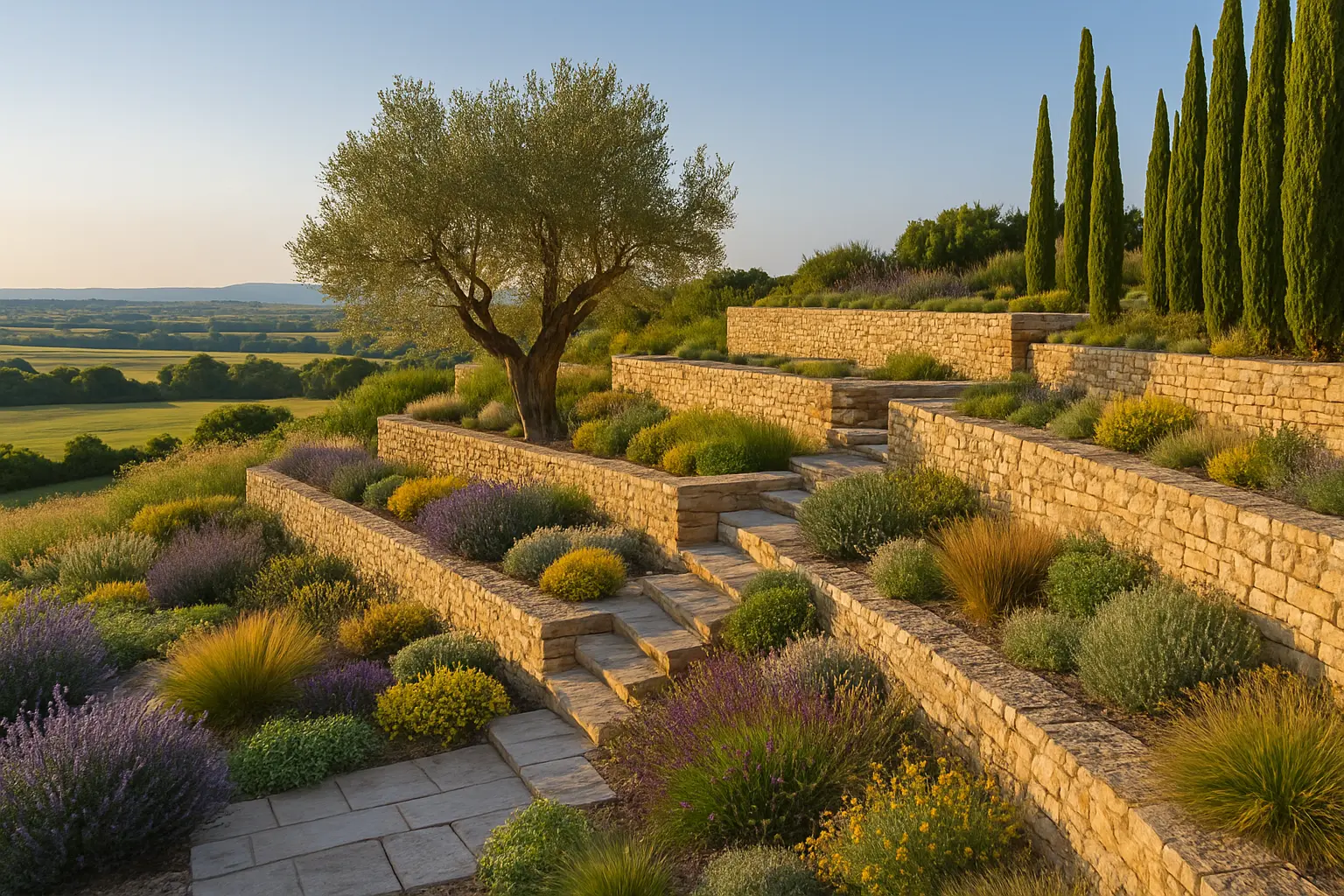
Retaining walls
Made from natural stone, wood, corten steel or concrete, they:
- hold the land,
- create aesthetic levels,
- allow for the arrangement of garden rooms,
- increase the plantable areas.
Gentle hills and shapes
Recommended for:
- stabilise naturally,
- create curved flower beds,
- avoid major works.
They allow for structuring a sloped garden while maintaining a natural aesthetic.
3. Managing water: the key to a sustainable sloped garden
A poorly managed sloped terrain can lead to:
- runoff,
- erosion,
- puddles,
- saturation at the foot of the slope.
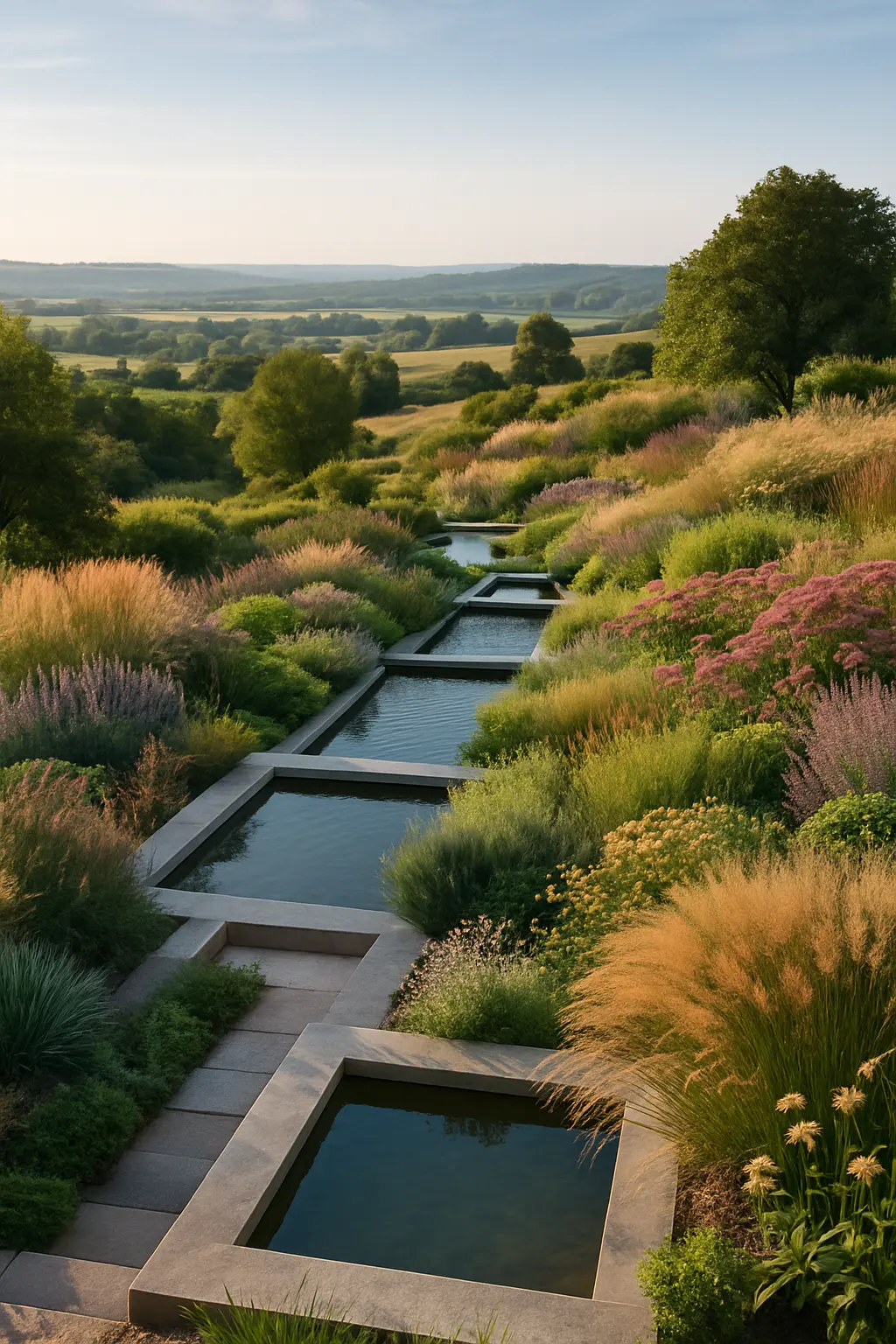
a) Plan for swales (drainage depressions)
Inspired by sustainable water management techniques (SUDS), they:
- collect the runoff water,
- create micro-wetlands,
- promote biodiversity,
- limit flooding.
They can be planted with:
- marsh iris,
- carex,
- lysimaques,
- helophyte plants.
b) Install passive drainage
- gravel under the paths,
- drainage ditches,
- agricultural drains if necessary (to be validated by a specialist).
c) Create a natural pond or a pool
Perfect for a bottom of a slope.
The mother :
- naturally captures water,
- create a refuge for amphibians, dragonflies and pollinators,
- stabilise the ecosystem of the sloping garden.
4. Structure the circulation: paths, stairs, landings
A sloping garden succeeds thanks to smooth and safe circulation.
External stairs
Recommended materials:
- blue stone,
- Kandla sandstone,
- treated wood,
- Corten steel.
The steps should be wide and low (15–17 cm), ideal for comfort.
Paths and avenues
- diagonal or winding paths = reduced effort,
- intermediate stages for blowing,
- 13×13 paving slabs laid in strips for wheelbarrow or mower wheels.
This also gives a very “Flemish garden” charm.
5. Create "rooms": the best way to take advantage of the terrain
The relief allows for the creation of distinct atmospheres at each level:
- dining terrace,
- coin lounge,
- vegetable platform,
- clump of grasses,
- controlled wild zone,
- small orchard…
Each space becomes a part of the garden.
It is one of the great strengths of a sloping garden: you can stage the views and the pathways.
6. Playing with perspectives: a major advantage
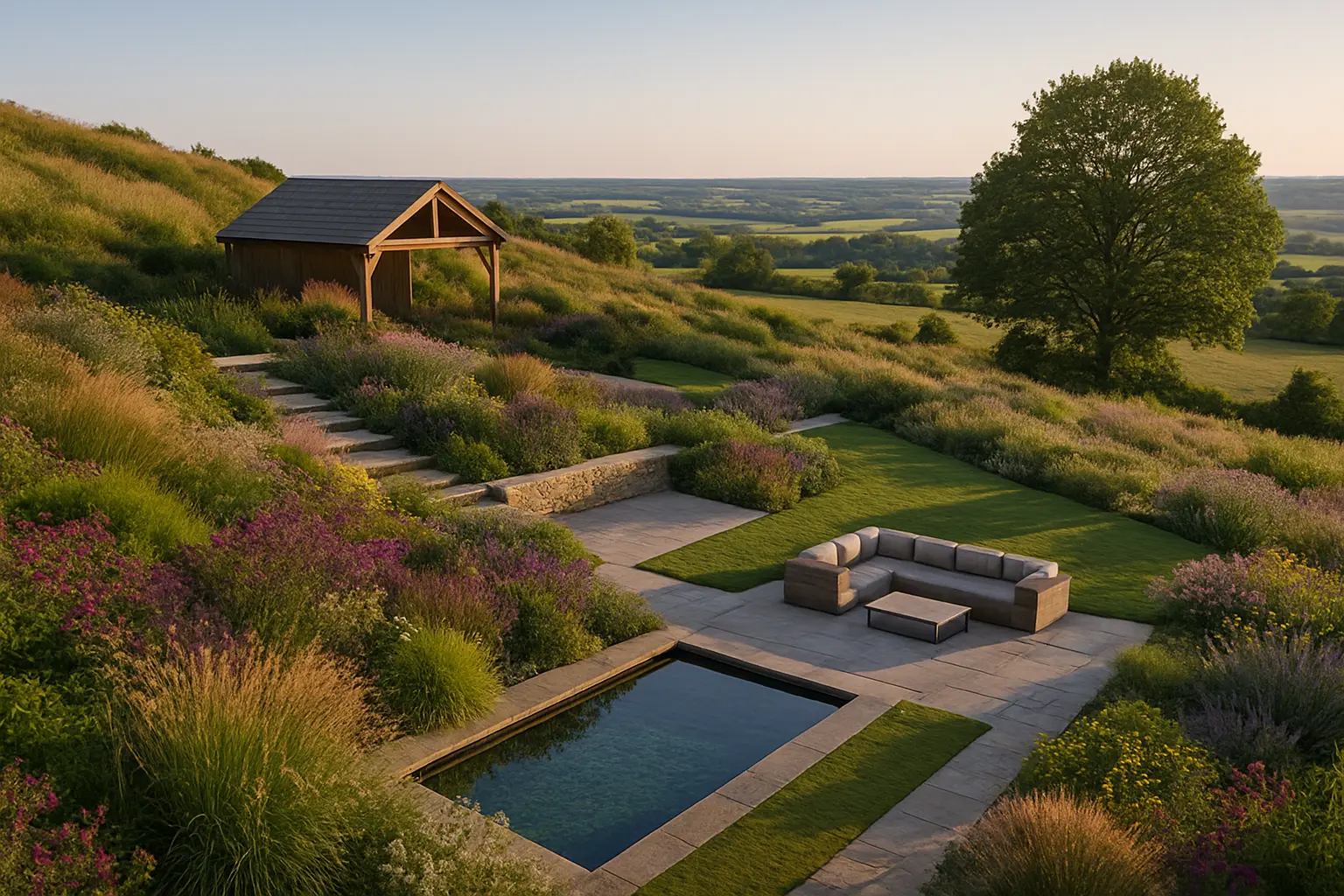
A sloping garden, unlike a flat garden, offers a vertical perspective:
- plant cascades,
- overlapping massifs,
- stairs framed by plantings,
- dive view over a pond.
Techniques to enhance perspectives:
- use tall plants at the bottom of the slope, shorter ones at the top;
- alternate textures (grasses, evergreens, perennials) ;
- integrate a work of art, a water mirror or a sculptural tree as a focal point;
- illuminate certain levels to create a nocturnal relief.
7. Choosing the right plants for a sloping garden
A sloping garden requires plants:
- resistant to runoff,
- capable of stabilising the soil,
- adapted to the exhibition.
Stabilising plants (structuring roots)
- euphorbes
- perovskia
- lavenders
- inspired
- grasses (miscanthus, stipa, pennisetum)
For wetland areas at the bottom of slopes
- iris pseudacorus
- astilbes
- filipendula
- carex
- dogwoods
For dry and sunny areas at the top of the slope
- cysts
- rosemaries
- thyms
- achillées
- maples and lightweight multi-stem trees
These plants create a resilient and aesthetically strong sloped garden.
8. Intégrer la biodiversité dans un jardin en pente
The relief naturally creates micro-environments:
- dry at the top → Mediterranean plants, thermophilic insects;
- wet at the bottom → amphibians, dragonflies ;
- wooded areas → birds, hedgehogs.
Add:
- loads of stones,
- dead branches,
- a pond,
- unmown areas.
Your sloping garden becomes a living ecosystem.
Conclusion
A sloping garden is not an obstacle: it is a wonderful opportunity to create a rich, structured, vibrant, and visually spectacular space. With good water management, well-designed levels, thoughtful circulation, and suitable planting, the terrain becomes your best ally.
If you ask the right questions from the outset, your sloping garden can become a unique space that combines aesthetics, functionality, and biodiversity — in the style of the most beautiful contemporary gardens.