
Gardens with integrated furniture: thinking of the landscape as a living space
Designing a garden is no longer just about organising plantings or laying out a terrace.
Today, gardens with integrated furniture reflect a more holistic approach: that of an outdoor space designed as a true extension of the home, where the furniture is an integral part of the landscaping project.
Strictly separating the terrace from the garden, placing furniture as merely a decorative accessory, or confining seating to a mineral platform are increasingly outdated reflexes. The contemporary garden encourages blurring boundaries, creating continuities, and integrating furniture from the design phase.
No longer oppose terrace and garden
The terrace is not an end in itself.
It is a threshold, a space of transition between architecture and landscape.
In contemporary garden projects, a clear evolution can be observed:
- more understated terraces, sometimes reduced,
- pathways that extend the uses in the garden,
- rest areas directly integrated into the plantations.
The furniture no longer signifies a break. It accompanies the movement of the garden, slipping in and settling there with discretion.

Incorporate furniture from the design of the garden
A well-thought-out garden is a garden designed with its furniture, and not the other way around.
This involves asking the right questions very early on:
- where do we actually sit?
- at what times of the day?
- how many people?
- for what purposes?
The furniture then becomes a spatial tool, just like a low wall, a staircase, or a plant bed.
The furniture does not always have to be on a terrace
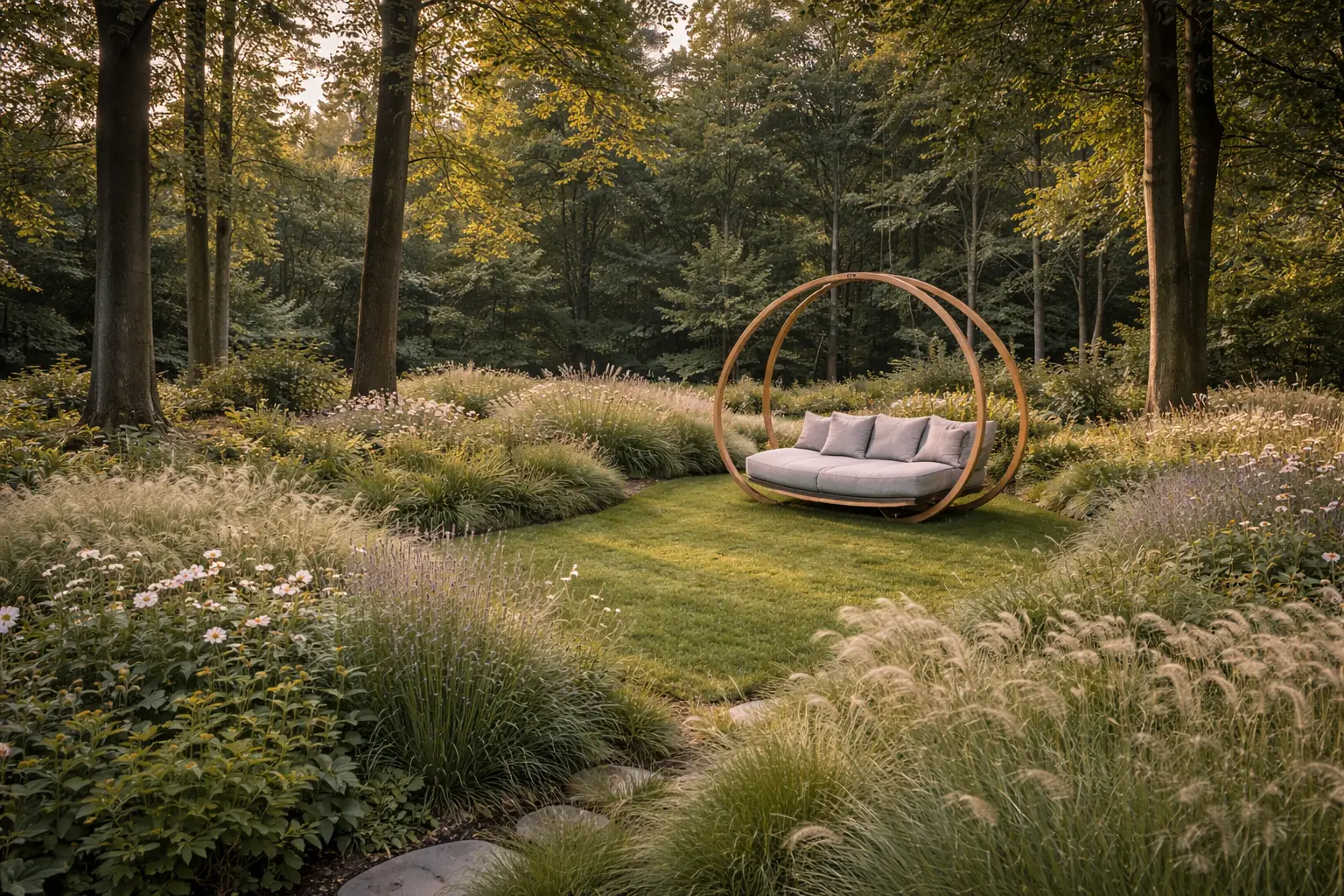
In many gardens with integrated furniture, the seating deliberately leaves the main terrace:
- a discreet bench integrated into a massif,
- a seat on small pedestals slightly raised off the ground,
- furniture placed directly in the garden, without a visible base,
- a bench backed against a bank or a persistent hedge.
These devices create secondary spaces conducive to reading, calm, or contemplation, away from the main reception area.
Thinking about furniture in terms of living areas
A functional and harmonious garden often relies on a hierarchy of spaces:
1. The areas close to the house
- receive,
- eat,
- share enjoyable moments.
Here, the furniture is more structured, often linked to the outdoor kitchen or the main table.
2. The intermediate zones
- outdoor lounge area,
- shaded area,
- gentle transition between built environment and vegetation.
The furniture is becoming lighter, lower, and sometimes modular.
3. Isolated areas
- individual seat,
- meditative space,
- view of the garden or the landscape.
The furniture almost fades away, in favour of the sensation of immersion.
Furniture and aesthetics: visibility or disappearance?
In a contemporary garden, the furniture poses an essential question:
must it be seen or felt?
Two approaches coexist:
- a bold, graphic, assertive furniture,
- a more airy, discreet, almost invisible furniture.
In many minimalist or natural gardens, the choice is focused on:
- simple lines,
- shades close to the ground, wood or stone,
- low forms, not very dominant.
The aim is not to remove the furniture, but to blend it into the landscape.
Durability and consistency of materials
The outdoor furniture is exposed to the elements.
His choice cannot be separated from the sustainability of the project.
Some essential principles:
- frost and moisture resistant materials,
- finishes suitable for permanent outdoor use,
- acceptable patina over time.
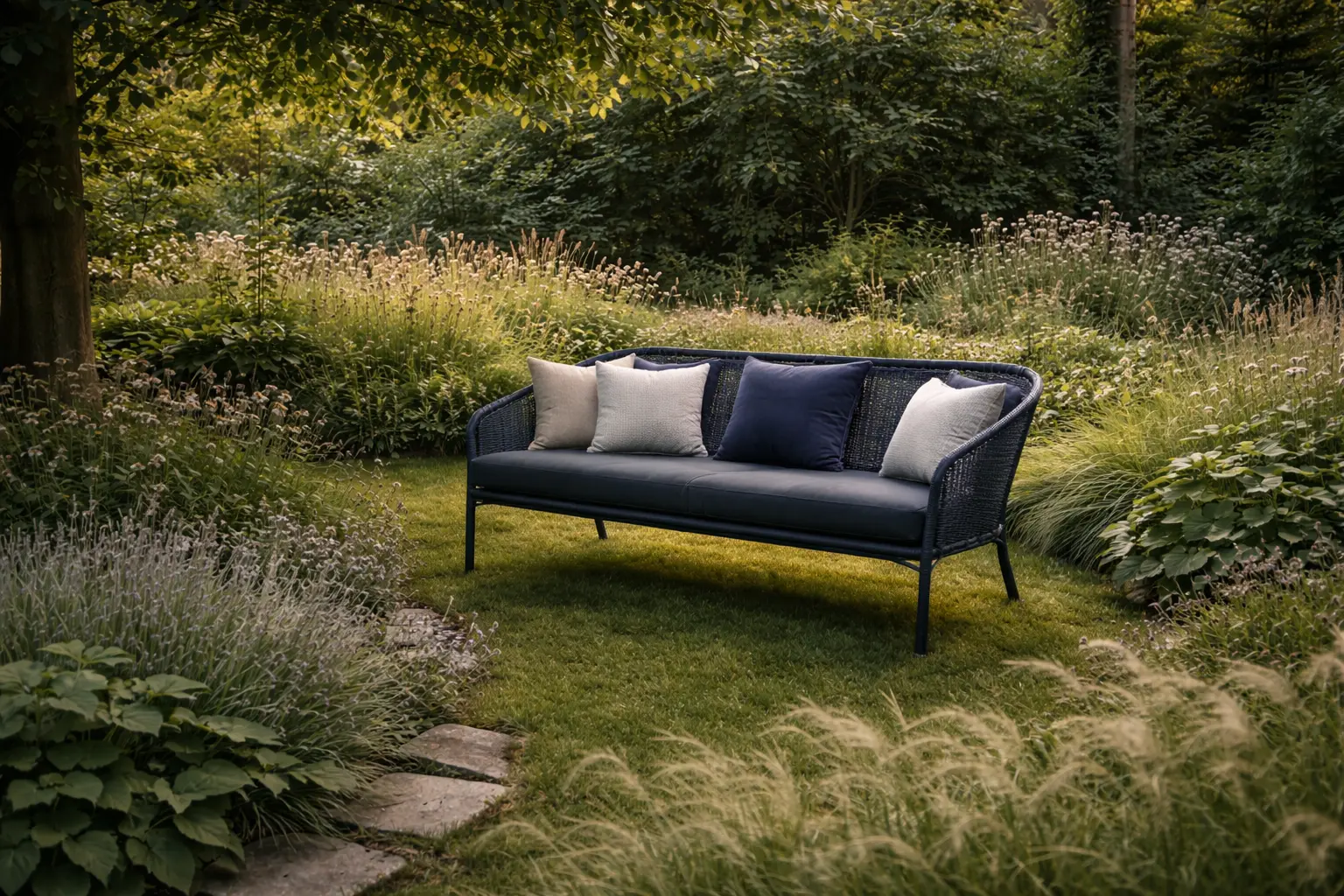
Visual consistency is just as important:
- dialogue with the frames,
- continuity with the bricks, stone or wood of the terrace,
- harmony with the dominant plant tones.
A durable piece of furniture is also a timeless piece, which does not go out of fashion with the changing seasons.
Storage and everyday use
A well-integrated piece of furniture is also practical to live with.
It is necessary to anticipate:
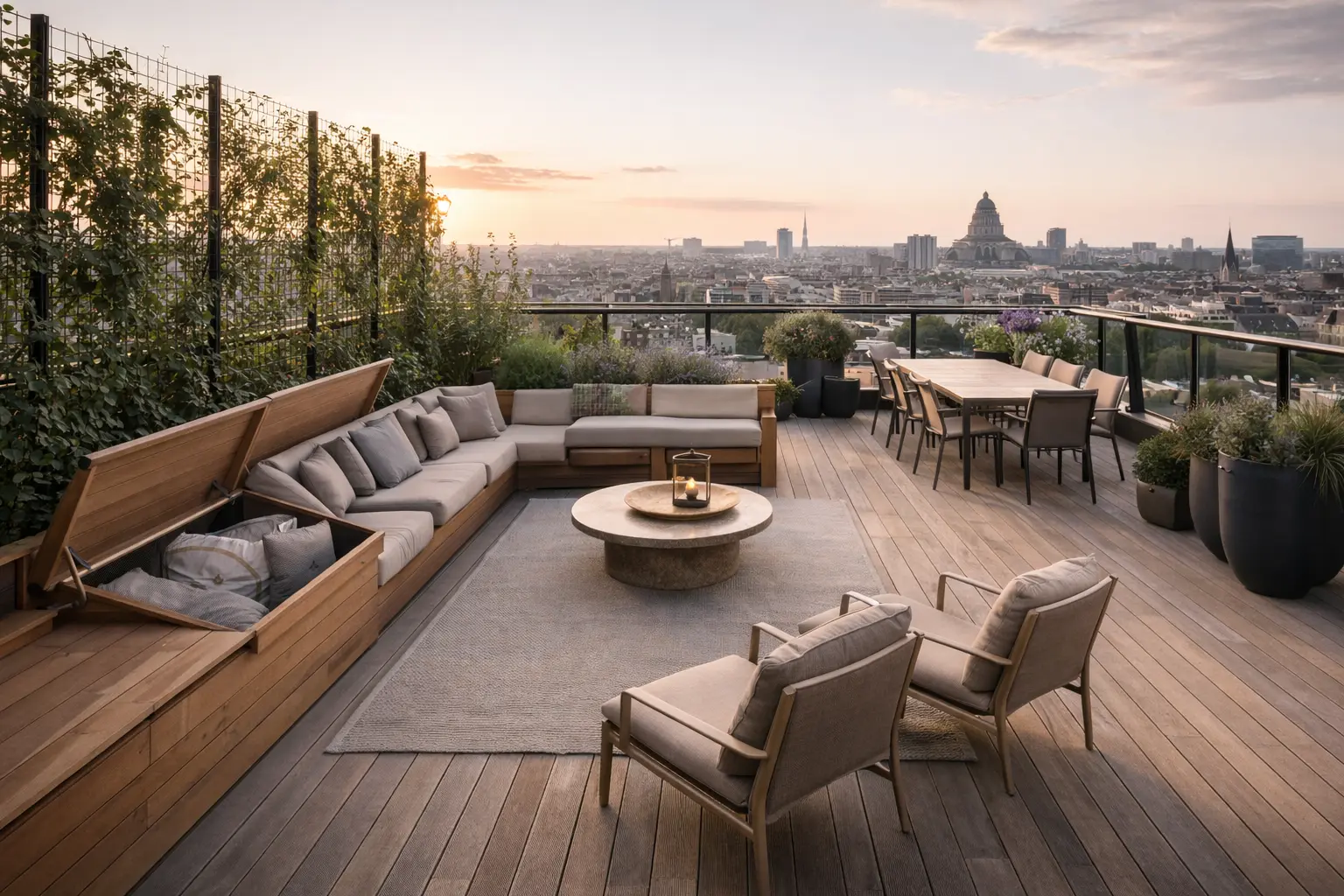
- the storage of the cushions,
- the wind resistance,
- the ease of movement,
- the possible wintering.
Simple solutions exist:
- discreet storage boxes integrated into the garden,
- multi-functional benches,
- fabrics designed to stay outdoors.
A successful garden should not become a logistical burden.
Decorative elements in the service of furniture
The furniture does not live alone.
It is highlighted by its immediate environment.
Today, many projects integrate:
- outdoor rugs to structure a space,
- low or indirect lighting fixtures,
- simple decorative objects, few in number,
- fabrics chosen for their texture as much as their colour.
These elements enhance comfort without burdening the reading of the garden.
A holistic approach to the garden
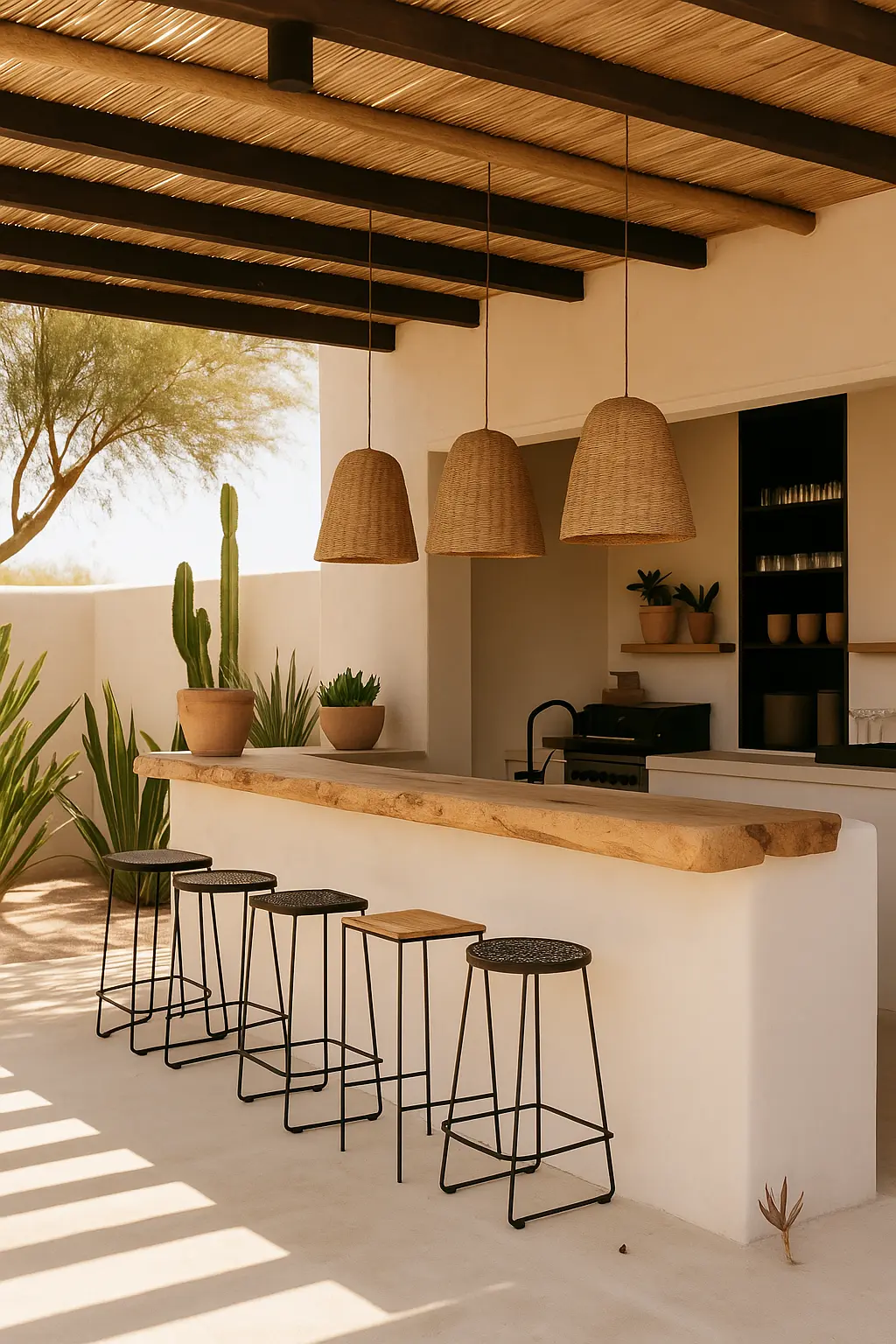
On architecte-paysagiste.be, we advocate a holistic approach to outdoor design.
Designing a garden is:
- to conceive the volumes,
- structure the movements,
- thinking about the terraces,
- integrate the furniture from the outset,
- support the selection of parts suitable for the project.
The furniture is not a final addition.
It is a component, just like the vegetation or the soil.
Conclusion
The gardens with integrated furniture reflect a new way of experiencing the outdoors: more fluid, more coherent, more sustainable.
A well-chosen piece of furniture does not impose itself.
It naturally fits into the landscape, supports the uses, and reveals the identity of the garden.
We also offer support and advice for the selection of furniture, directly linked to the design of the garden and terraces, in order to ensure aesthetic and functional coherence in the long term.