Winter is not a dead season for the garden. It is a strategic moment: to protect, prepare, clean intelligently, strengthen the soil, and anticipate spring.
Many horticultural institutions like the RHS remind us that a well-maintained garden in winter starts faster, stronger, and with fewer diseases.
Here are the essential, simple and effective actions to take between November and February.
1. Leave the leaves… but not just anywhere
Contrary to popular belief, removing all the dead leaves is not a good practice.
Where to leave the leaves?
- Under the trees and shrubs
- In the mountains
- Under the hedges
The leaves create a natural ground cover, limit erosion, nourish the microfauna, and protect the roots from frost.
Where to collect them?
- Terraces and paths (slippery)
- On the lawn (risk of diseases if the layer is too thick)
Living soil tip: shred the leaves with a mower before spreading them → better decomposition (recommended by the RHS).
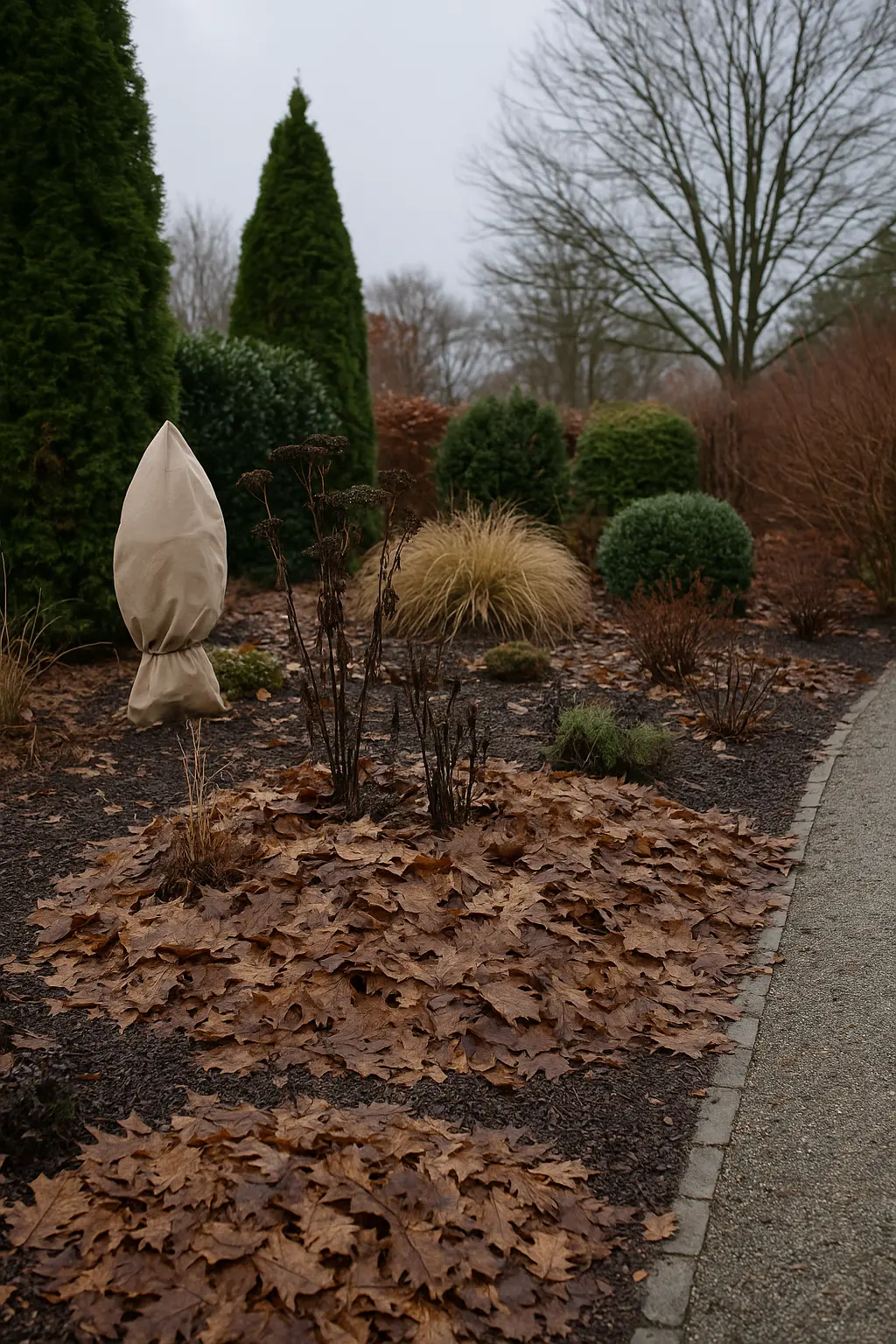
2. Mulch the flower beds before the severe cold
Mulching protects the roots, reduces temperature fluctuations, and improves soil life.
Best winter mulches:
- Wood chip (BRF)
- Wood shavings
- Crushed dead leaves
- Flax or hemp straw
- Very mature compost
Mulching also helps to limit erosion caused by heavy winter rains.
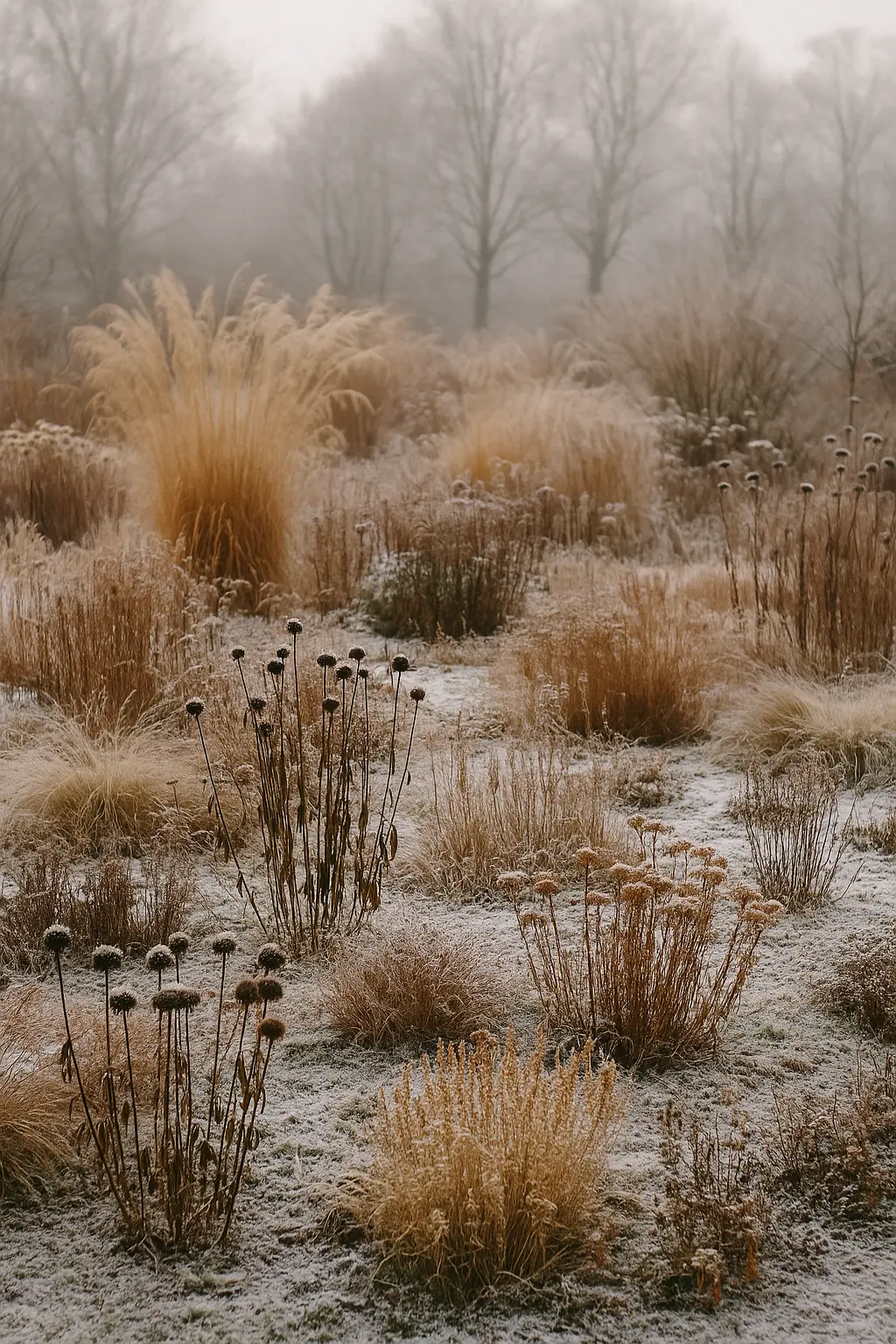
3. Prune the faded perennials… or leave them for biodiversity
Two schools exist, both validated by the RHS:
Option A – Clean Aspect
Cut the faded perennials to 10 cm above the ground.
Option B – Refuge Garden
Leave the dry stems until February:
→ refuge for insects
→ winter food for birds
→ very decorative frosted aesthetic structure
Advice: adopt a mixed management approach (some areas tidy, others “natural”).
4. Protecting frost-sensitive plants
Some Mediterranean or exotic plants are as sensitive to humidity as they are to frost.
To protect:
- Libertia
- Agapanthes jeunes
- Gunnera
- Bananiers
- Agaves, Yuccas
- Oliviers jeunes
- Certaines sauges et cistes
Recommended protection:
- Generously mulch the base
- Add a winter cover (always breathable!)
- Raise potted plants
- Place the pots against a south-facing wall
5. Monitor the snow on the evergreen trees
It is a crucial point often overlooked.
The heavy snow can break the branches of:
- conifers
- laurels
- buis
- bambous
- photinias
- pittosporums
What to do?
- Gently shake the branches to make the snow fall
- Avoid using a hard tool (risk of sharp breakage)
6. Prune the fruit trees (frost-free)
November to February is the best time for:
- apple trees
- pear trees
- plums
- some small fruits
Objectives :
- remove dead wood
- open the heart
- promote light
- stimulate future production
7. Clean and sharpen the gardening tools
Winter is the best season for:
- sharpen the secateurs
- oil the tools
- clean the gloves, pots, watering cans
- drain and protect the hosepipes (frost)
8. Planting trees and shrubs (ideal period)
Contrary to popular belief, winter is the best season for planting because the soil is moist and the roots settle in gently.
To plant:
- deciduous trees
- shrubs
- hedges
- bare root plants (economic option)
Avoid simply prolonged frost periods.
9. Improve the soil before spring
The Belgian soils (often clayey) like to be worked on before restarting.
Useful actions:
- add mature compost
- add coarse sand to improve drainage
- never leave the soil bare: always use mulch
This limits the settling caused by winter rains.
10. Prepare the borders and clean the paths
- reset the borders with a chalk line
- clean the moss off the paving
- to periodically redo the joints of the paving stones or klinkers
- level the gravel areas
This gives a clean appearance as soon as the nice weather returns.
11. Protecting garden wildlife
Simple actions:
- install some nichoirs dès l’hiver (the birds locate the places)
- leave a pile of wood in a corner
- do not disturb hedgehogs in hibernation
- leave the leaves under the hedges
12. Already thinking about their planting plan for spring
Winter is the best time to reflect on:
- the restructuring of the massifs
- the choice of perennials
- the colours and volumes
- terrace projects, ponds, vegetable gardens
A good preparation = an easier spring.
Conclusion
Winter is a key time for the garden.
What you do between November and February determines 80% of the success of spring: soil health, plant vigour, flowering, biodiversity, ease of maintenance.
By adopting simple and eco-friendly actions, you turn the cold period into a genuine opportunity to create a vibrant garden ready for the next season.