A style born from modern architecture
The contemporary garden established itself at the turn of the 20th century, in dialogue with houses featuring clean lines and large bay windows.
It is based on sobriety, geometry and respect for the character of the place.
Few species, cleverly repeated
Three to five plants chosen for their silhouette, planted in clear masses, are enough to create a strong composition.
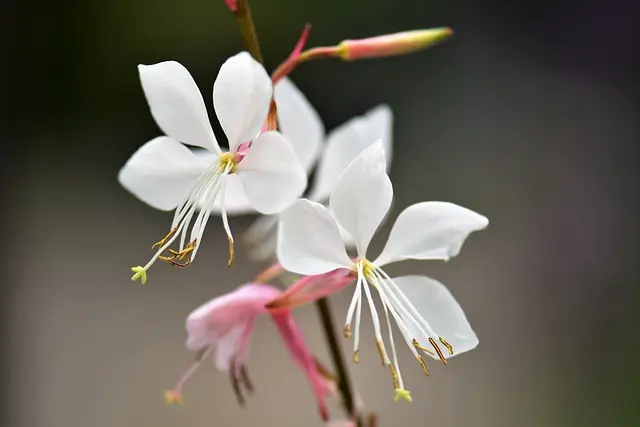
Graphic grasses, structural perennials and trimmed evergreens respond to each other in a restricted palette.
A natural extension of the house
The contemporary garden extends from the terrace like an additional open-air room.
It adapts to current architectures as well as to old houses renovated with sobriety.
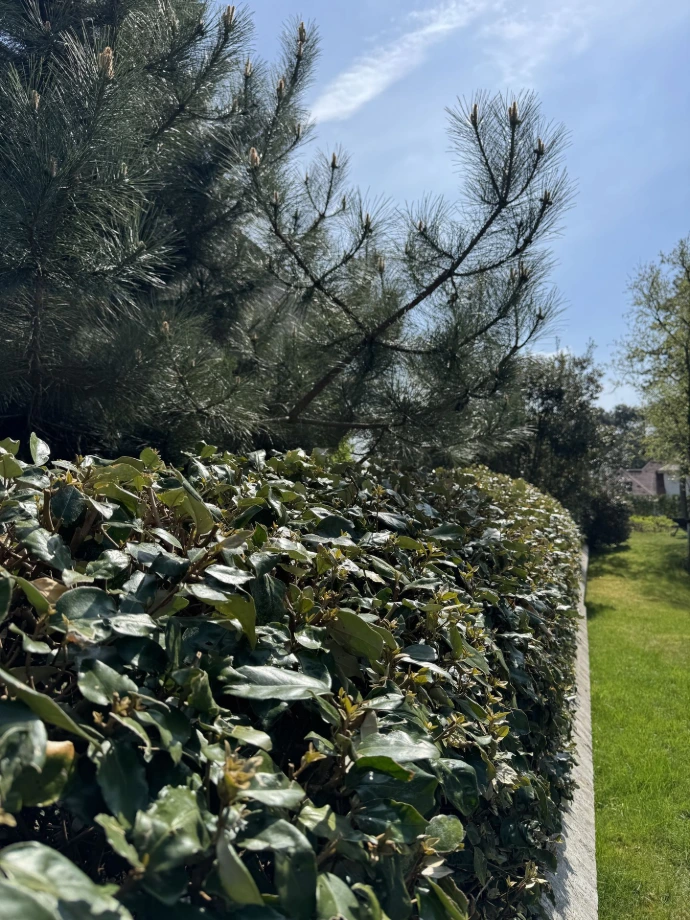
Exposure
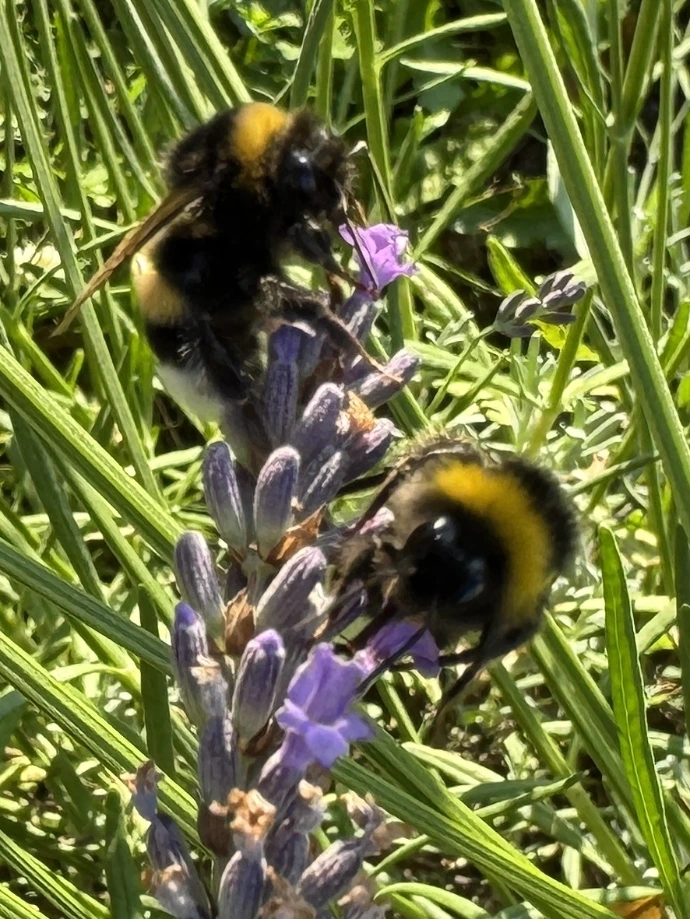
Full sun to partial shade, depending on the chosen palette. Grasses and lavenders prefer the sun; structured foliage tolerates partial shade.
Climate
Adapted to the Belgian temperate climate. The chosen plants are hardy and withstand winter without special protection.
Soil
Drained or clay soils depending on the species. The clay-loam soil of Walloon Brabant is suitable for most grasses and evergreens after light amendment.
Ideal exposure and conditions
The contemporary garden adapts to most terrains in Walloon Brabant and the south of Brussels. Its success relies on the right choice of plants for each exposure.
A graphic palette, noble materials
The contemporary garden plays with sober tones: grey, anthracite, white, taupe, which highlight the deep greens of the foliage.
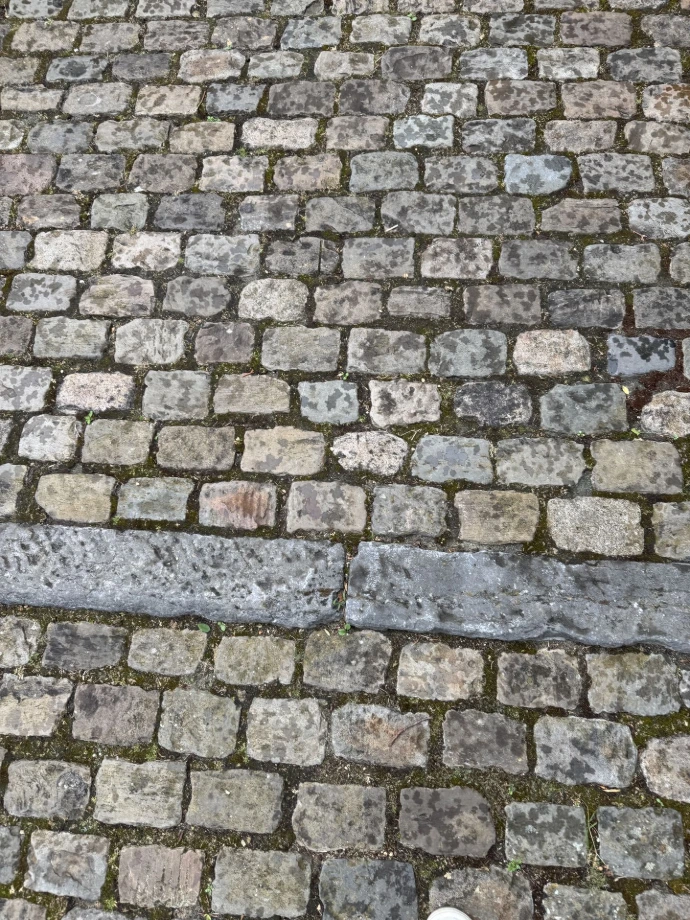
Belgian blue stone, slate, polished concrete, corten steel, and weathered wood provide texture and durability.
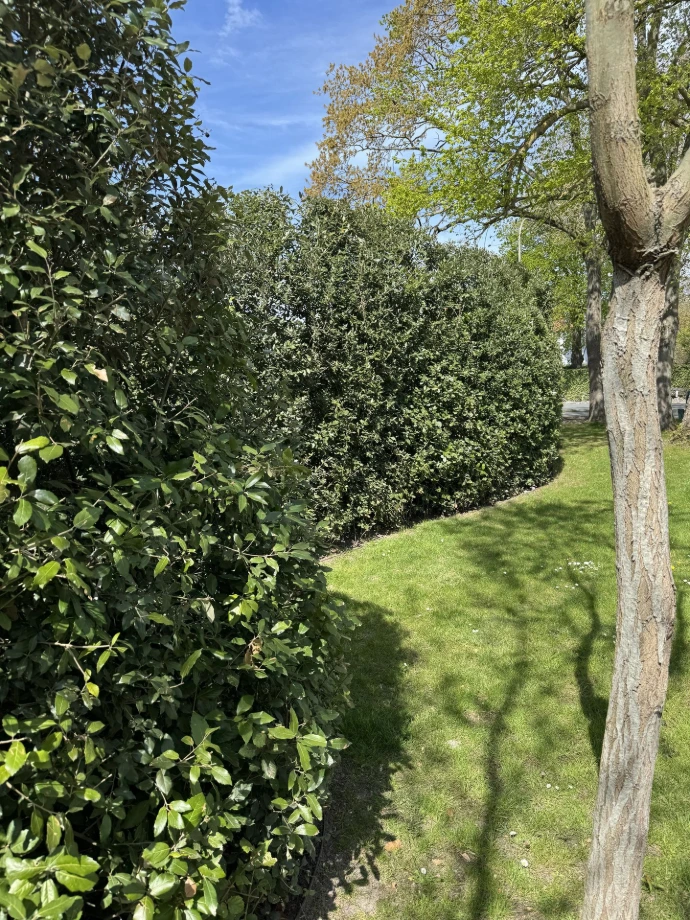
The grasses undulate at the slightest breeze and give the garden its movement. The evergreens trimmed into balls, cones, or cubes anchor the composition.
Throughout the seasons, the grasses change from tender green to golden beige, the perennials bloom, and the evergreens maintain the structure. The garden remains readable all year round.
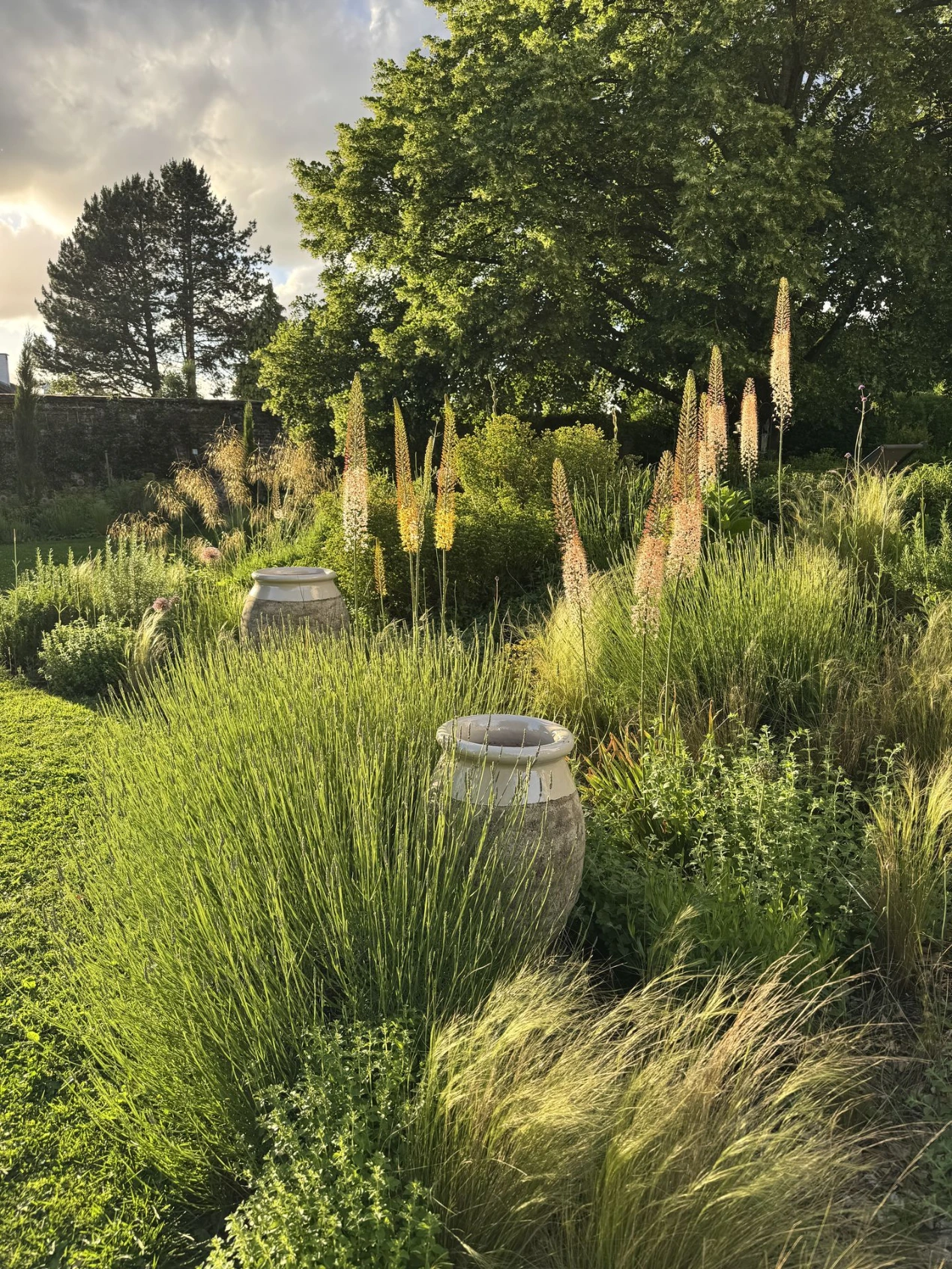
The blooms succeed one another, the volumes intersect, and the textures respond.
The garden evolves constantly, offering a renewed spectacle in every season.
A lively composition, between natural and elegance..
A free and generous garden.
Frequently Asked Questions
Does the contemporary garden require a lot of maintenance?
No, but it requires precise maintenance. Regular pruning of the evergreens, annual mowing of the grasses, careful weeding of the paths: the beauty of the style lies in the neatness of the whole.
Is it suitable for the Belgian climate?
Very well. The palette of grasses and evergreens selected for this style is perfectly hardy in Walloon Brabant and withstands winter without protection.
Is a contemporary house necessary to adopt this style?
Not necessarily. The contemporary garden interacts just as well with a soberly renovated old manor house as with a recent construction featuring large bay windows.
Is it suitable for small gardens?
Excellently. In a small space, the tight palette and sharp geometry of the contemporary garden create an impression of depth and calm where a lush garden would overwhelm the eye.
Can a pool be integrated into a contemporary garden?
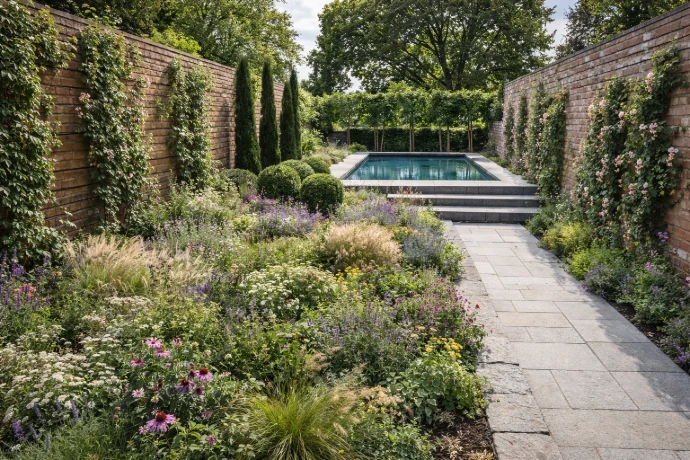
It is even one of the most successful combinations. A pool with straight lines naturally becomes the heart of a contemporary garden, surrounded by blue stone and graphic plantings.
What is the difference between contemporary, modern, and minimalist gardens?
The three terms refer to the same family of clean and geometric gardens. "Modern" emphasises current materials, "contemporary" focuses on the dialogue with architecture, and "minimalist" highlights the radical nature of sobriety. Our projects draw from all three depending on the site.