
There are artists that one does not quite know where to place. Roberto Burle Marx (1909-1994) was a painter, botanist, ecologist, engraver, musician, jeweller, and incidentally one of the most influential landscape architects of the 20th century. This multiplicity is not anecdotal — it is the key to his entire work. Because Burle Marx never separated these disciplines. When he designed a garden, he painted. When he painted, he thought in terms of plants and ecosystems. His work may be the only one in the history of landscape architecture where one cannot distinguish the artist from the naturalist from the composer.
Painter first, landscape architect by vocation
Burle Marx discovered botany in an unexpected way. As a teenager, he stayed in Berlin with his family in the 1920s — and it was there, in the greenhouses of the Botanical Garden of Dahlem, that he saw for the first time the tropical plants of his own country. Brazilian species, collected and preserved in Germany, while in Brazil, imported European plants were preferred. This colonial absurdity struck him and would never leave him.
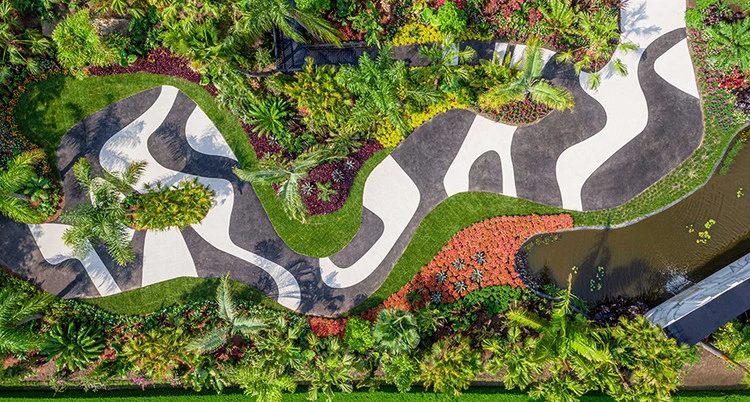
Back in Brazil, he trained as a painter at the National School of Fine Arts in Rio. And it is precisely this artistic training that will transform his approach to the garden. Where most landscape architects think in terms of individual plants, Burle Marx thinks in terms of masses, shapes, colours, and contrasts. His garden plans — often large sheets of watercolour with organic curves — resemble abstract paintings. They are not just working plans: they are works of art.
The revolution of native plants — a political act
Burle Marx's most radical contribution is not aesthetic. It is ecological and, in a profound sense, political.
In Brazil during the 1930s and 1940s, public gardens and green spaces in cities followed European models — English lawns, French flowerbeds, imported plants that required constant irrigation and intensive maintenance in a climate for which they were not suited. The Brazilian flora, despite its extraordinary richness, was ignored in its own country.
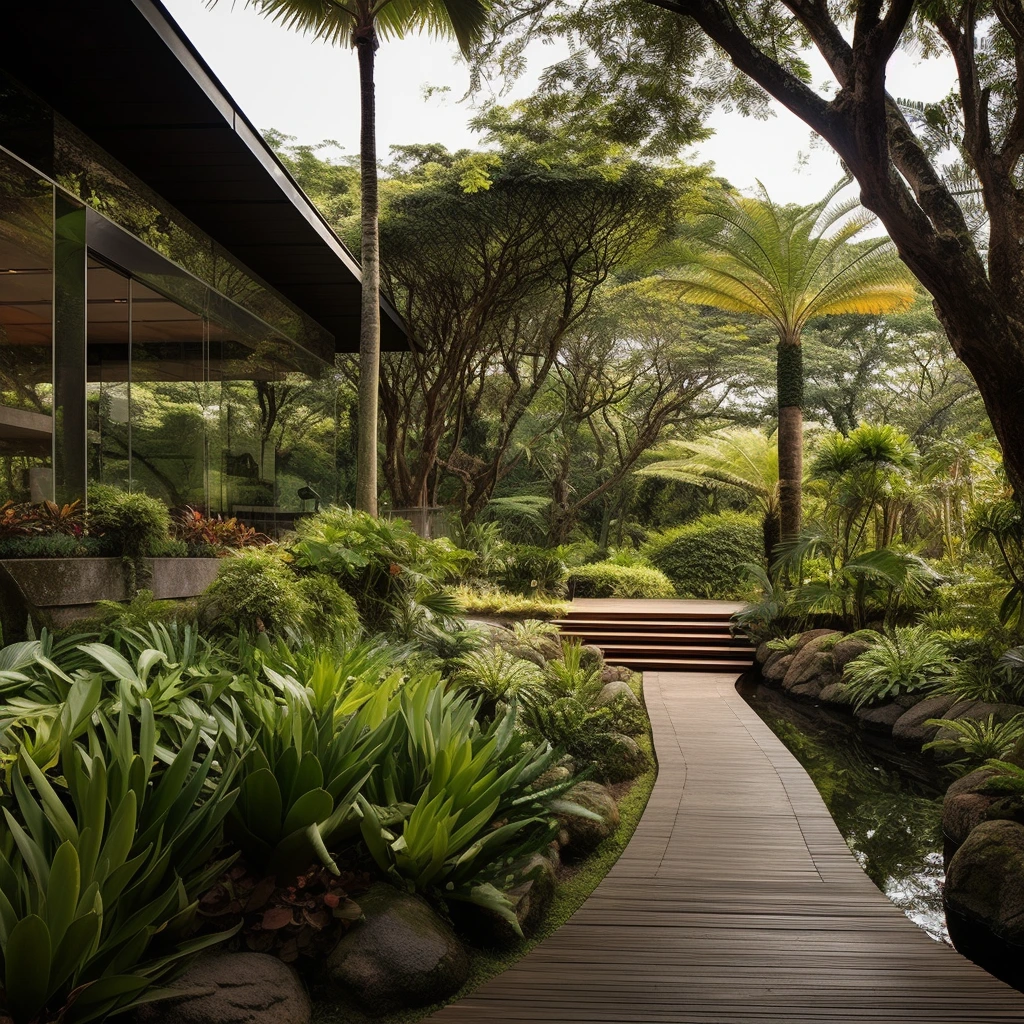
Burle Marx overturns this logic. He travels across Brazil — sometimes to remote regions of the Amazon — to collect little-known native species, cultivate them in his own estate, and integrate them into his compositions. In doing so, he does not just choose beautiful plants. He asserts that Brazilian nature is sufficient, that it does not need to be corrected by European imports, that it is in itself a source of beauty and identity.
Long before the terms "sustainable development", "native plants" or "resilient design" became mainstream concepts, Burle Marx was practising them. This activist dimension of his work is often overlooked in favour of the formal aspect — yet it is what makes him an absolutely contemporary precursor.
His achievements: from Copacabana to Brasília
The pavements of Copacabana, Rio de Janeiro (1970)Paradoxically, this is one of his most democratic works. The famous black and white limestone mosaic pavements — stylised wave patterns that stretch along the beach for 4 kilometres — are crossed every day by millions of people who do not necessarily know they are walking on a work of art. This ability to create beauty in ordinary public space, accessibly, without barriers to entry, is one of the most beautiful dimensions of Burle Marx's legacy.
The Museum of Modern Art of Rio (1938)His first major project — and already a complete statement. Organic forms, masses of native tropical plants, dialogue with the modernist architecture of the time. At 29, he invents a language that did not exist.
Flamengo Park, Rio de Janeiro (1961)1.2 million square metres transformed into an urban park on land reclaimed from the sea. One of the most ambitious projects in the history of Brazilian landscaping — and a demonstration that native plants can create public spaces that are both beautiful, sustainable, and popular.
The Palácio da Alvorada, Brasília (1958)The garden of the official residence of the Brazilian president, in dialogue with the architecture of Oscar Niemeyer. Two modernisms that respond to each other — one vertical, the other horizontal — in a capital built from scratch in the heart of the cerrado.
Ibirapuera Park, São Paulo (1954)A park designed as a place of social connection as much as of nature — local species, fluid paths, meeting spaces. Today it is one of the most frequented green lungs in Latin America.
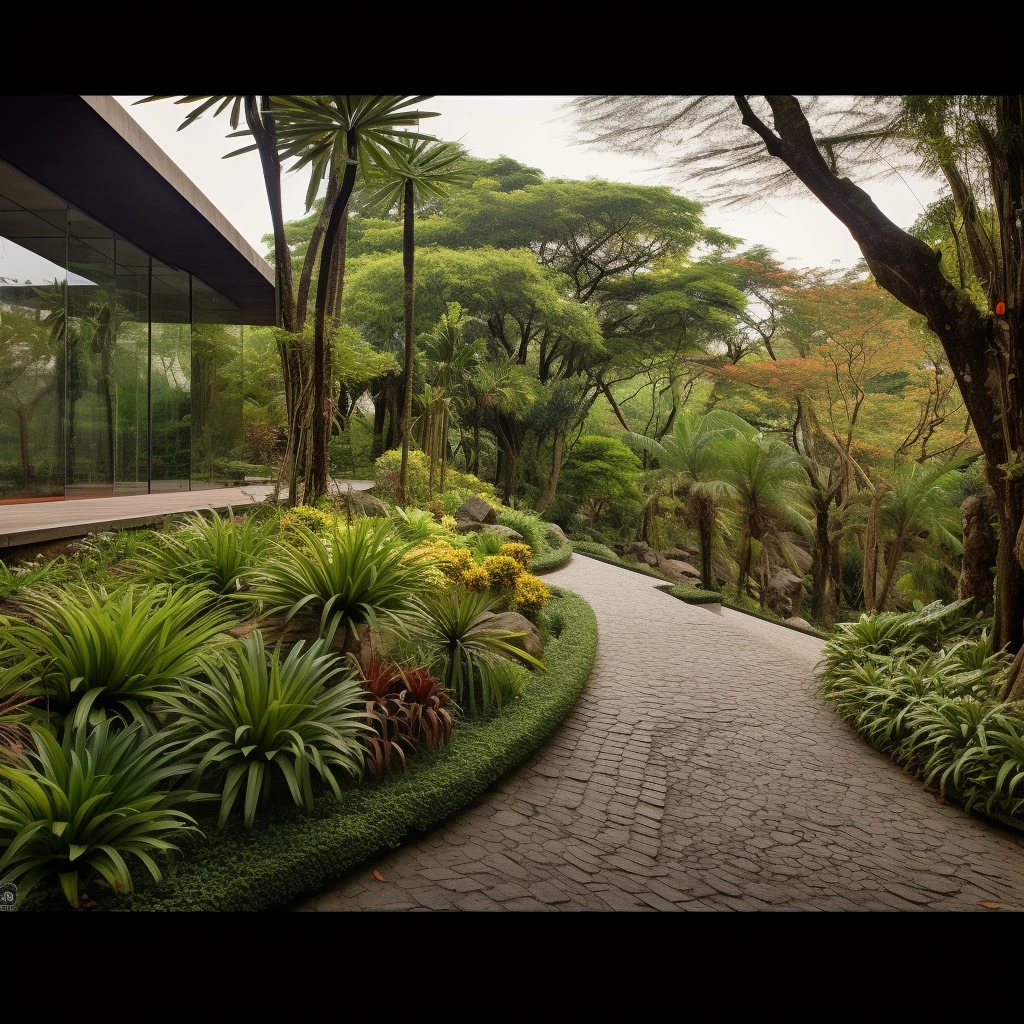
The Sítio — a living laboratory designated as a World Heritage site
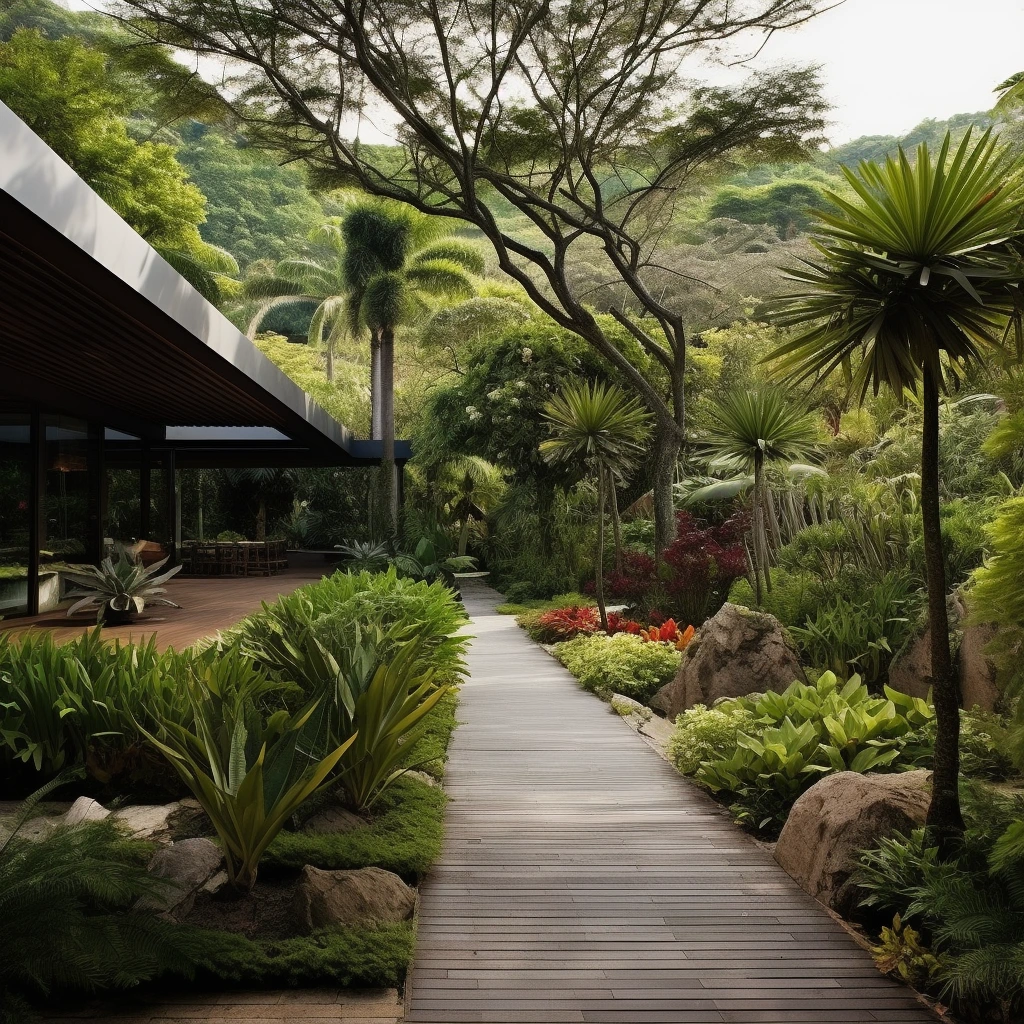
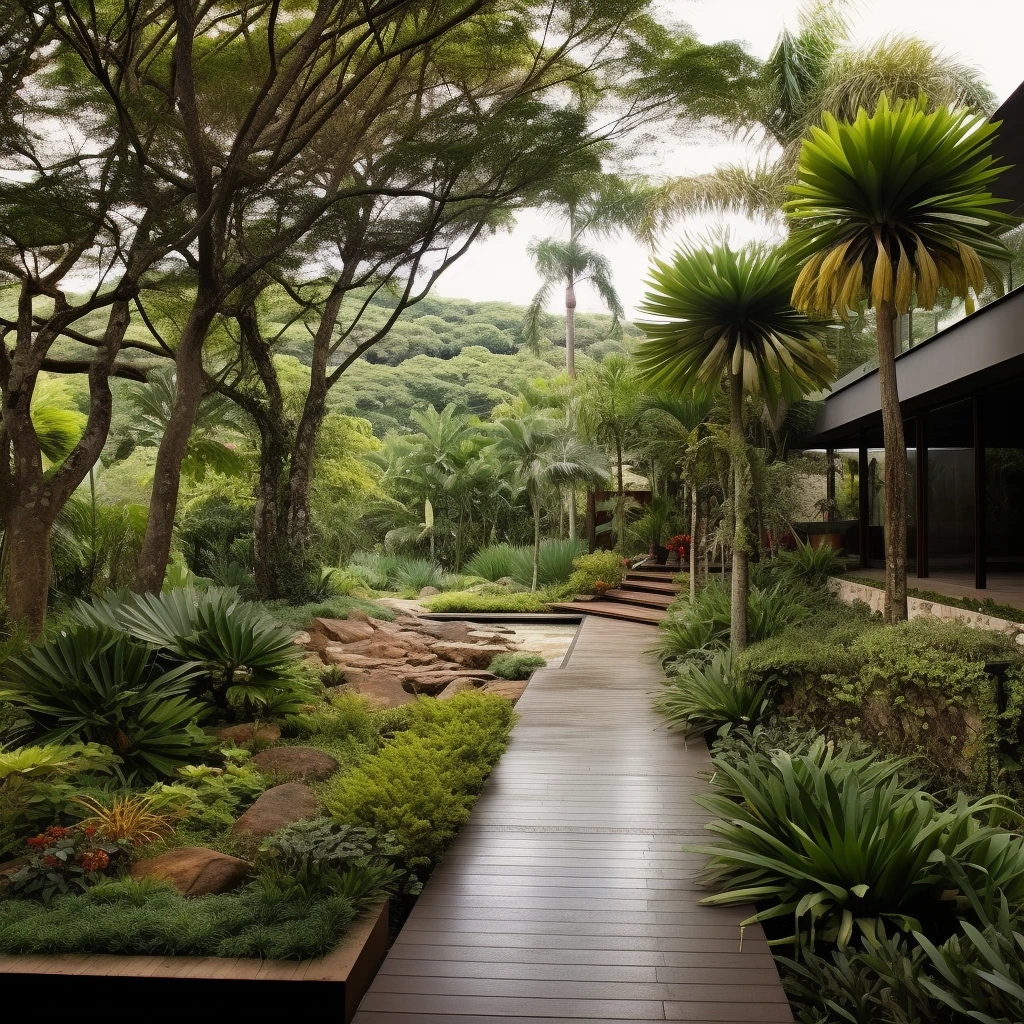
From 1949, Burle Marx acquired and developed a 365-hectare estate in Barra de Guaratiba, on the outskirts of Rio, which he transformed into a botanical and artistic laboratory: theRoberto Burle Marx Sítio. He cultivated over 3,500 species of plants there, many of which he collected himself from remote regions of Brazil. Upon his death in 1994, he bequeathed the estate to the Brazilian state.
In 2021, UNESCO inscribed the Sítio on the World Heritage List — recognising not only the exceptional botanical value of the site but its unique dimension as a synthesis of art, architecture, landscaping, and ecology. It is the only landscape architect's property in the world to receive this distinction.
This late but unanimous recognition says something important: Burle Marx was not only ahead of his time. He was on a trajectory that the world would take decades to catch up with.
What his work teaches us today
The influence of Burle Marx far exceeds the borders of Brazil — and it is becoming increasingly relevant in the European context.
His insistence on native plants resonates directly with current concerns about biodiversity, resilience to climate change, and the reduction of chemical inputs. A garden composed of species adapted to its territory requires less water, less fertiliser, less maintenance — and it contributes to local biodiversity rather than undermining it.
His way of thinking in masses — swathes of plants that form shapes readable from the sky, like pictorial compositions — has directly influenced how public spaces, green roofs, and contemporary gardens with high visual impact are designed today.
And his ability to traverse disciplines — painting, botany, music, architecture — reminds us that the best landscaping often arises from a broader culture than just knowledge of plants.
Frequently Asked Questions
Can we draw inspiration from Burle Marx for a Belgian garden?Yes — not in the species, obviously, but in the approach. Thinking in masses rather than specimens, choosing native Belgian plants (Molinia, Deschampsia, Anemone sylvestris, Geranium macrorrhizum), creating compositions that are readable from the windows of the house as one would read a painting. These principles apply at all latitudes.
Can we visit the Sítio Roberto Burle Marx?Yes. The Sítio is open to the public in Barra de Guaratiba, about 60 km from the centre of Rio de Janeiro. Visits are guided and by reservation. It is one of the most unique garden experiences in the world.
What is the connection between Burle Marx and the native plant movement in Europe?Burle Marx anticipated a movement thirty years ago that is now taking hold in Europe with figures like Piet Oudolf or the collectivePlanting Design. The logic is the same: to compose with what grows naturally, rather than imposing a foreign plant vocabulary on a territory.