
It is often imagined that great landscape architects are born with a secateur in hand. Louis Benech's journey tells the opposite — and perhaps that is why he has so much to teach us, even when we simply dream of a beautiful garden at home. Here is who he is, what has shaped his vision, and what his approach can change in the way you think about your own outdoor space.
A journey that did not lead him to gardens
Louis Benech was born on 16 February 1957 in Neuilly-sur-Seine, in a family that loves gardens and where his father is an architect. Nothing was obvious, however: he started by obtaining a master's degree in labour law. A stint at a law firm, which he did not enjoy, pushed him to listen to another desire.
He then went to England to work as a horticultural labourer at Hillier nurseries — a reference in the plant world — for a year and a half. Upon returning to France, he became a gardener at a private estate in Normandy. This hands-on work, with his hands in the soil season after season, gradually earned him his first clients. In 1985, he set up on his own as a landscape architect in Paris.
The lesson is already there: Benech did not learn about gardening from books, but in nurseries and on construction sites. His knowledge of plants comes from direct experience. It is a requirement we share: one can only design well what one truly knows.
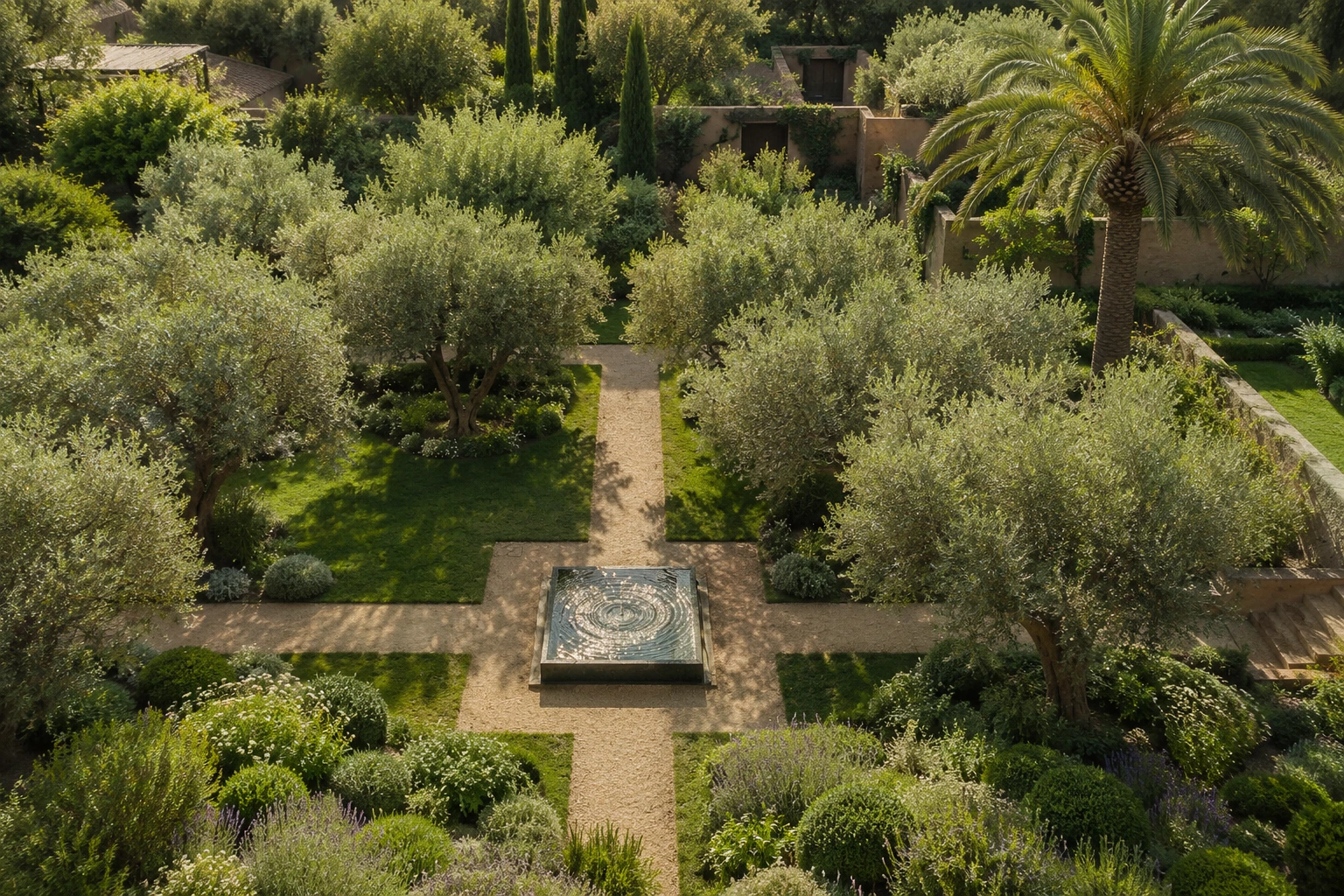
The Tuileries, 1990: the project that changes everything
In 1990, Louis Benech, along with landscape architects Pascal Cribier and François Roubaud, won the competition for the redevelopment of the historic part of the Tuileries Garden in Paris. The project will span around ten years.
It is not a detail that this major project was carried out by three people. Reinterpreting a garden originally designed by André Le Nôtre, adapting it for millions of visitors and today's maintenance constraints, without betraying its grandeur: such work requires collaborative perspectives. The Tuileries launched Benech's international career — but they also say something true about the profession. A great garden is rarely the work of a single person.
A vision of the garden: harmony before style
Since then, Louis Benech has designed over 500 parks and gardens, both public and private, in France and abroad: the gardens of the Élysée, the quadrilateral of the National Archives in Paris, the rose garden of Pavlovsk Park in Saint Petersburg, the imperial estate of Achilleion in Corfu, the water theatre grove at the Palace of Versailles, the park of the Chaumont-sur-Loire estate…
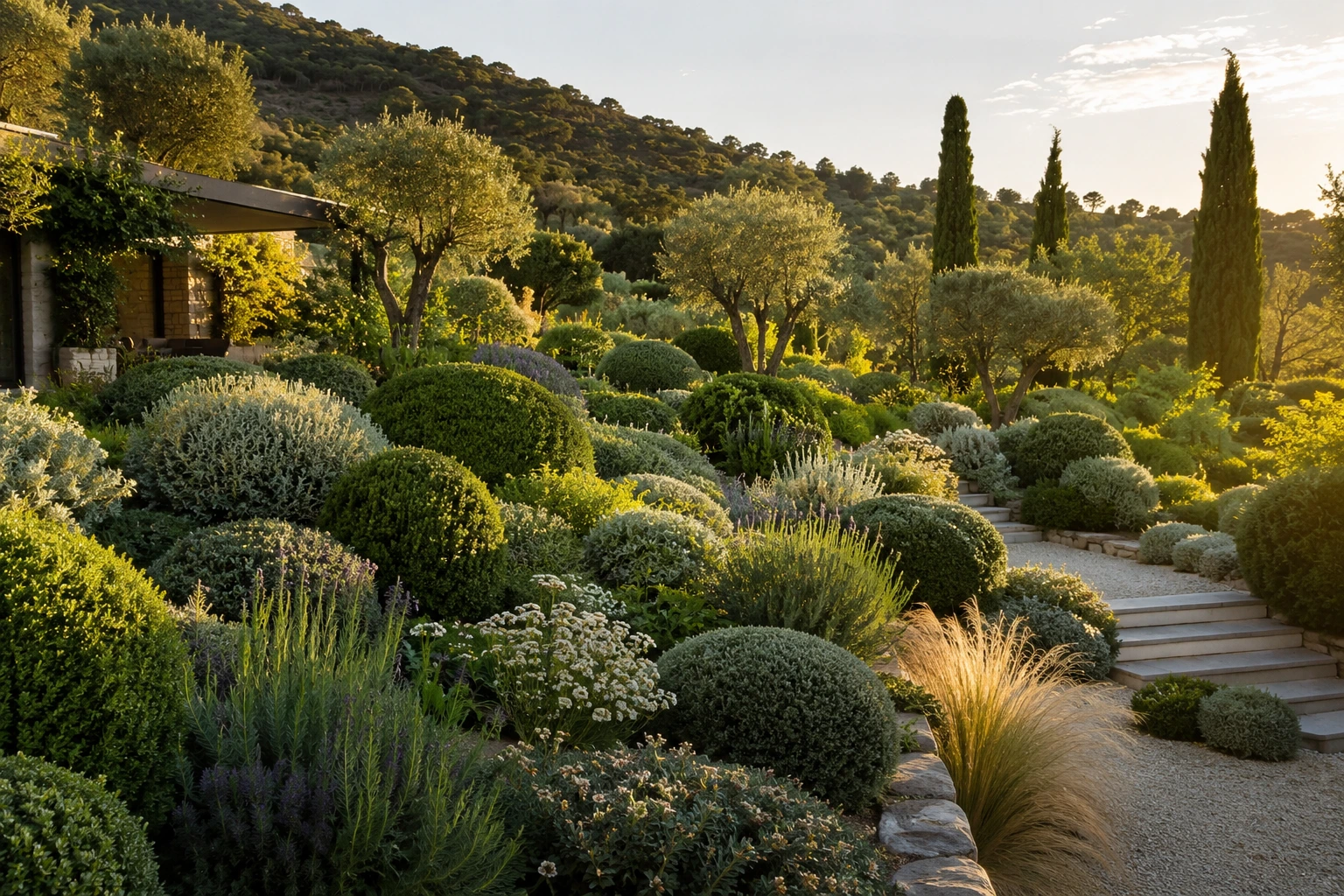
What strikes one in such a dense career is the absence of a recognisable 'signature' at first glance. Benech does not impose a style. He seeks to align each project with its location: the architecture, the relief, the light, the use that its owners will make of it. Three principles recur in his work.
Sustainability.A garden is conceived for the long term, not for the effect of a single season. This requires a genuine ecological concern and a choice of plants suited to the soil and climate.
Use before decoration.A garden is not an image to look at; it is a space to live in. Its shape must follow the way it is inhabited.
Maintenance considered from the design.A beautiful garden that is impossible to maintain is a failed project. Maintenance constraints should be considered in advance, not afterwards.
What Benech's approach inspires in us
One might think that all this only concerns castles and palaces. It is the opposite. These principles apply equally to a residential garden of 200 m² in Brabant Wallon.
At Vert Val, the landscape architecture office founded by Lorenzo del Marmol in La Hulpe, it is precisely this approach that we apply at the residential scale: starting from the site — your land, its orientation, its soil, your house — rather than from a catalogue of ready-made atmospheres. Choosing plants that will age well in your garden. Designing a garden for the life you will lead there, and whose maintenance will remain manageable for you.
In other words: a master like Louis Benech does not give us a model to copy. He reminds us of a method. And that method is entirely transferable to your project.
Frequently asked questions
Who is Louis Benech?
Louis Benech is a French gardener and landscape architect born in 1957 in Neuilly-sur-Seine. After obtaining a law degree, he trained on the ground — in a nursery, then as a gardener — before establishing himself as a landscape architect in Paris in 1985. He gained international recognition with the renovation of the Tuileries Garden and was made a Knight of the Legion of Honour in 2005.
What are the most famous gardens designed by Louis Benech?
Among his most emblematic achievements are the redesign of the Tuileries Garden (with Pascal Cribier and François Roubaud), the gardens of the Élysée, the quadrilateral of the National Archives in Paris, the rose garden of Pavlovsk Park in Russia, and the water theatre grove at the Palace of Versailles. In total, he has designed more than 500 parks and gardens.
Has Louis Benech written any books?
Yes. Louis Benech is also the author of several works on gardening, includingThe Spirit of the Garden(1998),Kitchen Gardens(1999) andThe City Garden(2004). His gardens have also been compiled in photography books, such asLouis Benech, Twelve Gardens in France.
What is the connection between Louis Benech and the Tuileries Garden?
In 1990, Louis Benech, along with Pascal Cribier and François Roubaud, won the competition to redesign the old part of the Tuileries Garden in Paris. This project, carried out over about ten years, marked the beginning of his international career.
In summary
Louis Benech's journey shows that a beautiful garden does not arise from an applied style, but from a method: listening to the place, thinking in the long term, designing for use. It is this same requirement that we apply to your project.