
Gilles Clément, landscape architect: the thinker of the garden in motion
There is a persistent misunderstanding surrounding Gilles Clément. Upon seeing his gardens — where wild grasses are welcome and where mowing is kept to a minimum — many conclude: "he lets things happen, he does nothing." It is the opposite. Gilles Clément's thinking is not a praise of laziness: it is a different way of working, more attentive and more intelligent. And it is undoubtedly the most directly useful garden philosophy for an ordinary garden in all of contemporary landscaping.
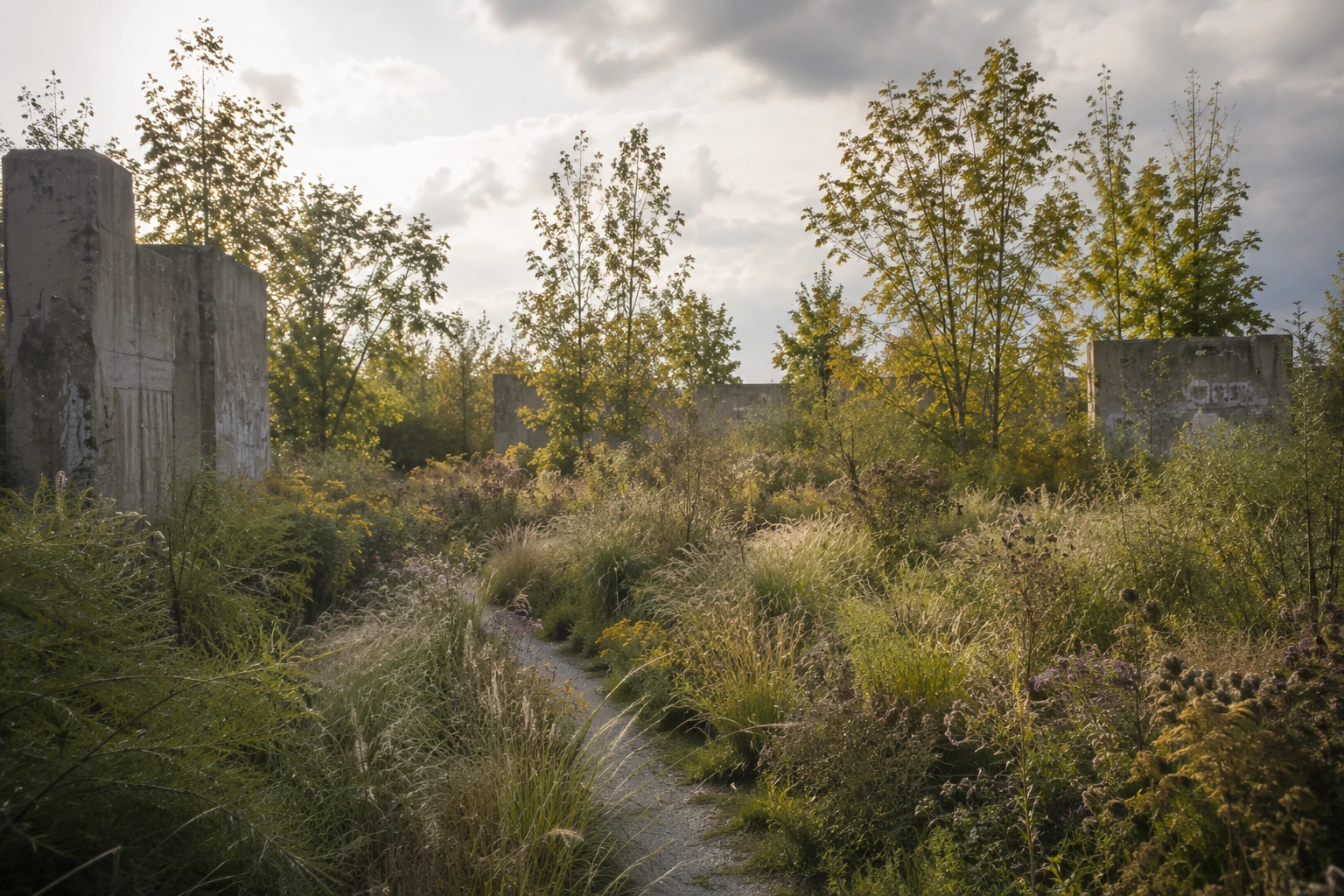
A gardener-philosopher
Gilles Clément was born on 6 October 1943 in Argenton-sur-Creuse, in the Indre. He trained at the National School of Horticulture in Versailles, became a horticultural engineer, and then obtained his landscape architect diploma in 1985.
But his true school is a piece of land. In 1977, he settled in Crozant, in the Creuse, in a garden he named "La Vallée". There, he observed for years the behaviour of plants left to their own devices. A foxglove or a giant hogweed left to go to seed never grows back exactly in the same place the following year: they seek the best light, the best soil. From this patient observation, all his thinking will emerge.
Clément is not only a man of the field. He taught for many years at the National School of Landscape in Versailles, was a professor at the Collège de France, received the National Grand Prize for Landscape in 1998, and is the author of a considerable written work — fromGarden in MotiontoManifesto of the Third Landscape.
Three ideas that changed the garden
The entire thought of Gilles Clément is encapsulated in three concepts, which have become references.
The garden in motion.His most well-known idea, summarised by a formula: "Do as much as possible with, as little as possible against." The gardener does not fix a plan: he observes how plants move by themselves — through their seeds, their rhizomes — and adapts the paths and sizes to these movements. The result: plants complete their cycle, biodiversity is enriched, and the use of machines and products is significantly reduced.
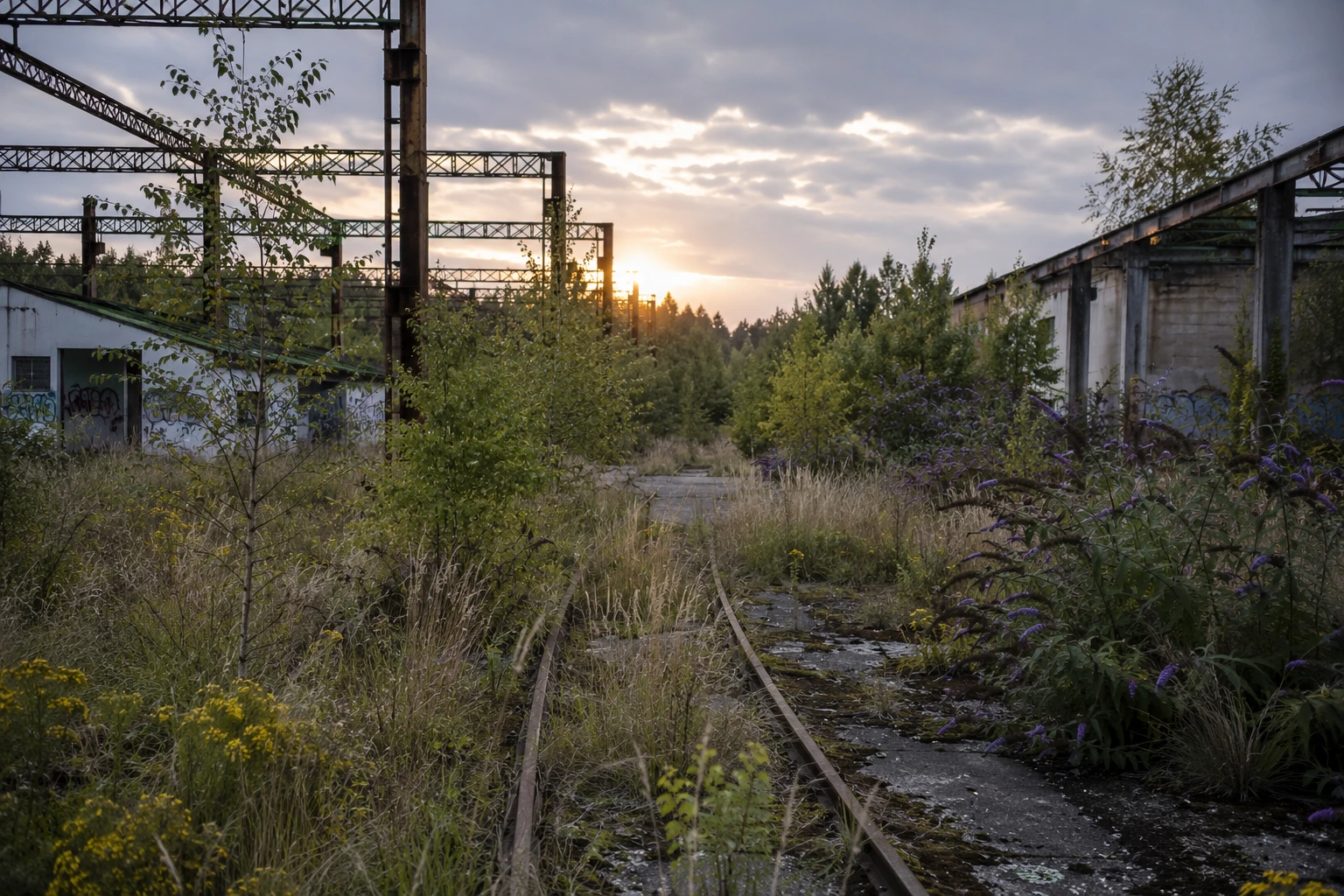
The third landscape.The term — inspired by the "third estate" — refers to all neglected spaces: wastelands, road edges, embankments, abandoned land. For Clément, these are not voids, but reservoirs of biodiversity: the last places where life expresses itself without constraint.
The planetary garden.A broader vision: to consider the entire Earth as a single garden, finite and enclosed, of which humanity would be the gardener — and therefore responsible. Every local action has a global impact.
Gardens that apply these ideas
Gilles Clément has not only theorised: he has realised.
TheAndré-Citroën Park, in Paris, inaugurated in 1992 and designed with the landscape architect Allain Provost, is the full-scale demonstration of the garden in motion: some plots reseed freely, and the park changes from one season and year to the next. At theRayol Estate, in the Var, he created the “Garden of the Mediterranean”: rather than a labelled botanical garden, he reconstitutes the landscapes of the regions of the world with a Mediterranean climate, allowing the flora to express itself. And at the foot ofthe Quai Branly Museum, in Paris, he imagined a dense and abundant garden, almost a savannah, that isolates the visitor from the noise of the city.
What his thinking changes for your garden
This is where Gilles Clément becomes truly useful — because his ideas, unlike many, can be directly transposed to a private garden.
Observe before acting.Before uprooting, look at what grows spontaneously: these plants are often the best adapted to your soil.
Keep a corner free.A part of the garden where no intervention occurs — neither mowing nor pruning — becomes your own third landscape: a refuge for insects, hedgehogs, and birds.
Accompany rather than control.If a plant thrives somewhere, it is often better to divert the path than to cut it.
Lighten maintenance.Accept that the garden changes in winter, that dry stems nourish the soil and shelter life.
Let’s be clear: this is not abandonment. A garden in motion requires an eye, knowledge of plants, and real follow-up — simply, this work consists of accompanying the living rather than fighting against it. It is precisely this balance that we seek, at Vert Val, in the residential gardens we design in Brabant Wallon and Brussels: living gardens, rich in biodiversity, and whose maintenance remains manageable for you.
Frequently asked questions
Who is Gilles Clément?
Gilles Clément, born in 1943 in Argenton-sur-Creuse, is a French landscape designer, gardener, botanist, and writer. Trained in Versailles, he teaches at the École nationale supérieure de paysage and is a professor at the Collège de France. He is one of the most influential thinkers in contemporary gardening.
What are the main concepts of Gilles Clément?
Three concepts summarise his thinking: the "garden in movement" (to accompany the natural movement of plants rather than to fix a plan), the "third landscape" (the ecological value of neglected spaces), and the "planetary garden" (the Earth as a unique garden for which humanity is responsible).
What gardens has Gilles Clément created?
Among his most well-known achievements are the Parc André-Citroën in Paris (1992, with Allain Provost), the Jardin des Méditerranées at the Domaine du Rayol in Var, and the garden of the Musée du quai Branly in Paris.
Can his ideas be applied in a small garden?
Yes — this is actually where his thinking is most accessible. Observing before uprooting, leaving a corner free, accompanying plants rather than constraining them, reducing maintenance: these principles apply to an urban garden just as they do to a large park.
In summary
Gilles Clément has reconciled the garden with the living. He has taught us that the role of the gardener is not to dominate nature, but to accompany it — a shift in perspective that makes gardens richer, more vibrant, and often easier to live with. It is this approach that we bring to your project.