
Horticultural therapy: when the garden becomes a healing tool
In 1984, a study published in the journalScienceshowed something simple and disturbing: patients recovering from surgery healed faster and requested fewer painkillers when their room's window overlooked a garden rather than a wall. This study established an entire field. Horticultural therapy — healing through the garden — is not a wellness slogan: it is a documented practice, with sometimes striking results. Here is what studies and practice really show.
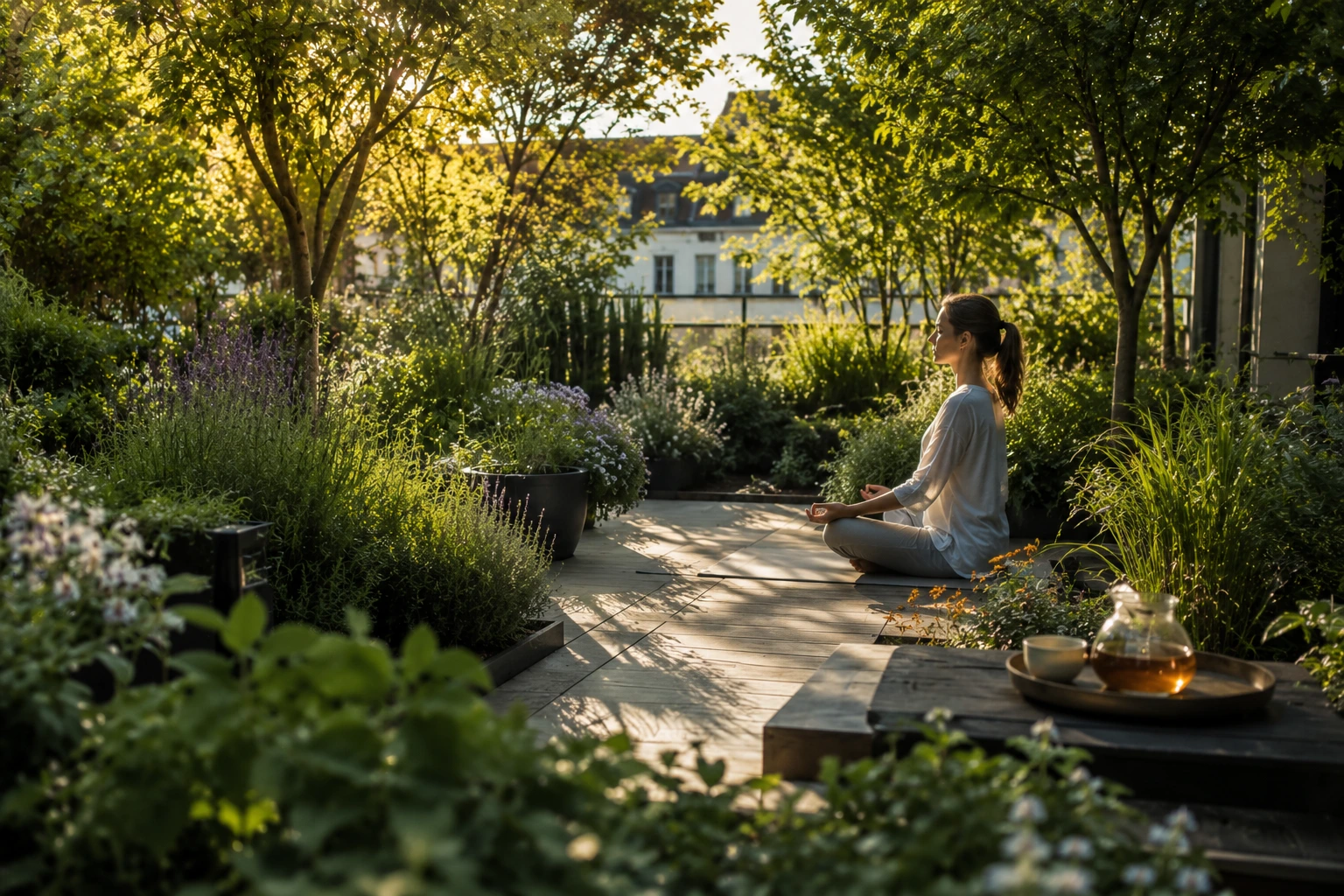
What is horticultural therapy?
Horticultural therapy involves using the garden, plants, and contact with living things as supports for therapeutic activities — conducted by a trained professional, around defined and evaluated objectives. It is therefore not "gardening that does good" in a vague sense: it is a discipline, recognised in many countries such as Japan, the United States, or Canada, and practiced in hospital settings, care homes, psychiatry, or support for disabilities.
One point must be clear from the outset: horticultural therapy is acomplement, not a substitute. It integrates into a care plan, alongside medical treatments — it does not replace them.
The founding study: Ulrich, 1984
Researcher Roger Ulrich is the author of the most cited study in the field: "View through a window may influence recovery from surgery", published inSciencein 1984. By comparing patients operated on with a view from their room, he found that those who could see a garden recovered faster, consumed fewer painkillers, and had shorter hospital stays than those who faced a wall.
The importance of this study lies not only in its result: it provided the field with a measurable basis. Since then, research has continued to expand — and Roger Ulrich himself continues his work on healing gardens.
Striking cases: veterans and prisons
This is where horticultural therapy ceases to be abstract.
Veterans.A growing body of research has focused on military personnel suffering from post-traumatic stress disorder. Veterans engaged in nature or gardening therapy programmes report a decrease in their post-traumatic stress and depression symptoms, and an increase in their sense of hope and ability to act. A 2017 meta-analysis confirmed more broadly that gardening improves depression and reduces anxiety in various populations.
Prisons.These may be the most spectacular figures. In the United States, theInsight Garden Program(now ‘Land Together’) operates in California prisons: the programme reports a recidivism rate of less than 10% among its participants, compared to an average of around 64% in the state over the same period. In New York, the ‘GreenHouse’ programme on Rikers Island also shows a recidivism rate of 5 to 10% for inmates who graduate from it, where the average is around 65% — and some subsequently find sustainable employment in the landscaping sector.
These cases, however different they may be, tell the same story: caring for a living being, seeing the result of patience, regaining a sense of responsibility and usefulness — this acts where medical treatment alone reaches its limits.
At the hospital, today
Horticultural therapy and "care gardens" are developing in healthcare facilities — hospitals, nursing homes, psychiatric services, including in oncology. The documented benefits are convergent: reduced stress and anxiety, decreased pain perception, recovery of attention and concentration abilities, better recovery.
The idea is not new — it is what Ulrich sensed as early as 1984 — but it is finally becoming part of the very design of care spaces: a green and calming environment is not just a backdrop, it is a healing factor.
And in Belgium?
Horticultural therapy is not just an American or Japanese affair — it is coming to us. In February 2025, RTBF dedicated a report to a project caring for psychiatric patients through the cultivation of vegetable and ornamental plants.
Two associations, in particular, are advancing the subject. The non-profit organizationThe garden that caressupports, throughout Wallonia, organizations wishing to create a therapeutic garden; it is led by a clinical psychologist trained in horticultural therapy. The non-profit organizationTherra(formerly "The Animated Garden") develops expertise in "green care", offers training to healthcare professionals, and supports the creation of therapeutic gardens. For further exploration of the subject, they are reliable and practical interlocutors.
What this says about our profession
Let’s be precise: we are not horticultural therapists. Horticultural therapy is a profession in its own right, requiring specific training and practiced within a care framework.
But this entire field rests on an intuition we share, which guides our work on a daily basis:a well-designed garden does good.Not just because it is beautiful — because it soothes, it revitalises, it reconnects to something living and slow. Designing gardens that produce this effect, on the scale of a home and a family, is precisely the heart of our profession.
Frequently Asked Questions
What is horticultural therapy?
Horticultural therapy is the use of the garden, plants, and contact with the living as supports for therapeutic activities, supervised by a trained professional and organised around specific objectives. It is practiced notably in hospitals, care homes, and psychiatry.
Is horticultural therapy scientifically recognised?
It is based on a solid and growing body of research, including the foundational study by Roger Ulrich (1984) on post-operative recovery. Research shows measurable effects on stress, anxiety, depression, and recovery — while remaining a relatively young field that continues to document itself.
Does horticultural therapy replace medical treatment?
No. It is a complementary approach that integrates into care alongside medical treatments — it never substitutes for them. It is precisely in this complementary role that it has demonstrated its value.
Are there horticultural therapy associations in Belgium?
Yes. In Wallonia, the non-profit organisation 'The garden that cares' supports the creation of therapeutic gardens, and the non-profit organisation 'Therra' offers expertise and training in 'green care' for health professionals.
In summary
From hospital rooms to American prisons, the evidence converges: organised contact with the garden helps to recover, to rebuild, to feel better. Horticultural therapy has made it a discipline; research has made it a fact. And behind this discipline, there is a simple truth that underpins our profession: a garden designed with care is never merely decorative — it has an effect on those who experience it.