
How to create a mineral garden: the guide for a vibrant and sustainable outdoor space
The mineral gardenhas two faces. On one hand, it is presented as the dream solution: elegant, contemporary, low maintenance. On the other hand, you may have read that it is a 'false good idea', harmful to the soil and biodiversity. Both are true — and the whole difference lies in how it is designed. Here’s how to create a beautiful, low-maintenance, and lively mineral garden without falling into the 'rock desert'.
Mineral garden or 'rock desert': the confusion to clear up
Under the same name lie two opposing layouts.
The first is the 'rock desert': a waterproof tarp spread over the entire surface, covered with gravel, with a few scattered plants. Visually neat at first — but ecologically problematic. The soil, deprived of air and water, compacts and impoverishes: without earthworms or roots to aerate it, rainwater no longer infiltrates and runs off. The mineral captures and reflects heat, creating a true heat island in summer. And a lifeless soil offers nothing to insects, birds, or pollinators. This type of garden is now so criticised that several German regions have ended up restricting or banning it.
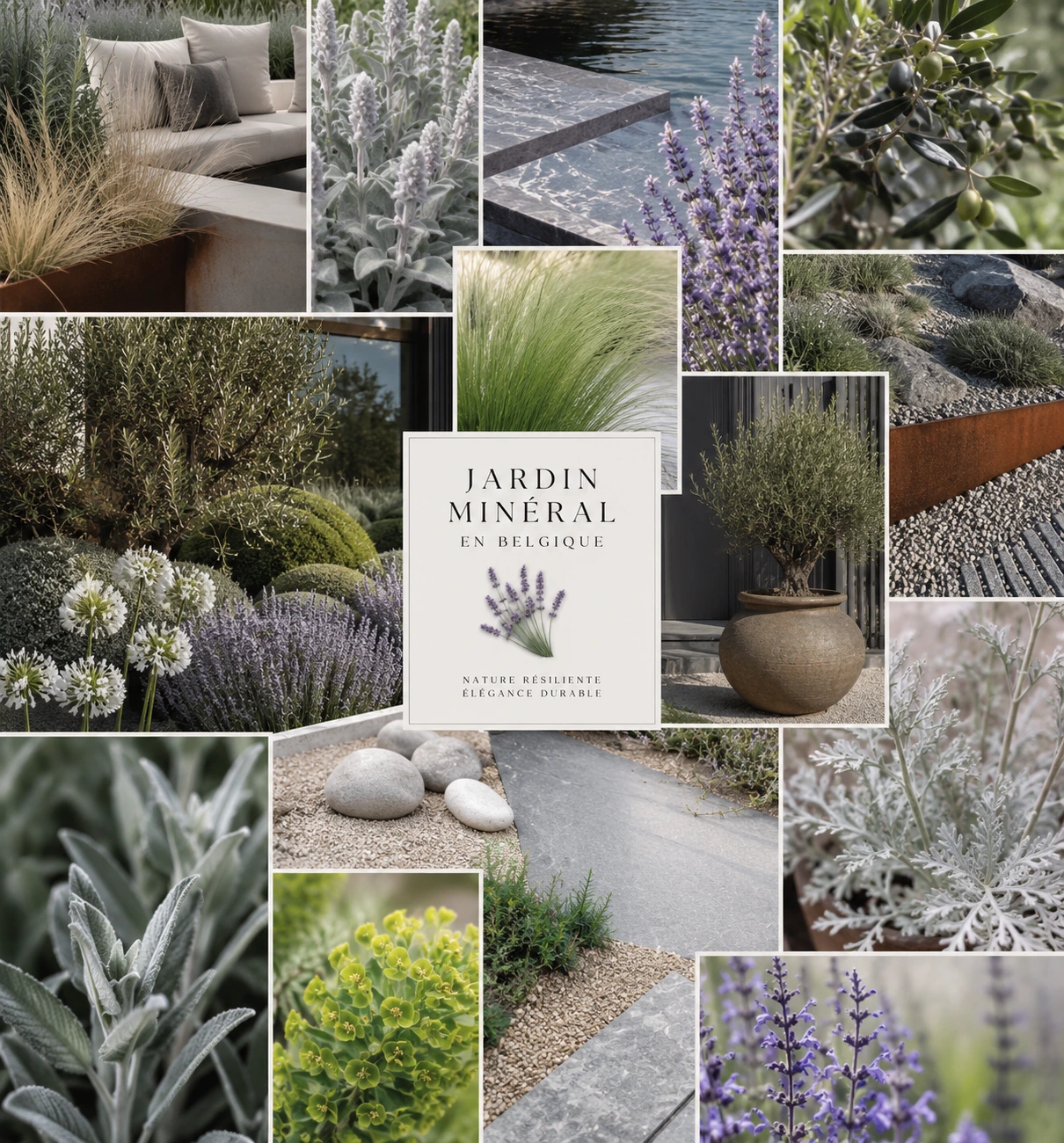
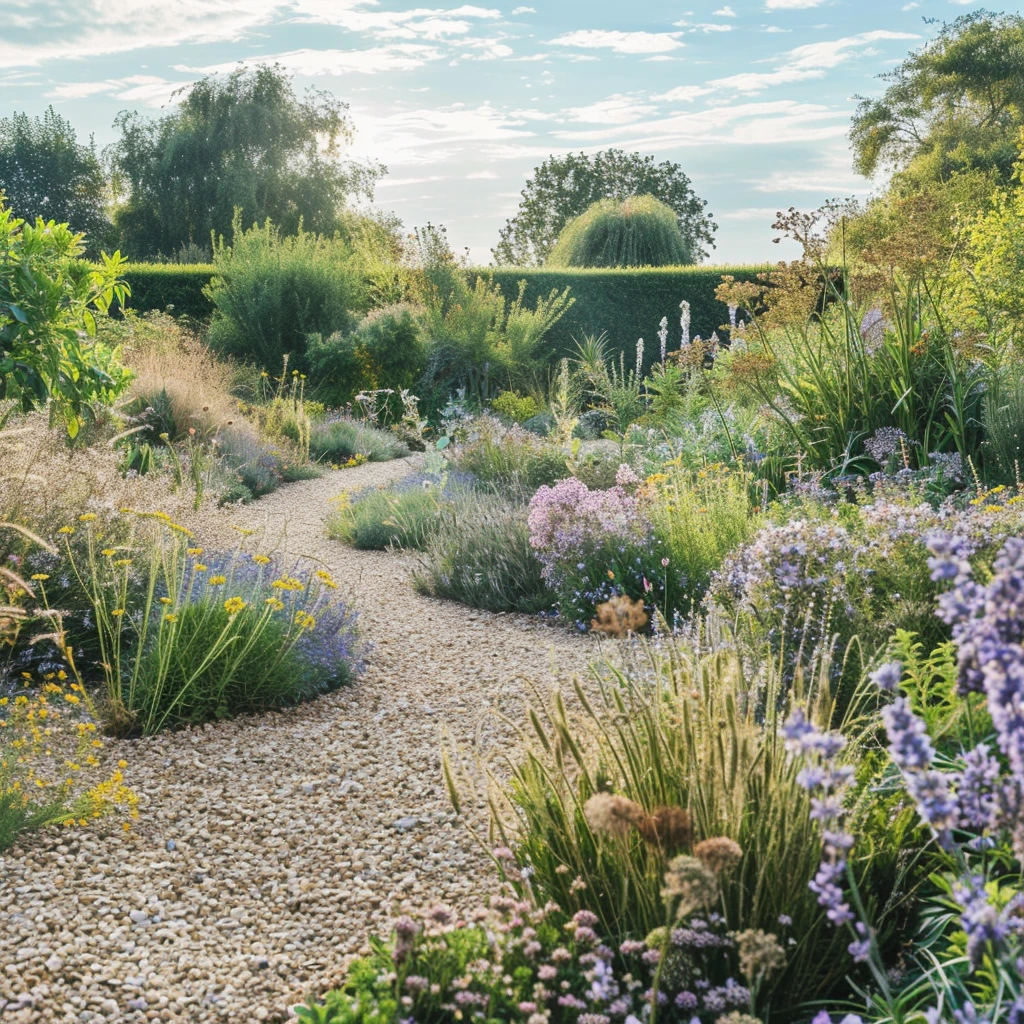
The second is the true mineral garden — what gardeners also call a "dry garden". Here, the mineral and the plant work together. The gravel is not a tarp: it is a mulch, laid on living soil, which retains moisture, limits unwanted weeds, and showcases the plants. The most famous dry garden, created by the English gardener Beth Chatto on a former car park, has never been watered since its creation over thirty years ago — precisely because its soil has remained alive.
It is this second garden that we will learn to create.
The real advantages — and the myth of "zero maintenance"
Well designed, the mineral garden has serious advantages, especially in our climate.
It is drought-resistant.Belgian summers are becoming increasingly dry and hot. A dry garden, planted with species that thrive in these conditions, can withstand these episodes without watering once it is established.
It requires little maintenance.No mowing, no regular watering, limited weeding thanks to mineral mulching. "Little", not "none": this is where honesty is needed.
The "maintenance-free garden" does not exist. A living mineral garden requires cutting back perennials and grasses once a year, occasionally removing some weeds, collecting fallen leaves, and topping up the gravel from time to time. It is light and spaced maintenance — not no maintenance. Promising otherwise is setting up for disappointment.
It adapts to all styles.Contemporary, Mediterranean, zen or more naturalistic: the mineral offers true freedom of composition. And a well-kept exterior sustainably enhances your home.
Materials and plants: the balance that makes everything
A successful mineral garden relies on the right balance between stone and plant — and on a technical detail that many miss.
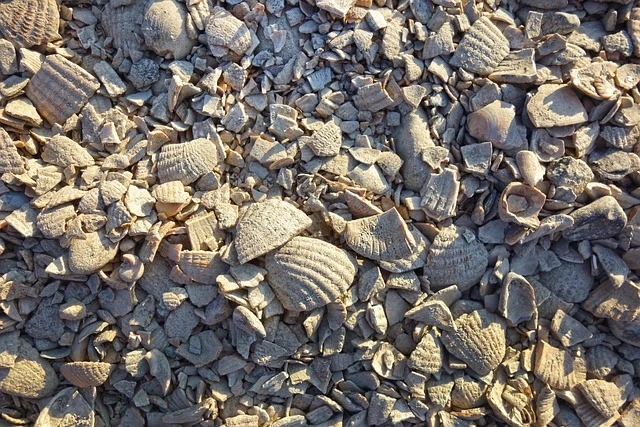
Mineral materials.Gravel is the foundation: rolled or crushed, limestone, schist or porphyry, in shades of grey, beige, white or anthracite depending on the desired atmosphere. Allow for a thickness of 5 to 8 cm for it to truly serve its role as mulch. Slate set on edge, light-coloured dolomite, river pebbles and rockeries are used to structure: create relief, draw lines, mark boundaries.
The detail that changes everything: geotextile.The geotextile fabric has its place — but only under circulation areas (paths, terraces, stepping stones), where nothing grows. Under planted areas, absolutely not: the gravel is laid directly on the soil, as mulch, so that the ground remains alive and permeable. This is exactly what separates the dry garden from the 'desert of stones'.
The plants.The mineral only lives through the plant — and there needs to be enough for the garden to breathe. We choose plants that love the sun and well-drained soils: grasses (miscanthus, pennisetum, stipa) for movement and lightness; robust perennials (echinacea, yarrow, sage, gaura) for flowering; Mediterranean plants (lavender, rosemary, cistus, euphorbia) for evergreen foliage and scents. The goal is not three plants lost in the gravel, but a true plant cover that thickens year after year.
The steps to successfully create your mineral garden
1. Observe the site.Exposure, soil type, water drainage. A dry garden needs sunlight and well-draining soil. In Walloon Brabant, the soils are often loamy and heavy: this point deserves real attention.
2. Prepare the soil — without sealing it.Remove the existing lawn or vegetation, loosen the soil, and improve drainage if the soil is heavy (by lightening it with coarse sand or gravel mixed with the soil). The goal is soil that breathes, not a waterproof surface.
3. Separate pathways and plantings.Clearly define the areas where one walks and those where one plants. Geotextile only under the former.
4. Plant, then mulch.Plant the vegetation quite densely, then spread gravel as mulch around them, directly on the soil. Water for the first two years, until the roots go deep.
5. Maintain, lightly.An annual pruning, occasional weeding, and a top-up of gravel from time to time. The garden matures each year.
Do it yourself or with a landscaper?
On paper, a mineral garden seems simple. In practice, three points determine its success or failure: soil drainage, the choice of plants truly suited to your land, and the balance between mineral and plant. Getting one of the three wrong means ending up with plants that wither, soil that becomes waterlogged, or a 'desert of stones' that one regrets.
This is precisely where a professional eye makes the difference. At Vert Val, the landscape architecture office founded by Lorenzo del Marmol in La Hulpe, we design mineral gardens tailored to their location: your soil, your exposure, your way of experiencing the outdoors. A dry garden, yes — but alive, permeable, and sustainable.
Frequently Asked Questions
Is a mineral garden really maintenance-free?
No. A well-designed mineral garden requires little maintenance — no mowing, little watering — but not none: perennials and grasses need to be pruned once a year, weeding occasionally, and replenishing the gravel from time to time. We are talking about light and spaced maintenance, not non-existent.
Is a mineral garden bad for the environment?
It entirely depends on its design. A "rock desert" — waterproof membrane and gravel over the entire surface — seals the soil, worsens runoff, increases heat in summer, and impoverishes biodiversity. In contrast, a true dry garden, where the gravel is simply a mulch on a living and planted soil, remains permeable and welcoming to wildlife.
What plants should be chosen for a mineral garden?
Plants that love the sun and well-drained soils: grasses (miscanthus, pennisetum, stipa), robust perennials (echinacea, yarrow, sage, gaura), and Mediterranean plants (lavender, rosemary, cistus, euphorbia). The important thing is to plan enough of them to achieve a true plant cover.
Is a mineral garden the same as a dry garden?
These are two names for the same well-conceived idea: a garden where minerals (gravel, stones) and drought-resistant plants coexist on living soil. The term 'dry garden' emphasises the essential — it is primarily a garden, not a mineral surface.
In summary
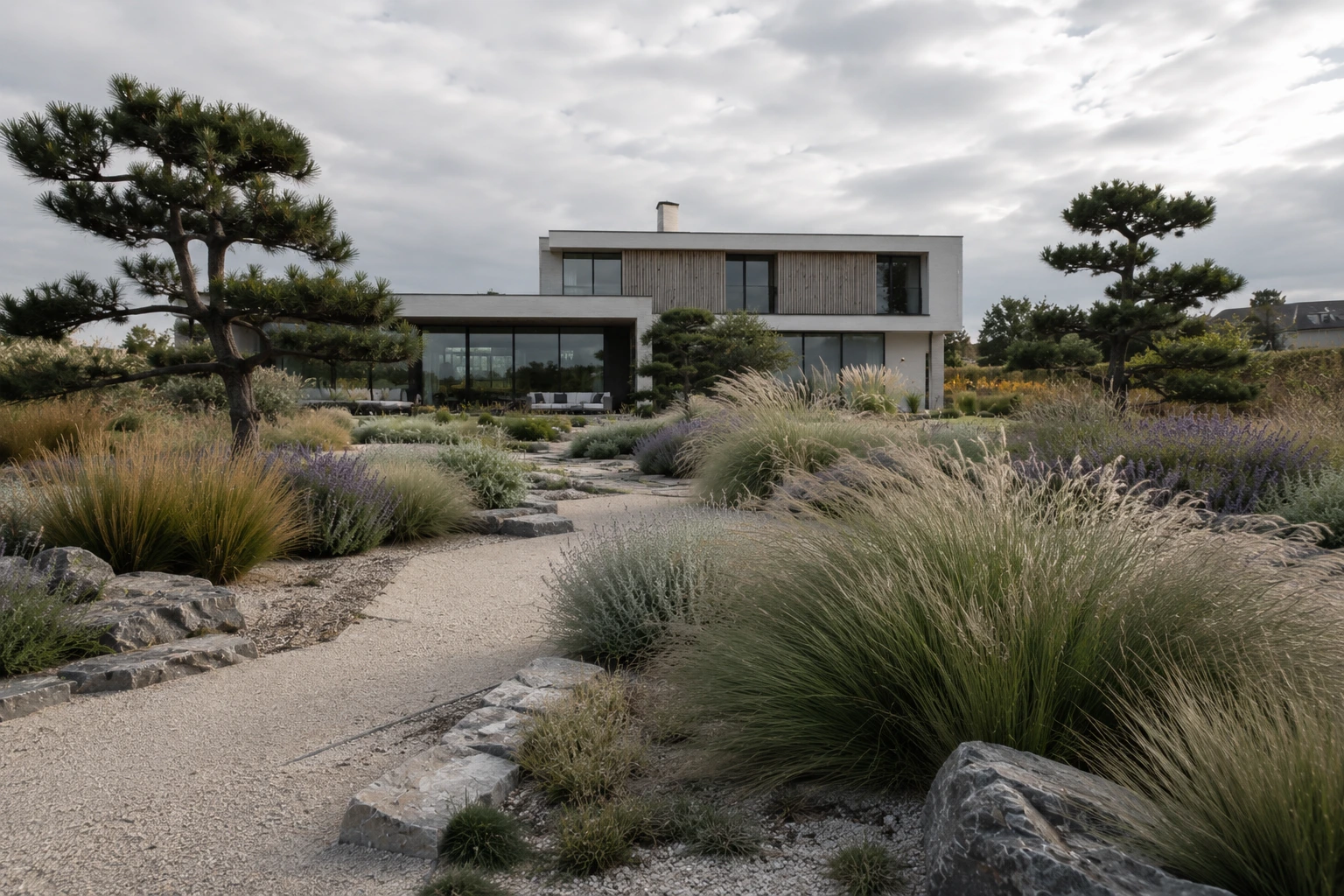
A mineral garden can be one of the most elegant and understated designs there is — provided you never forget that it is a garden, not a surface. The mineral provides structure; the plants and living soil do the rest. When well thought out, it offers you a sustainable outdoor space, beautiful in every season and pleasant to live with.
Are you considering a mineral garden for your property? Request your free quote— we will study your soil and your project with you.