
How to create a zen garden: the philosophy, the right balance and the method
« Zen gardenoften evokes a fixed image: raked sand, a stone lantern, a Buddha statue placed in a corner. This is the postcard version — and it is also the one that ages the least well. The true zen garden is both simpler and deeper than that. To succeed in it, especially in Belgium, begins with understanding what lies behind it. Here is this philosophy, the spectrum of possibilities, and a concrete method to carry out your project.
What really lies behind the zen garden
The zen garden, in its purest form, has a Japanese name: thekaresansui, literally "dry landscape". It is a garden of stones and gravel, without water, where themineralrepresents nature in an abstract way: the raked gravel evokes water, the rocks represent mountains or islands.
These dry gardens originated from the 15th century in the zen temples and monasteries of Japan. They are not meant to be walked through: they are supports for contemplation, designed to be looked at and meditated upon from a fixed point. The most famous, the garden of Ryōan-ji temple in Kyoto, aligns fifteen rocks in an ocean of light sand — arranged in such a way that, no matter where you stand, you can never see all fifteen at once. There is always one missing. The enigma is intentional: it invites reflection on perception and its limits.
Two ideas run through this entire tradition. The first is thema, the void — not a space to fill, but an intentional interval that allows the mind to breathe. The second iswabi-sabi, the beauty of the imperfect, the modest, of what passes. Added to this is a true economy of means: the zen garden eliminates the superfluous, both through discipline and aesthetics.
This is what makes it an applied philosophy, not just a decorative style. Designing it requires restraint; maintaining it — raking, pruning — is part of the practice. And perhaps this is why it resonates with us so much today: in a saturated life, a space that does little, deliberately, becomes a luxury.
A spectrum, not a cliché
We imagine the zen garden as a unique model. In reality, it is a spectrum.
At one end, thekaresansuipure: almost no vegetation, gravel, rocks, moss. A demanding mineral tableau, made for contemplation. At the other, the Japanese-inspired garden: planted, walkable, with its maples, its grasses, sometimes water.
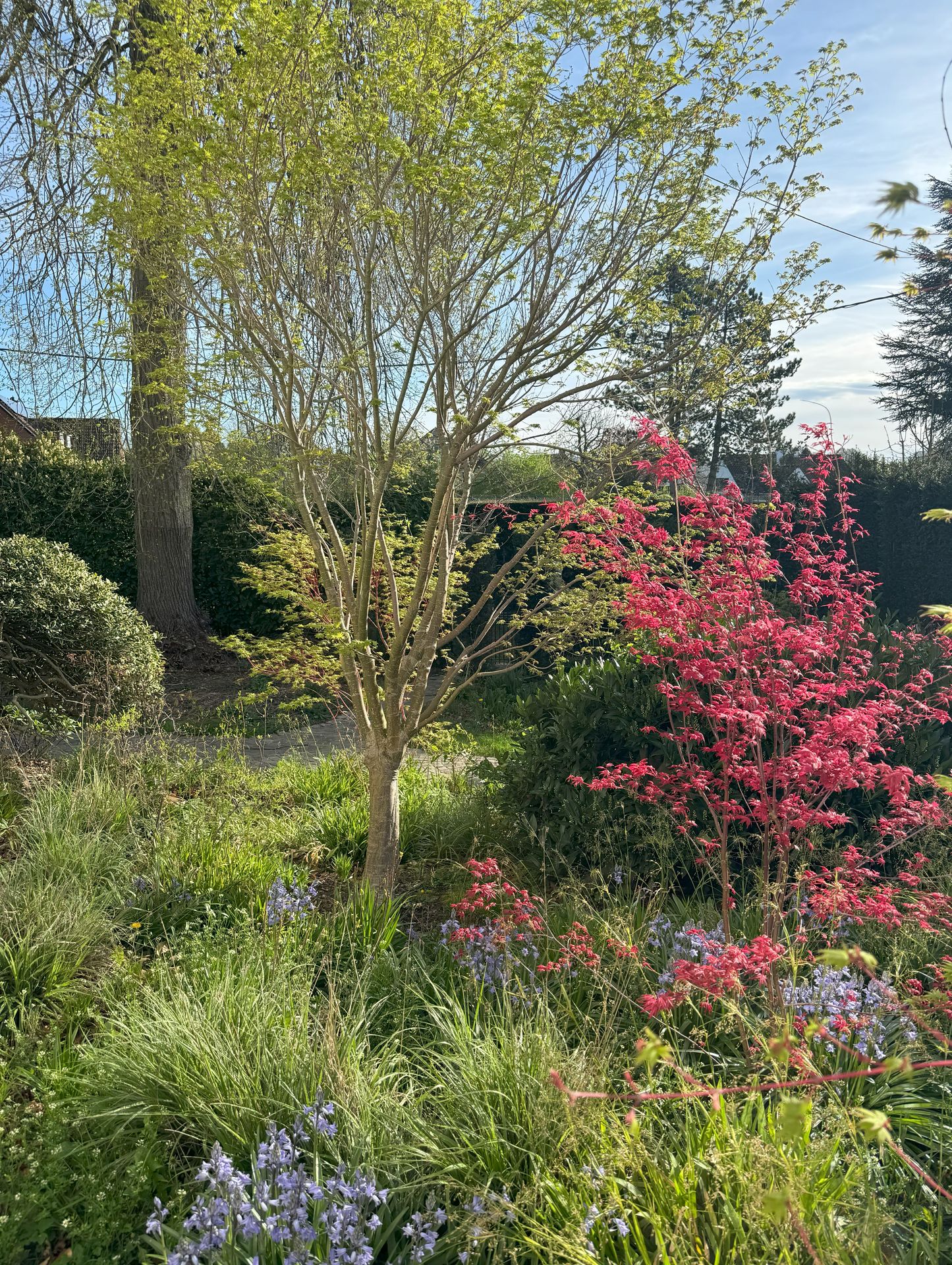
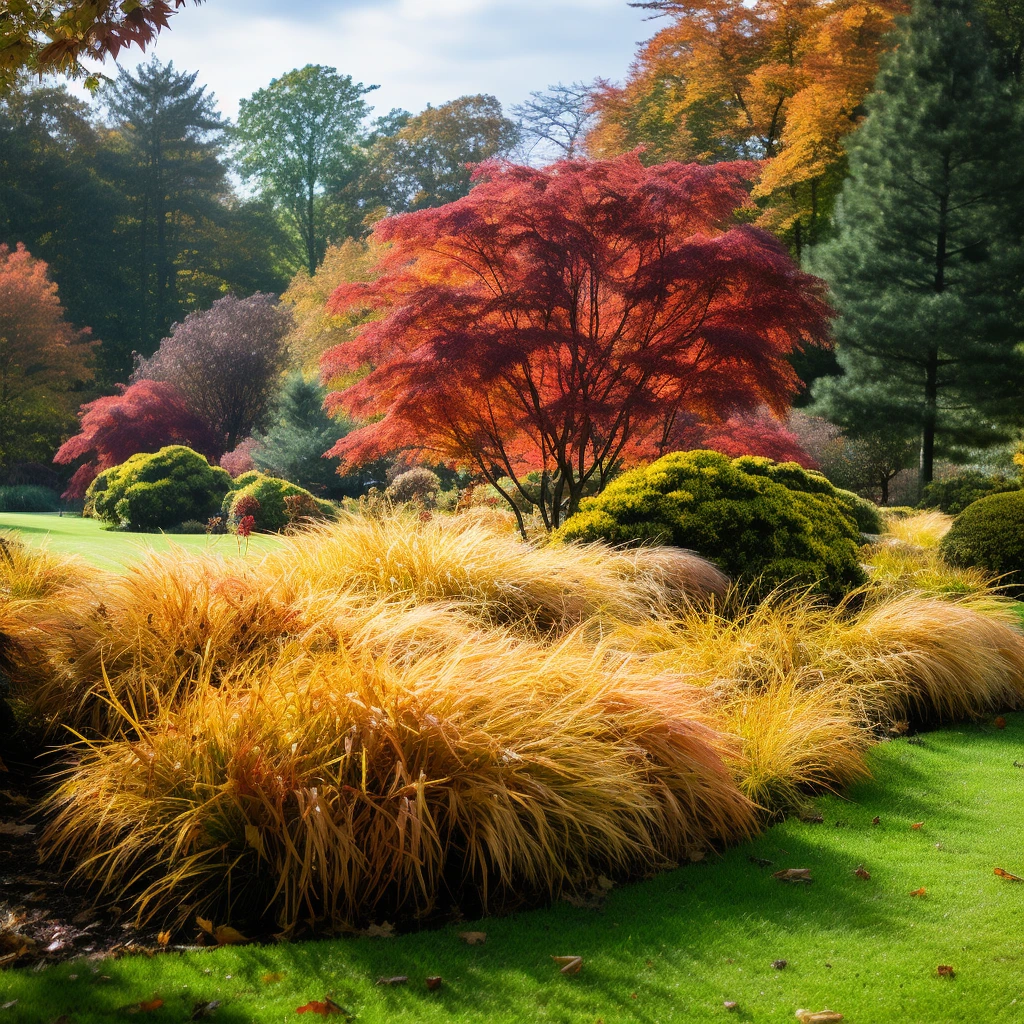
For a residential garden in Belgium, the sweet spot is almost always between the two — and on the side of sobriety. Here is the liberating idea:you do not need all the trappings.A few Japanese maples, grasses likeHakonechloa macra, a single rock, some moss, and above all, the void: that is already a zen garden.
Artifacts — lanterns, statues, small red bridges — are optional. They are often what tips the garden into pastiche. The essence is never in the accessories: it lies in the composition, the mineral, the plant chosen with restraint, and the space left empty. A successful zen garden in Belgium is often one that dares to do less.
Creating a zen garden in Belgium: the method, step by step
A zen project is not improvised. Here is the approach we follow.
1. Define the viewpoint.A zen garden is primarily designed to be looked at. First of all, identify where it will be viewed from: a window, a terrace, a bench. It is these viewpoints that dictate the entire composition — the position of the rocks, the lines of the gravel, what remains empty.
2. Compose the empty before the full.Counterintuitive, but essential: first decide what will remain empty. The empty space is not what is left once everything is placed — it is the starting point. Resist the urge to fill.ma n'est pas ce qu'il reste une fois tout placé — c'est le point de départ. Résistez à l'envie de combler.
3. Place the rocks.They are the skeleton of the garden. They are chosen and arranged with care: an odd number, asymmetry, a partially buried base so they appear anchored rather than placed. There is no need to import stone from Japan — Belgian blue stone, schist, or local sandstone work very well and are even more consistent with the spirit of the place.
4. Work the mineral soil.Gravel or light sand, raked or simply calm. Consider drainage: Belgian soils, often heavy, require it. As with a mineral garden, the geotextile fabric is laid under the areas of circulation, but never under the planted areas, where the soil must remain alive.
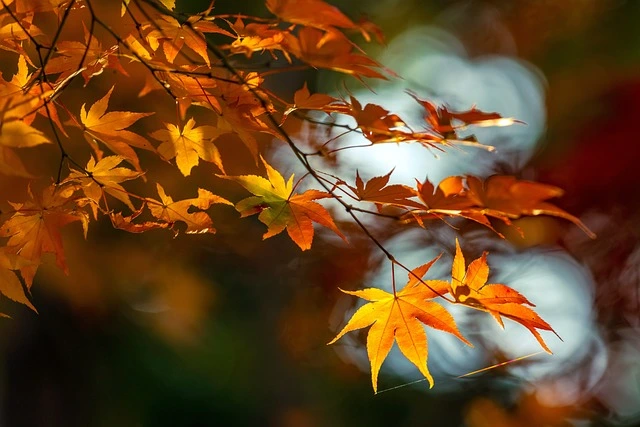
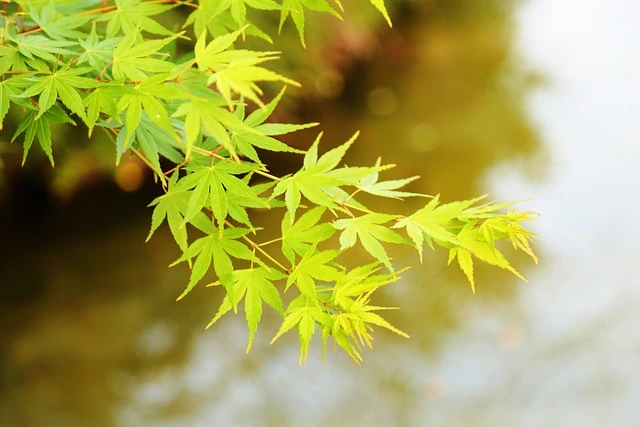
5. Choose the plant, sober and just.Japanese maples (Acer palmatum) are the signature: they thrive in Belgium, in partial shade, sheltered from the wind, in well-drained and slightly acidic soil. Grasses —Hakonechloa macra, sedge — bring movement and lightness. Moss, a central element of the zen garden, finds ideal conditions in our humid and often shaded climate: it is a true Belgian asset. A few trimmed evergreens — pine, yew — structure the whole. An important caveat: avoid running bamboo, which is invasive and difficult to control in our latitudes; prefer a clumping bamboo (Fargesia) or plan for a rhizome barrier.
6. Water, or its absence.Water is not mandatory — in thekaresansui, it is the gravel that evokes it. If you want real water, keep it minimalist: a still pond, a simple stone basin. Avoid decorative waterfalls, which quickly revert to cliché.
7. Maintenance as practice.Raking the gravel, trimming the evergreens, caring for the moss: a zen garden requires regular but light maintenance. It is not a chore — it is, in the spirit of tradition, a part of the garden itself.
Frequently asked questions
What is a zen garden, exactly?
The zen garden, orkaresansui("dry landscape"), is a mineral garden that originated in the zen temples of Japan from the 15th century. It represents nature in an abstract way — the gravel evokes water, the rocks represent mountains — and serves as a support for contemplation rather than a space for walking.
Zen garden and Japanese garden, are they the same thing?
No. The Japanese garden is a broad tradition that includes strolling gardens, tea gardens, moss gardens... The zen garden — thekaresansui— is a particular form of it: the most stripped back, the most mineral, the most linked to meditation.
Can you create a zen garden in a small space?
Yes — it is even an ideal setting. The zen garden thrives on restraint, not surface area. A small courtyard, a patio, or even a narrow strip viewed from a room can suffice, provided that the composition is carefully considered and emptiness is preserved.
What plants for a zen garden in Belgium?
Japanese maples, grasses like theHakonechloa macra, sedges, moss — favoured by our humid climate — and a few trimmed evergreens (pine, yew). We avoid running bamboo, which can be invasive in our latitudes.
Do you need lanterns and statues?
No, they are not essential elements. Used sparingly, they can punctuate a garden; if multiplied, they can lead it towards a tacky decor. The zen spirit lies in sobriety, not in accessories.
In summary
A zen garden is not a collection of exotic objects: it is a philosophy of restraint, translated into a space. Understanding thema, thewabi-sabiand the economy of means that underpin it, is to give oneself the means to create a just garden — sober, calming, and that ages well. In Belgium, with a few maples, grasses, moss, and emptiness, it is entirely within your reach.
Fancy a zen garden designed with precision, away from clichés? Request your free quote— we design your project with you, in Brabant Wallon and Brussels.