
Furnishing your terrace with pots and planters
The terrace is often the space we inhabit the most as soon as the nice weather arrives — and yet it is the one we furnish the least well. The question always arises: how do we give it life, greenery, a real atmosphere, especially when there is no soil? The answer can be summed up in two words —pots and planters— but doing it well involves a double exercise: a compositional task, and a technical task that is almost always overlooked. This guide covers both.
The terrace, a true living space
For a long time, the terrace was just a platform: a few slabs, a table. Today, we think of it as a room in its own right — an extension of the house, without walls but with light, air, and life.
This changes the way we furnish it. We extend the lines from the interior to the exterior, we install real uses — a dining area, a lounge area, sometimes a summer kitchen — and we seek, as in a house, a smooth flow between these spaces. The greenery is not an added decoration at the end: it is what gives this room its atmosphere.
Pot-scaping: structuring the space with pots
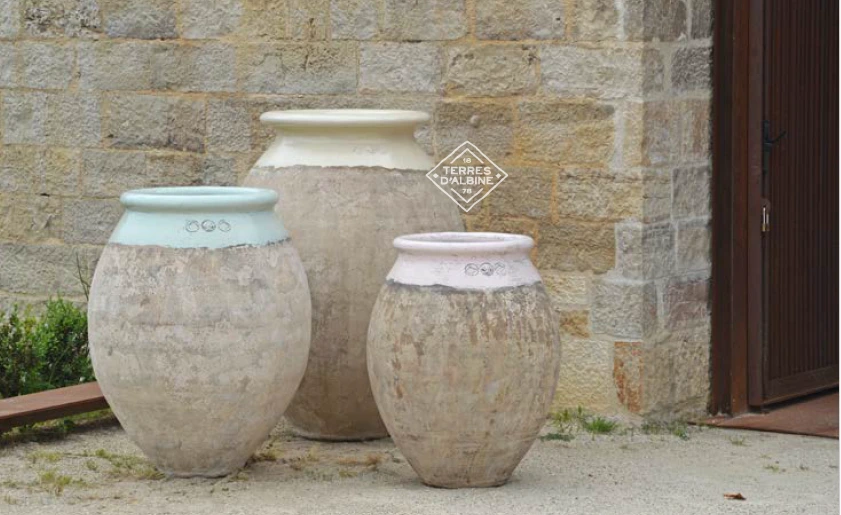
‘Pot-scaping’ is the name — a bit marketing, it must be admitted — given to a simple practice: furnishing and structuring a space with pots, instead of treating them as mere containers placed here and there.
When used well, pots shape the space. A large pot becomes a focal point. A series of aligned containers creates rhythm in circulation or highlights a boundary. A tall container adds volume where the ground is flat. Above all, the pot offers a rare freedom: it can be moved, rearranged, and the terrace can evolve with the seasons. It is a living arrangement, never fixed.
Compose: trios, heights and fluid spaces
This is where the success of a terrace is determined. A few principles that we apply systematically.
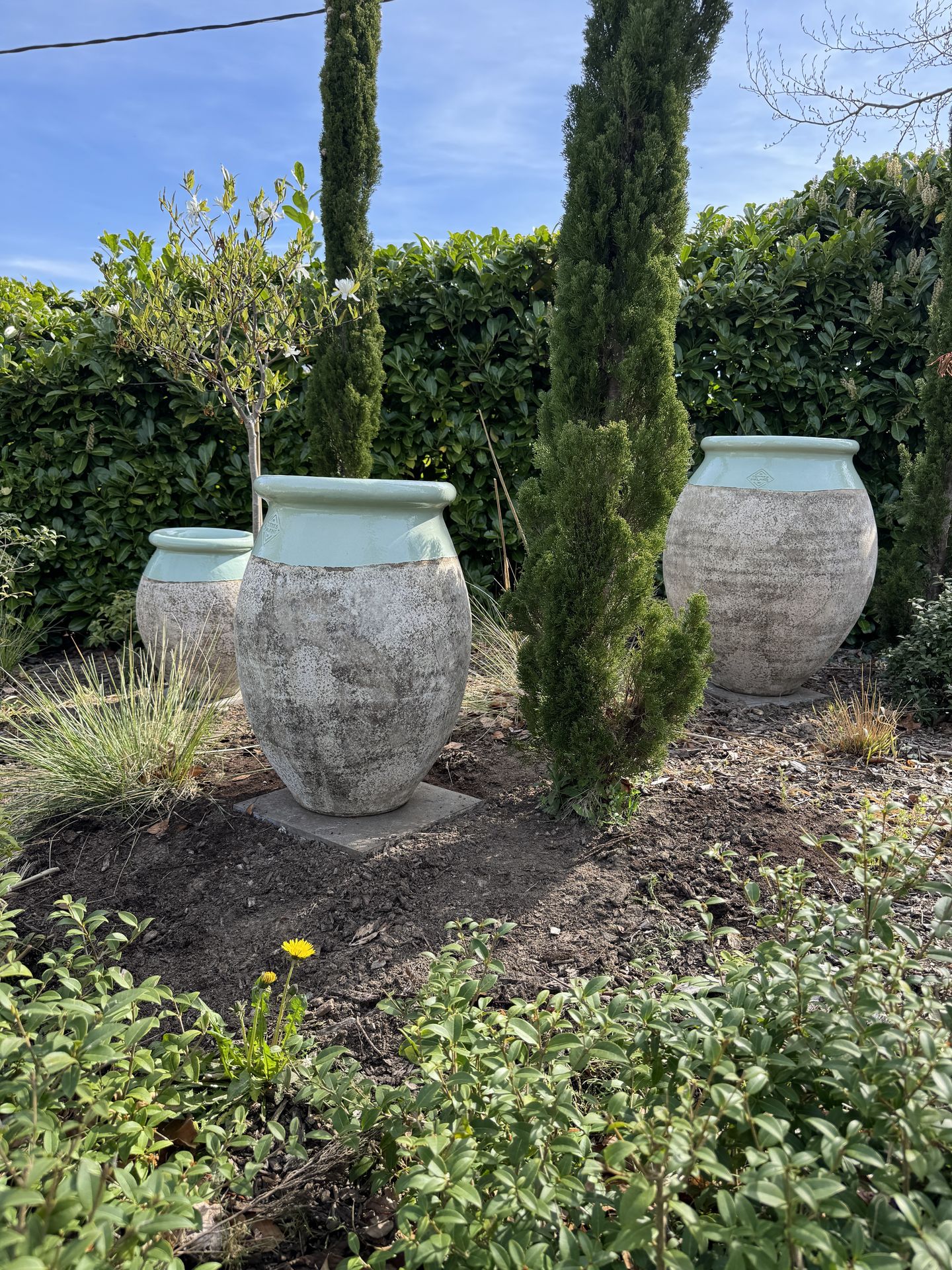
Work in trios.The most beautiful compositions arise from groupings — often three to five containers — brought together at different heights. A low pot, a medium one, a tall one: the eye moves, the whole breathes. An isolated pot, on the other hand, almost always seems lost.
Think of spaces without partitioning them.A successful terrace distinguishes its uses — dining, relaxing — without separating them with walls. It is the plants that make the transition: a mass of grasses between the table and the lounge is enough to mark the passage from one space to another, while maintaining fluidity.
Integrate the furniture.A built-in bench, a seat that extends a planter: integrated furniture structures the terrace much better than simply placed furniture, and frees up floor space.
Greenery even without soil.In a very mineral courtyard, where it is not possible to plant in the ground, planters and custom-made boxes become the solution: they bring a lot of greenery, fit exactly to the dimensions of the space, and can themselves define the boundaries of the areas. And where a small flowerbed exists, even modest, it is beneficial to treat it as a true element of composition rather than as a leftover.
A discreet lighting, finally, extends the terrace at dusk and highlights the compositions.
Choosing your pots and plants wisely
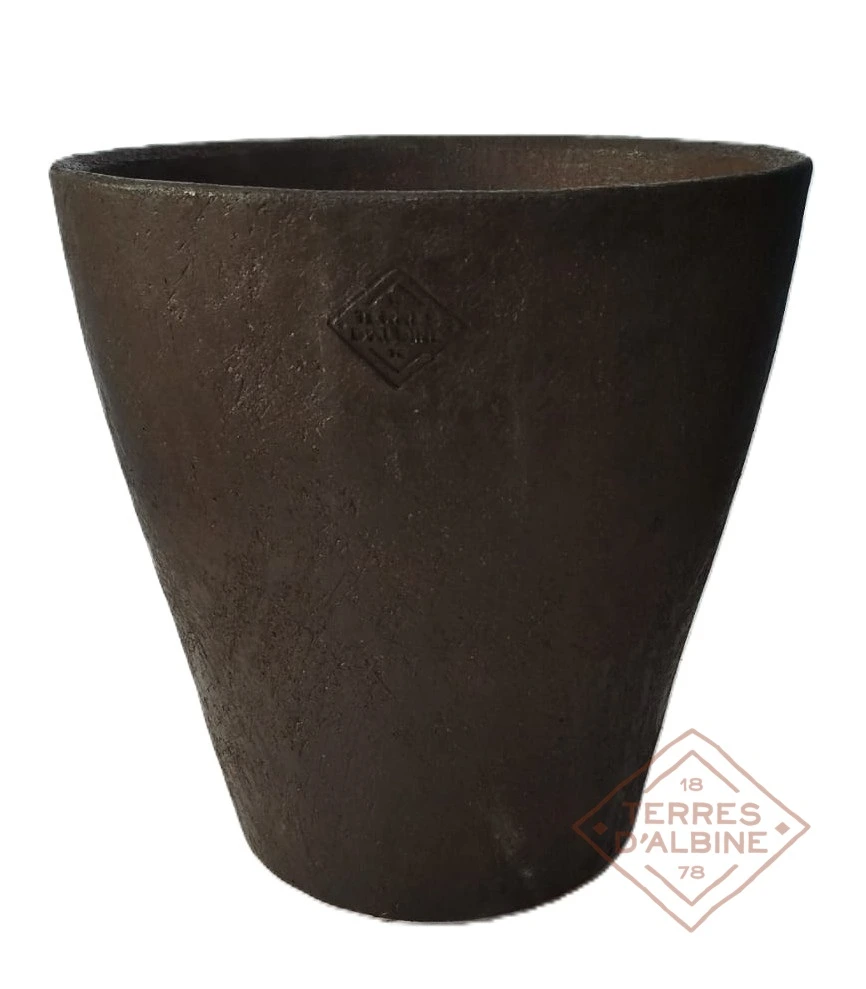
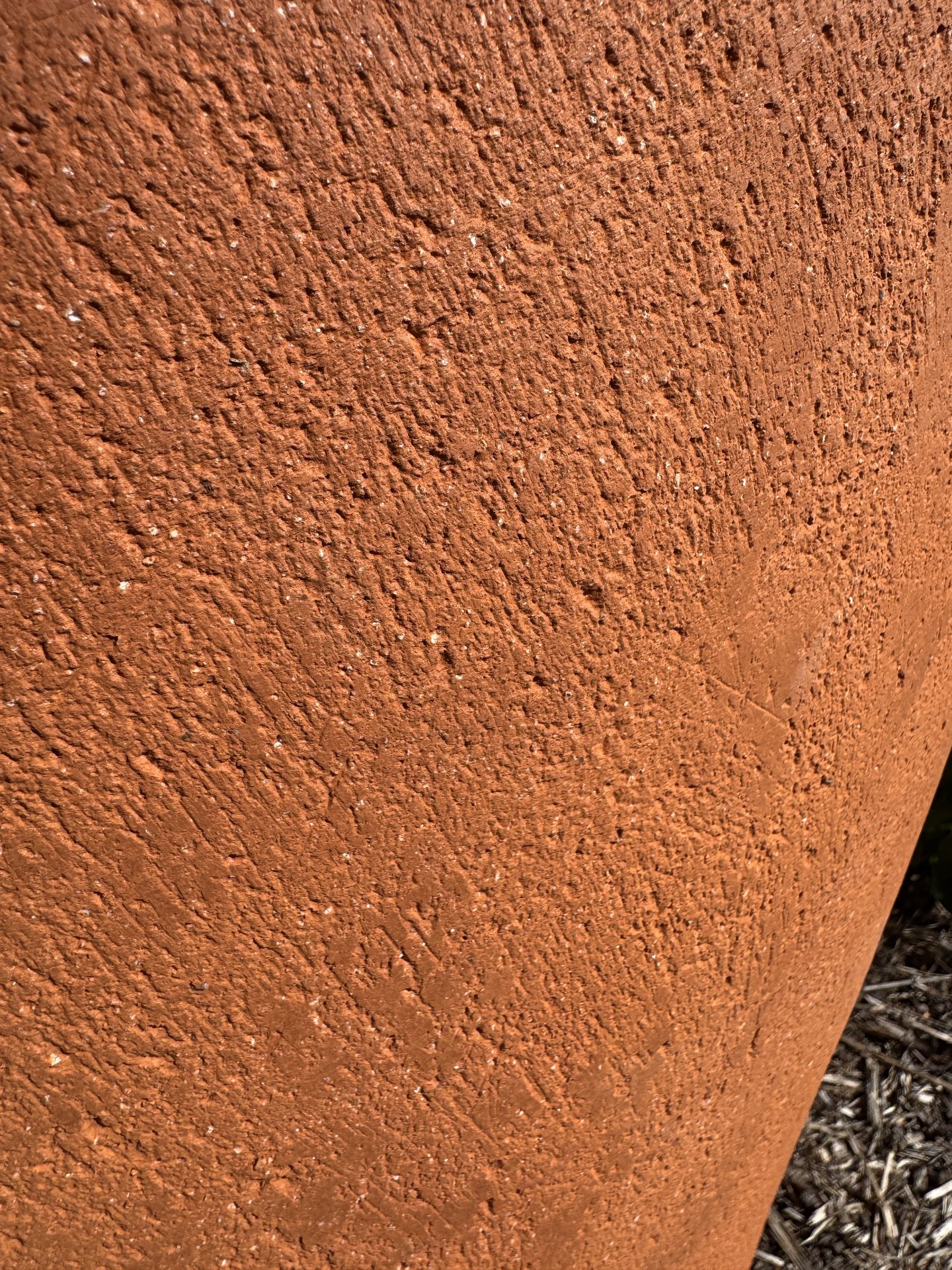
Coherence is key. It is better to have a few well-chosen formats than an accumulation of disparate small containers. One plays with families of materials according to the desired atmosphere: raw terracotta for a Mediterranean spirit, corten steel for a contemporary touch, smooth concrete for a mineral rigor. The shades of the pots interact with the foliage and surrounding walls. Plastic, garish colours, and overly light containers are to be avoided.
On the plant side, each pot is a small scene, to be composed according to the exposure. Grasses (stipa, miscanthus, pennisetum) bring movement; robust perennials (echinacea, Buenos Aires verbena) extend the summer and nourish pollinators; in the shade, carex, ferns, and heucheras offer beautiful textures. And a few herbs — thyme, rosemary, sage — combine the useful with the pleasant.
The technical points that are almost always forgotten
This is what 'decor' articles never mention — and yet it is what makes the difference between a terrace that lasts over time and a terrace that causes problems.
The load.A pot filled with damp soil is heavy — very heavy. On a paved terrace, a balcony or a rooftop terrace, the total weight must be considered in advance: containers should be distributed, lightweight substrates should be prioritised, and at the slightest doubt, the load-bearing capacity of the structure should be checked. This is not a detail, it is a matter of safety.
Aeration under the pots.A pot placed directly on the ground retains moisture, stains the surface and eventually damages it. Wedges or feet that allow air to circulate under the container protect both the plant and the terrace.
Water drainage.Each pot must drain freely — a perforated base, a drainage layer — and the water that flows out must be able to reach the terrace drainage without stagnating. A poorly drained green terrace leads to stains, moss, and ultimately, damage.
The wind.Especially at height, wind is a real issue. Lightweight containers can tip over; trees and large potted plants, weighted at the top by their foliage, can act as levers and may topple. The rule: lower the centre of gravity — wide and heavy pots at the base, dense substrate at the bottom — and for the most exposed subjects, plan for discreet anchoring.
Frequently asked questions
What is pot-scaping?
Pot-scaping is the art of designing and structuring an outdoor space — terrace, courtyard, garden — using pots and planters, treated as integral compositional elements rather than mere containers. It allows for the creation of volume, rhythm, and atmosphere, even without soil.
What to put in large pots on a terrace?
It all depends on the exposure. In full sun: grasses, hardy perennials or herbs; in the shade: ferns, sedges or heucheras. For very large containers, a small tree or a structural shrub can become the focal point of the terrace — provided that stability against the wind is ensured.
How should pots be arranged on a terrace?
In groups rather than in isolation: trios, or sets of three to five containers at different heights, create a balanced composition. They are also used to mark the transition between spaces (dining, lounge) without partitioning.
How to green a courtyard without soil?
Planters and custom-made boxes are the solution: tailored to the exact dimensions of the space, they bring in plenty of greenery, structure the area and can define its boundaries. It is then essential to pay attention to the technical aspects — load, drainage, aeration — which are even more important on a completely mineral surface.
In summary
Designing a terrace with pots and planters is two professions in one: creating an atmosphere, and mastering the technique that makes it last. Height trios, fluid spaces, custom boxes bring life; load, drainage, aeration and wind ensure it endures. It is this balance that we design for you.
Want a vibrant terrace, thought out down to the technical details? Request your free quote— we design your project with you, in Brabant Wallon and Brussels.