
Roscoff Botanical Garden: when the collection takes precedence over the composition
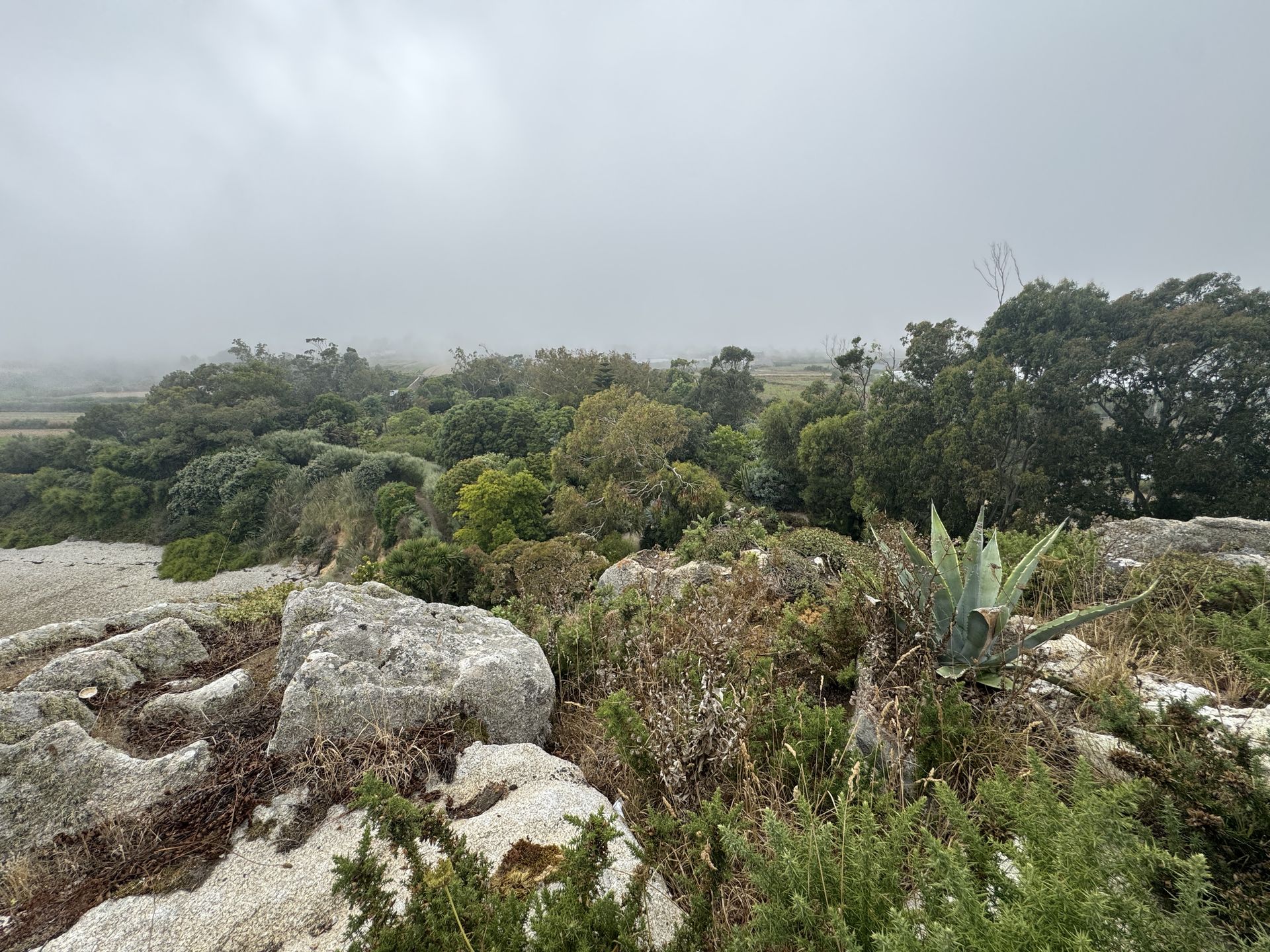
In a few minutes, the blue sky disappeared. A thick fog rose from the sea and engulfed the garden.
Photographically, it was a disaster: no more light, no more contrast. Visually, it was magnificent — silhouettes of southern plants emerging from the mist, scenes that would never have been seen in bright sunlight.
I had visited the Georges Delaselle garden that very morning, on the island of Batz. In the afternoon, on the other side of the waterway, the exotic and botanical garden of Roscoff. Two exotic gardens fifteen minutes by boat from each other, and two opposing philosophies.
A garden built around a rock
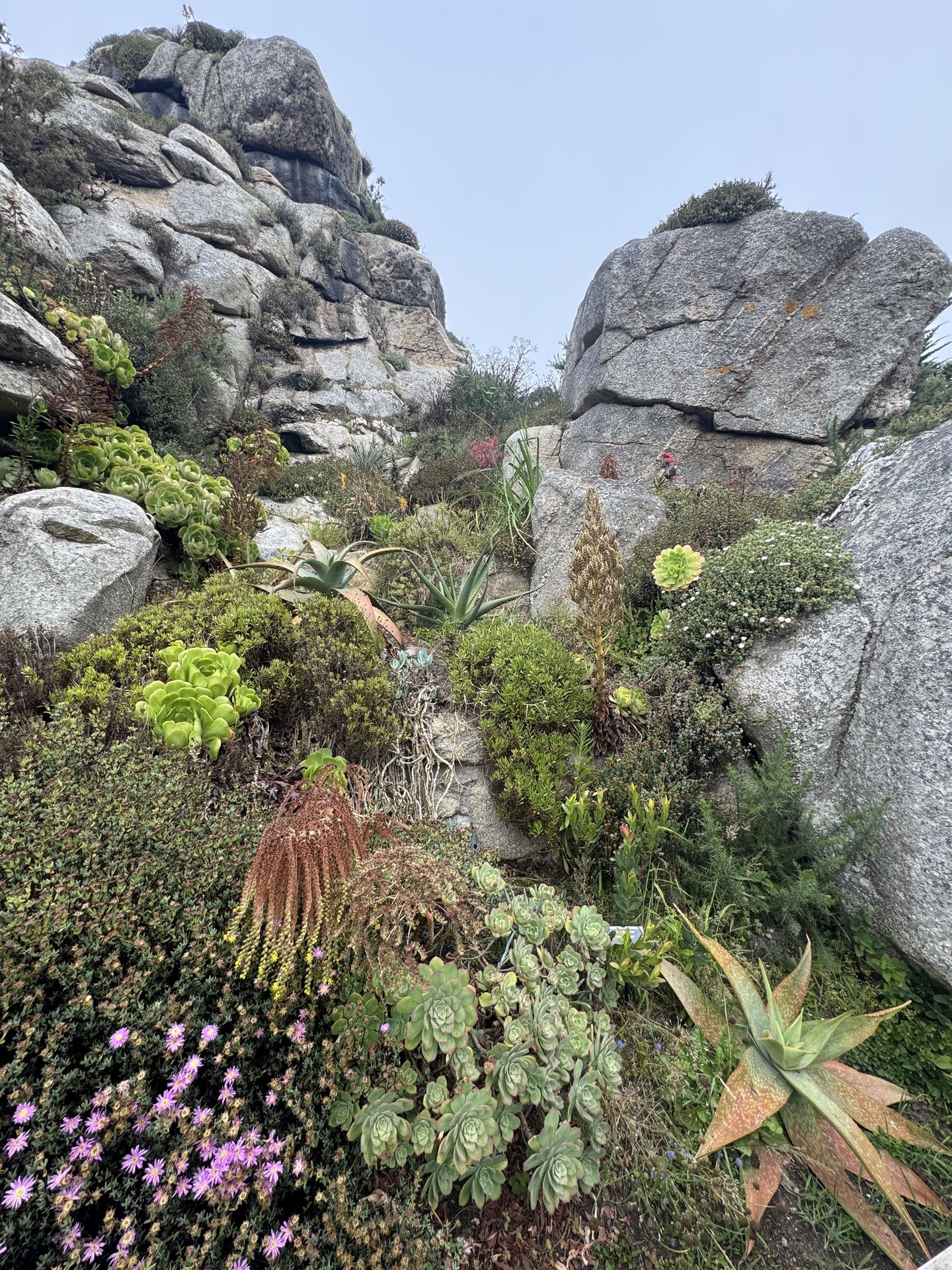
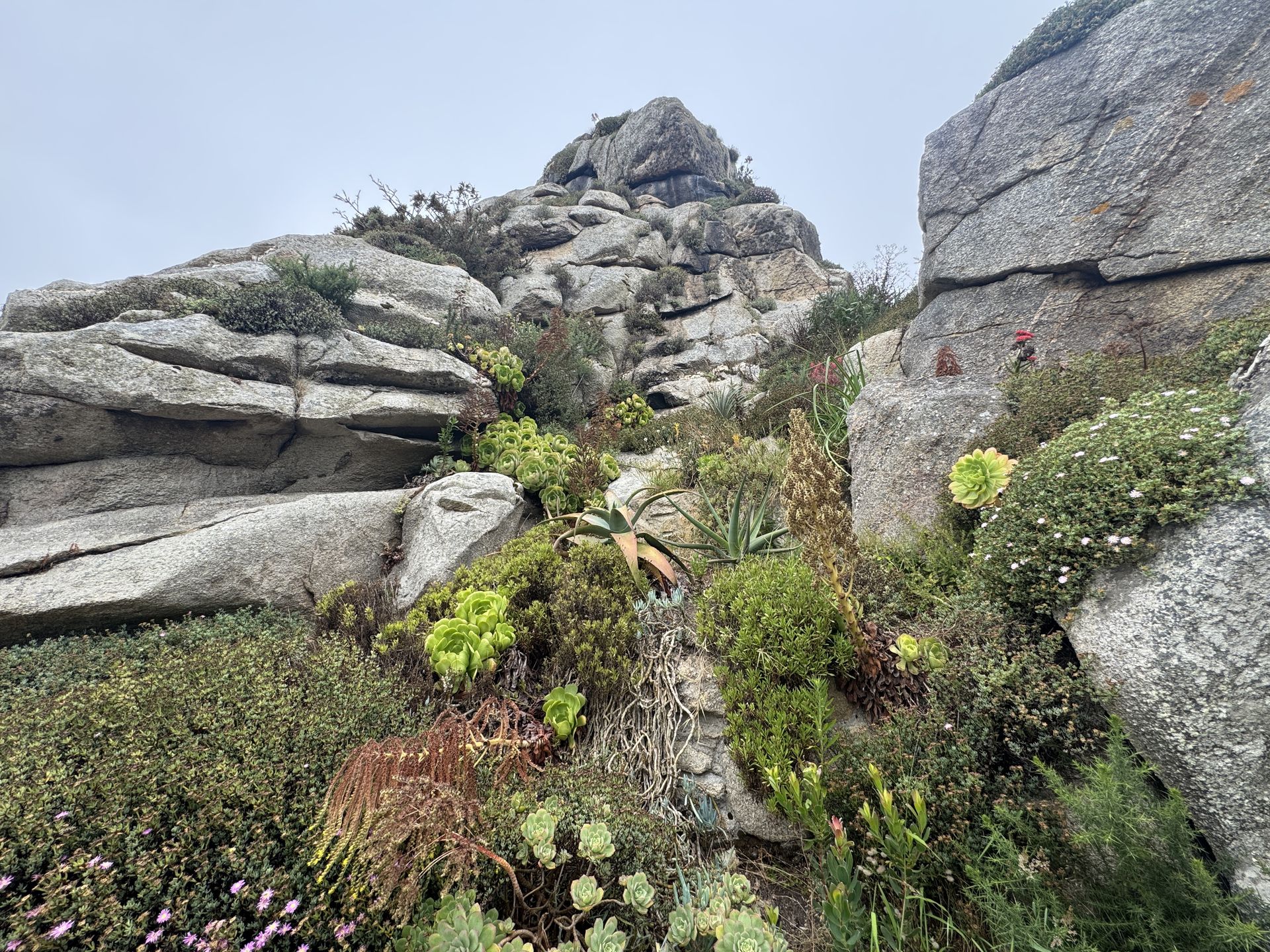
The garden occupies 1.6 hectares around the Roc'h Hievec, a granitic chaos 18 metres high. It was created in 1986-1987 at the initiative of enthusiasts, it is now managed by an association, the GRAPES, and labelled Remarkable Garden by the Ministry of Culture.
Access is simple: a parking area a little away from Roscoff, a small town that would be a mistake to pass through without stopping — old granite houses, artisans, Breton pancakes that you won't regret.
The rock is the heart of the setup, and it is what makes the place unique. You climb it, and from up there you can see the entire garden, then the bay of Morlaix behind. On its slopes grow succulent plants settled in the crevices — exactly the type of dry, drained, and exposed environment where they thrive. It is a lesson in planting in itself: the rock provides drainage, the exposure does the rest.
Around, a path of narrow trails that fork left and right, a greenhouse of cacti, a small vegetable garden, a few plants for sale for those who want to bring back something other than photos.
A botanical collection, not a landscape composition
This is where the comparison becomes interesting for a landscape architect.
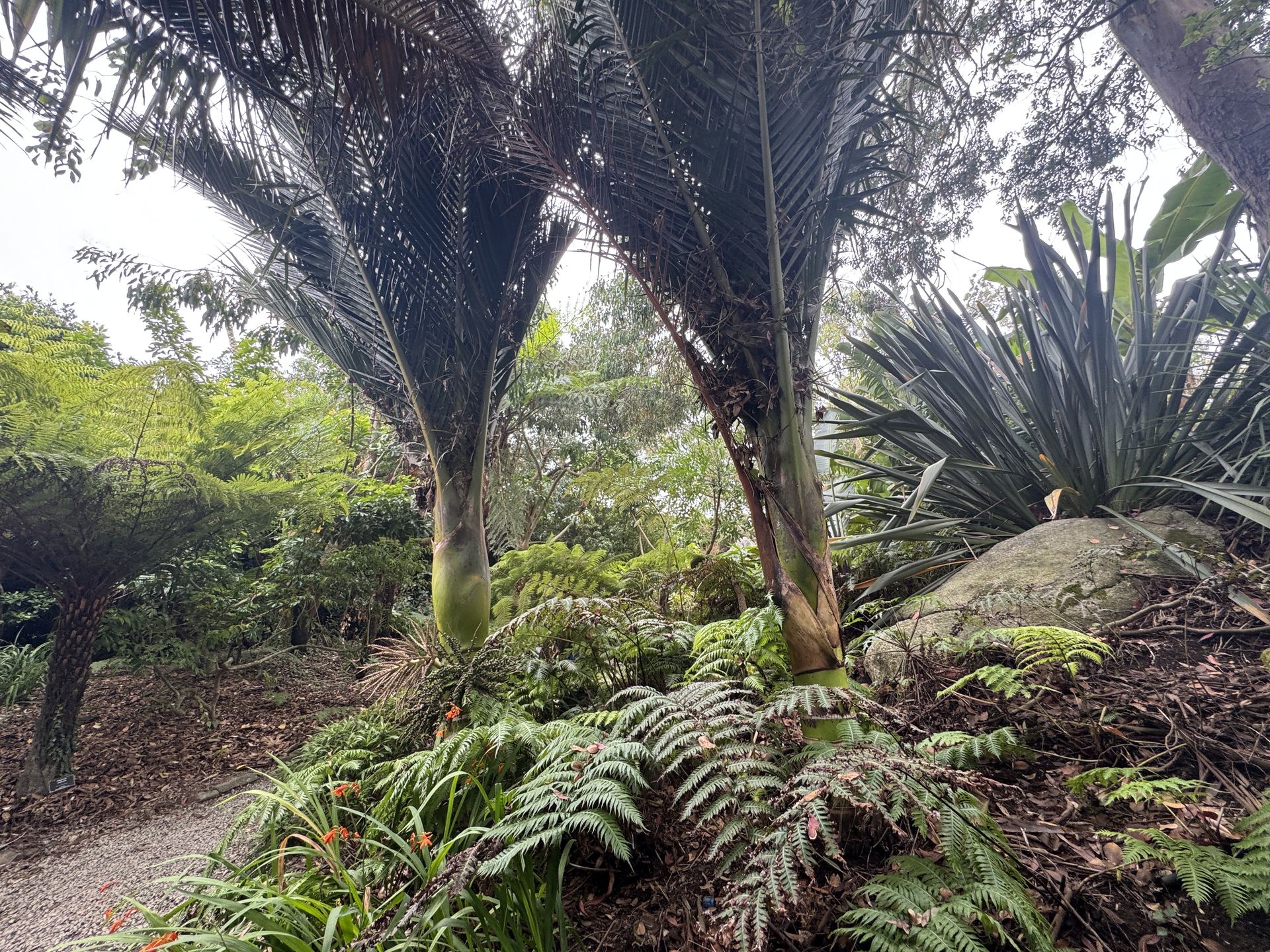
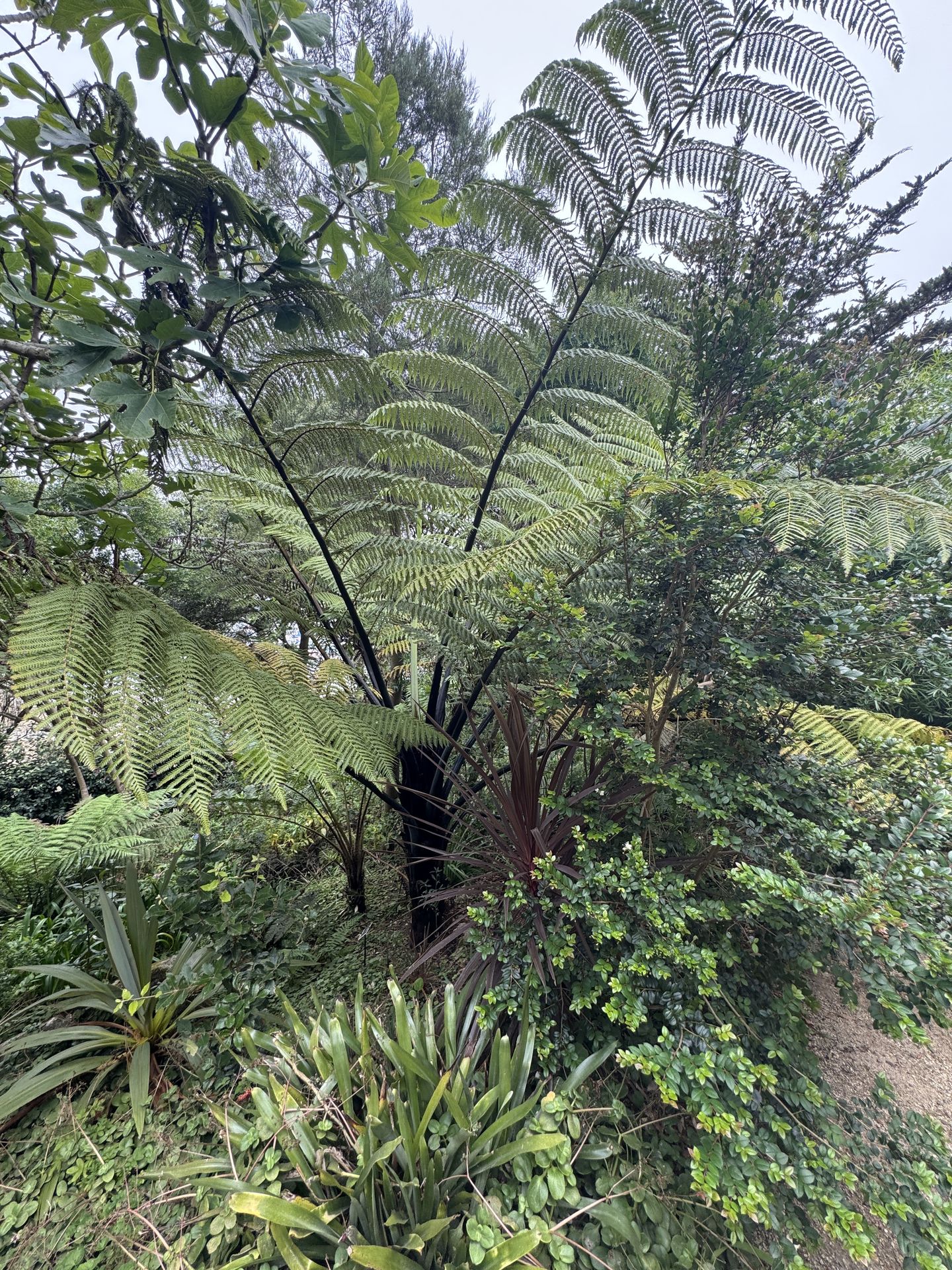
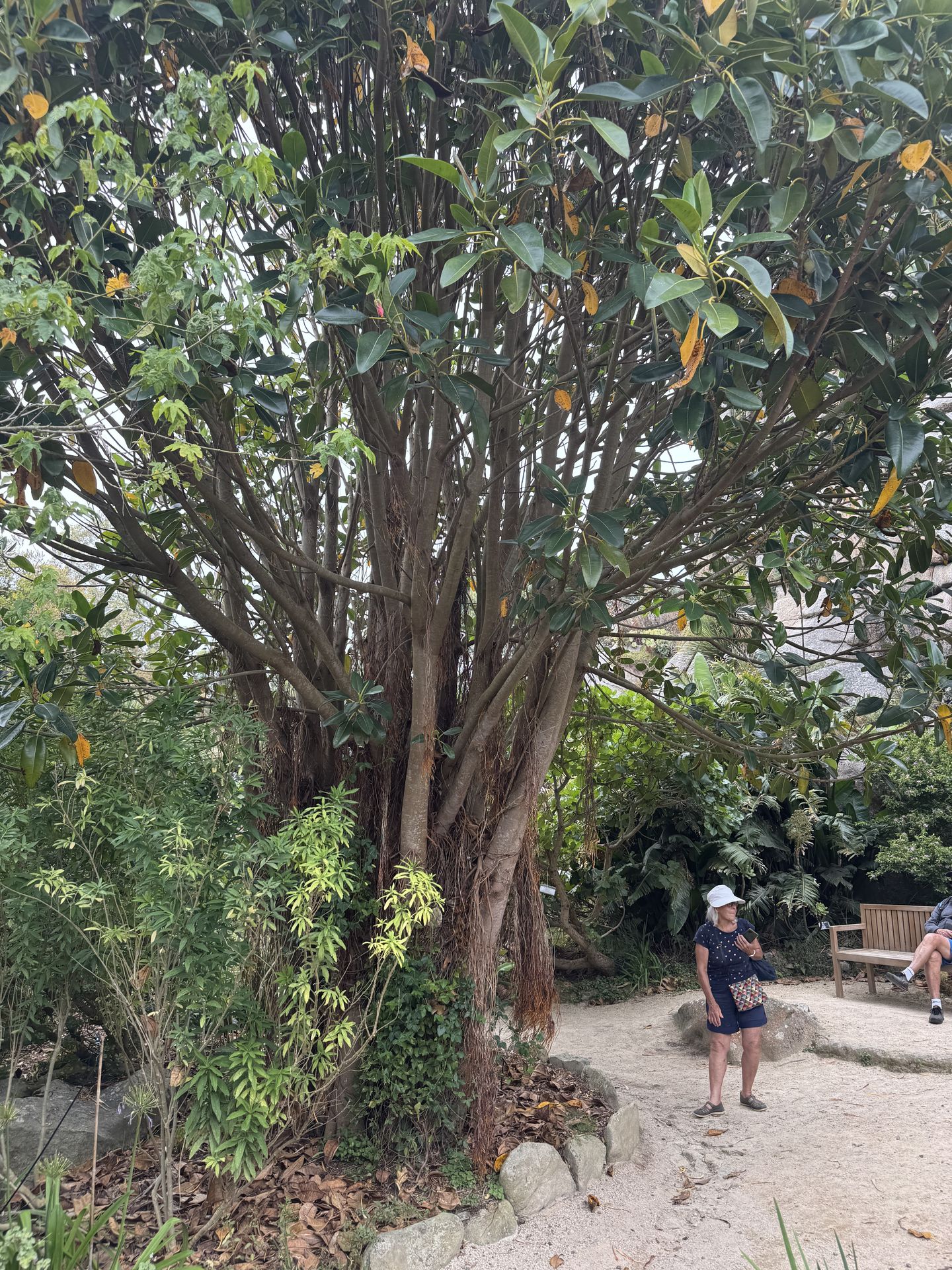
The garden of Roscoff gathers about 3,500 species — far more than Delaselle. Botanically, it is an impressive wealth, with plants that are hardly found anywhere else in our latitudes. Technically, it is also much more complex to manage: each species has its own requirements, and everything looked healthy.
But the path is enclosed, the perspectives are rare, and apart from from the top of the rock, you never really open up to the sea. The maintenance is more free, more natural, almost wild in places — you can feel another gardener's touch, and this is not a criticism, it is a choice.
Honestly: for the variety of species, Roscoff wins hands down. For the landscape beauty, I prefer Delaselle.
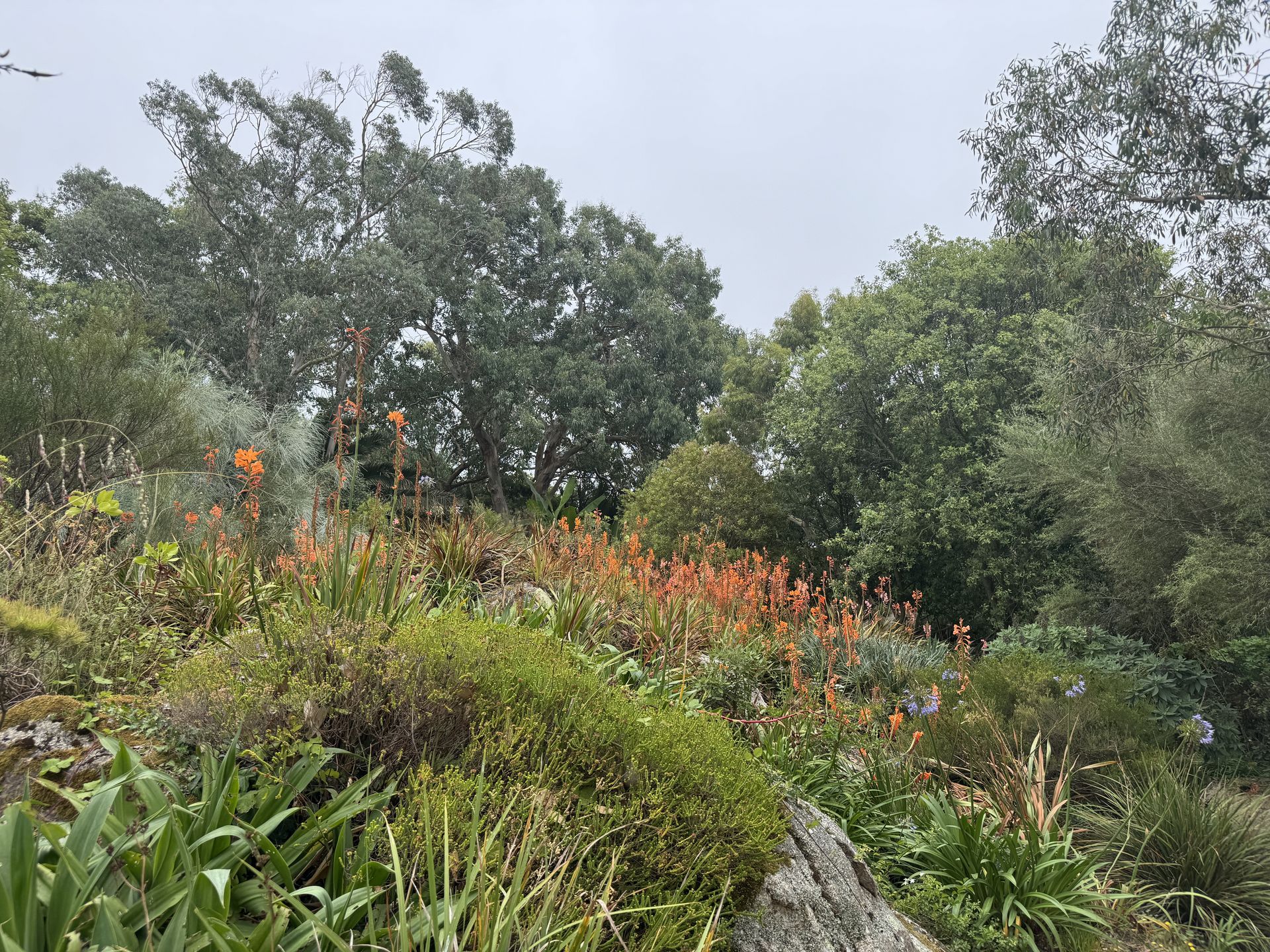
This distinction is the heart of my profession. A botanical garden exists to showcase plants; a landscape garden exists to create an experience. The former accumulates, the latter composes — it chooses a limited palette, frames views, organises sequences, decides what is seen and what is hidden. These are two different objectives, and a private garden always falls under the latter. The temptation of collection is the most common trap I encounter: accumulating plants that one loves never makes a garden. It is this work of composition that we undertake on each project, whether it is a jungle garden or a gravel and mineral garden.
Conclusion
Should one choose between the two? No. They each have their own personality, and they complement each other.
In Batz, the boat crossing and the walk along the coastal path are already part of the experience — one arrives prepared. In Roscoff, one enters directly into a collection, and it is another pleasure, more botanical, more contemplative. Both are worth the trip, preferably on the same day.
Do you dream of a garden with an exotic atmosphere in Belgium? The question is not which plants to gather, but how to compose them and where to place them.
Also read: the Georges Delaselle garden on the island of Batz, visited that very morning.
FAQ
What is the difference between a botanical garden and a landscape garden?
A botanical garden exists to present and conserve plant collections: the number of species is an objective in itself. A landscaped garden works with a deliberately limited palette to create atmospheres, perspectives, and sequences. A private garden falls into the second category.
Is a lot of different species needed for a beautiful garden?
No, quite the opposite. Repeating a limited number of well-chosen plants produces a more readable and stronger composition than an accumulation of rarities. It is also much simpler to maintain.