
Climate change: which trees and shrubs to choose for your garden in Belgium
A tree planted today in a garden in Walloon Brabant, Brussels or Flemish Brabant, is chosen for 30 to 40 years ahead of us, not for the next season. This is what makes the question of which species to plant — in the face of a changing climate — particularly delicate. Too early to do without the native Belgians that still hold on, too late to ignore the species that have been visibly suffering since 2018.
This article brings together what we have seen on our sites for the past ten years, in La Hulpe, Lasne, Uccle, Tervuren and surrounding areas. Not a generic list copied from a site without ground: our direct observations, the species that disappoint us, those that surprise us, and the selection we propose today to our clients for a sustainable garden.
What has changed beneath our gardens, concretely
Belgium is warming faster than the global average. According to data from the Royal Meteorological Institute (IRM), the average annual temperature in Uccle has increased by more than 2 °C since the beginning of the 20th century, and the trend has accelerated since 2000. Concretely, on our grounds, this results in:
• Severe summer droughts: 2018, 2019, 2020, 2022 — each accompanied by significant tree mortality, including among apparently established adult specimens.
• Increasingly early (June) and late (September) heatwaves, which stress young plantations.
• More erratic rainfall — less regular light rain, more violent storms that run off instead of penetrating the soil.
• But also rare but real episodes of intense cold (February 2012 cold snap, winter 2021) that remind us we are not in Provence.
This dual constraint — summer drought and winter cold snaps — explains why we cannot simply replace our Belgian species with those from the south of France. The Belgian garden of tomorrow is a compromise, not a transplant.
The species that are visibly suffering
Common beech (Fagus sylvatica)
The emblematic tree of the Soignes Forest, in great distress since the droughts of 2018-2020. We see sunburn on the bark (the bark of the beech is thin and sensitive to direct heat), cortical cracks, followed by opportunistic attacks from fungi and insects. On our sites, we now avoid planting young beeches in full southern exposure or in well-drained soil. For existing specimens, we preserve an understorey or companion trees that protect their trunk.
Conifers (spruce, fir)
The ravages of the bark beetle (Ips typographus) on the common spruce since 2018 are massive in Walloon forests. The problem also affects isolated spruces in private gardens : a tree weakened by drought becomes unable to produce the resin that defended it from bark beetles. We no longer plant spruces in residential gardens.
The horse chestnut (Aesculus hippocastanum)
Weakened by the leaf miner for 30 years and exacerbated by the heat, it has become a sad tree — leaves browning from July, sparse appearance. Beautiful adult specimens to preserve, but we no longer plant them.
The silver birch (Betula pendula)
Shallow root system, poorly suited to prolonged droughts. In well-drained soil and full south exposure, it is one of the species that dies the fastest today. If you are keen on the ‘white bark’ effect, prefer Betula utilis 'Jacquemontii' — the white bark is even more spectacular, and the drought resistance is better.
Emerging pests to know
• Box tree moth (Cydalima perspectalis) — generalised invasion in Belgium. The traditional box (Buxus sempervirens) is no longer defensible. We have replaced it with alternatives (see below).
• Spruce bark beetle — already mentioned, the main culprit of conifer decline.
• Oak processionary (Thaumetopoea processionea) — significantly increasing since 2018, a public health issue (stinging caterpillars). To be monitored on pedunculate oaks at the edge of woods.
Two underestimated traps
The actual hardiness of the species sold online
The online plant market — particularly active since Covid — offers increasingly exotic subjects. The problem: a hardiness stated at −10 °C is insufficient for Belgium, where cold snaps at −12 °C or even −15 °C remain occasional but real.
Our rule: for a tree to be reliable in the ground in our regions, its documented hardiness must be at least −15 °C (USDA zone 7a). For the superb but fragile exceptions — certain palms, citrus, hardy eucalyptus — we recommend growing in large pots, to bring in or protect in winter. It's more demanding, but it's honest about the risk.
The resilience to wet snow of Mediterranean evergreens
Here’s the point that no one mentions in generic articles. The more Mediterranean evergreens are planted to withstand drought — large-leaved magnolia, holm oak, photinia, Japanese medlar — the more one exposes oneself to the breaking of branches under Belgian wet snow.
The snow of the Flat Country is not the dry snow of continental climates: it is heavy, saturated with water, and accumulates on broad-leaved evergreens. The result : torn structural branches, unbalanced forms, or even entire trees down.
Practical consequences:
• For large-leaved evergreens (Magnolia grandiflora, Quercus ilex), prune regularly to limit the catch and maintain a balanced form. Avoid positions exposed to the wind.
• Prefer evergreens with small leaves : Ilex crenata, Osmanthus, Phillyrea, Pittosporum tobira nain — which retain little snow.
• Yews (Taxus baccata) and native conifers manage very well thanks to their fine leaves.
Our selection method : five criteria, in this order
1. The client's affinities. Identity of the garden, style, emotional attachments to certain species. The best tree is the one that you want to watch grow.
2. The characteristics of the garden. Size, exposure, views, built environment, presence of neighbouring trees, microclimate.
3. The purpose of the tree in the composition. To provide shade? Create a focal point? Ensure visual intimacy? Frame a view? Structure a mass of vegetation?
4. The soil conditions. Compact clay-loam of Walloon Brabant, limestone soils of certain parts of Brabant, poor and compacted urban soils of Brussels. Each species has its preferences.
5. The proportion. A large tree in a small garden is a lasting mistake. Conversely, a tree that is too modest gets lost in a large park.
Our position on the native vs adapted debate
We are neither religiously native, nor complacent with Mediterranean trends. We plant for 30 to 40 years ahead, not for the next season. This implies two things :
• Preserve and plant the natives that still thrive well. to our climate and our soils (hornbeam, small-leaved lime, wild maple, service tree).
• Integrate into our palettes species adapted to the coming climate — southern oaks, hackberry, parrotia — that will be in full form in 20 years, at a time when some natives will be in great difficulty.
What no longer makes sense is to plant a native species that only survives with an intensive watering : this is neither ecological nor sustainable.
Our selection of trees for 2026
Here are the species we are proposing today in our preliminary projects, classified by context of use. The summary table at the end of the section synthesises the main practical data.
For a large garden (Walloon Brabant, southern outskirts of Brussels)
Small-leaved lime (Tilia cordata). Native, magnificent, exceptional nectar-producing — bees and bumblebees swarm it by the thousands in June. Herbal teas possible with the flowers. Resists drought better than the common lime. Our signature tree for its complete qualities.
Common walnut (Juglans regia). Deep roots that dive to seek moisture, excellent drought resistance once established. Beautiful spreading form, dense shade, fruits. To be planted away from other species (allelopathic juglone).
Evergreen oak (Quercus ilex). Evergreen, drought-resistant, visual intimacy all year round. Prune regularly to limit snow load. Magnificent as a solitary specimen on a large lawn.
Pubescent oak (Quercus pubescens). One of the oaks best suited to the coming climate: perfectly tolerates drought, appreciates calcareous soils. Noble form, marcescent foliage in winter.
Plane tree (Platanus x acerifolia). Magnificent shade, coolness in summer, decorative bark. To be reserved for large gardens (15-25 m when mature, powerful roots). Avoid within 10 m of a terrace or building.
Hackberry of Provence (Celtis australis). Emerging in Belgium, noble form, excellent drought tolerance, deep non-invasive roots. A species for the future.
Parrotia persica (iron tree). Small to medium size, drought, decorative bark that flakes in plates, flamboyant autumn (red, orange, yellow on the same tree). Widely used by contemporary Belgian landscapers.
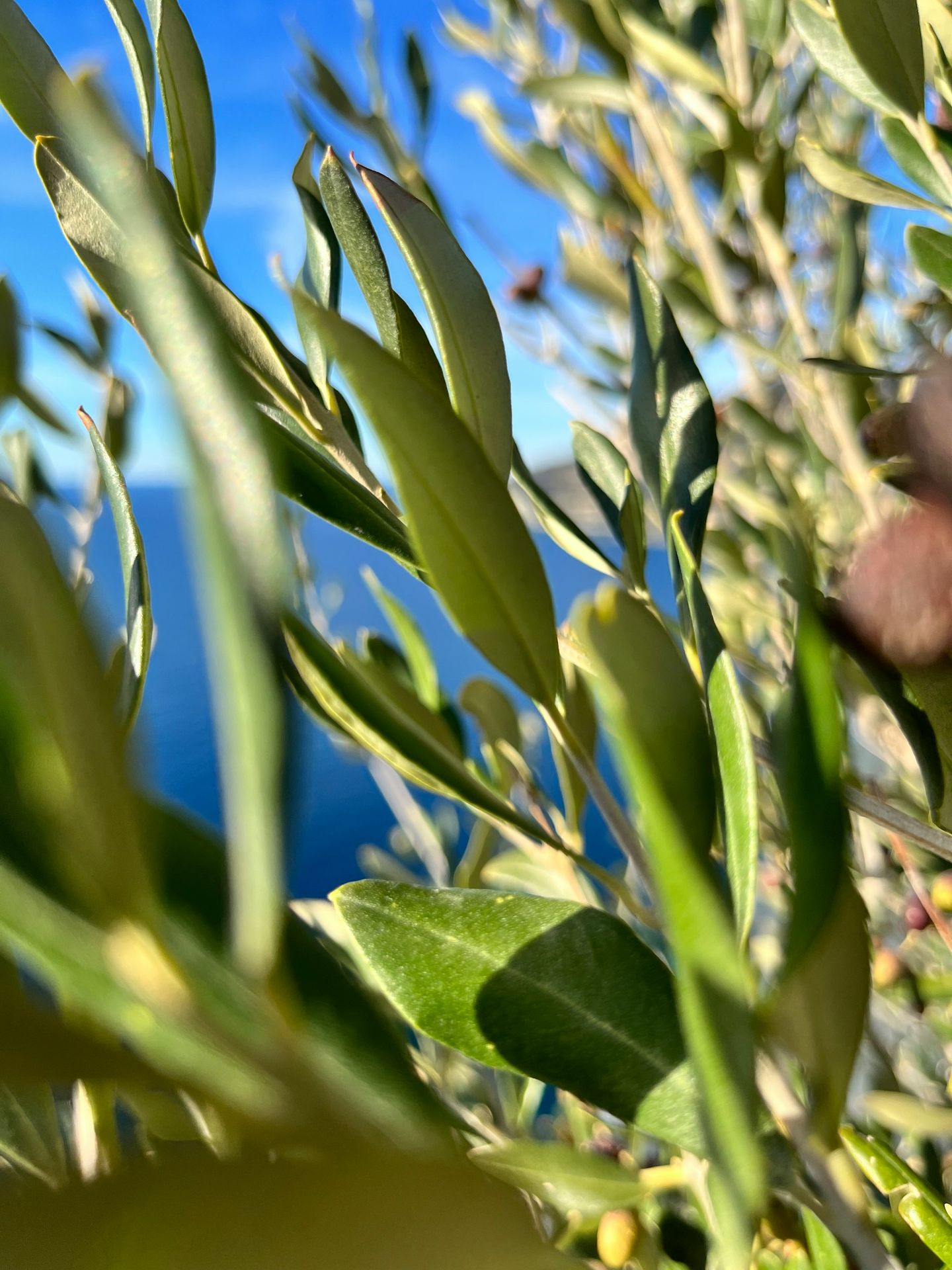
Olive (Olea europaea). Ornamental, Mediterranean identity, evergreen. Choose hardy varieties (Olea europaea var. 'Aglandau', 'Frantoio') and plant in a sheltered position, well-draining soil. Remains exposed to exceptional frost — we offer it with full knowledge.
For a small garden (city of Brussels, urban gardens)
Lime tree trimmed as a parasol (Tilia x europaea "roof"). A classic of Flemish and Dutch landscape architects: lime tree led as a platform, which provides plenty of shade and strong architectural charm, occupying little ground space. Ideal for a city terrace.
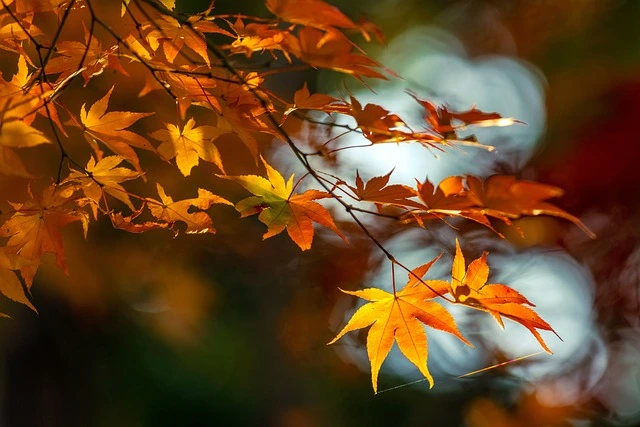
Japanese maple (Acer palmatum). Small size, delicate form, spectacular colours in autumn. Prefer partial shade and a cool soil. 'Bloodgood' variety for purple, 'Sango-kaku' for red branches in winter.
If common (Taxus baccata). Exceptional evergreen, accepts all sizes (topiary, hedge, free-standing), multi-millennial longevity. Indigenous. Provides a flawless winter visual presence.
Magnolia grandiflora. Large-leaved evergreen, spectacular white summer flowers. Prune regularly and avoid overly windy exposures (see our alert on wet snow).
Hornbeam (Carpinus betulus). Reliable indigenous species, withstands architectural pruning (in plateau, parasol, cone). Marcescent foliage that covers in winter. Our reference hedge.
Serviceberry (Amelanchier lamarckii). Small elegant tree, spring white blossoms, edible fruits, flamboyant autumn. Excellent for a small city garden. Widely used by contemporary landscapers.
Sweetgum (Liquidambar styraciflua). The most spectacular autumn of all trees: star-shaped foliage changing from green to scarlet red to orange. Prefers soils that are not too calcareous.
Himalayan Birch (Betula utilis 'Jacquemontii'). For those who are keen on the effect of "pure white bark": prefer this variety to the classic Betula pendula. More drought-resistant, remarkable white bark. To be planted in cool soil, in groups of 3 or 5 to enhance the effect.

Summary table: our species for the Belgian climate in 2026
Ornamental legend: ★ discreet · ★★ interesting · ★★★ remarkable · ★★★★ spectacular · ★★★★★ exceptional
|
Species |
Adult height |
Width |
Drought |
Moist soil |
Growth |
Suitable for |
Ornamental |
|
Small-leaved lime |
15-25 m |
10-15 m |
Good |
Tolerates |
Average |
Large garden BW |
★★★★ |
|
Common walnut |
15-20 m |
10-15 m |
Very good |
Tolerates |
Average |
Large garden BW |
★★★ |
|
Green oak |
10-15 m |
8-12 m |
Excellent |
Mediocre |
Slow |
Large garden, BXL |
★★★★ |
|
Pubescent oak |
12-18 m |
8-12 m |
Excellent |
Mediocre |
Slow |
Large garden BW/BF |
★★★ |
|
Common plane tree |
20-25 m |
15-20 m |
Good |
Good |
Fast |
Very large garden |
★★★★ |
|
Provence hackberry |
15-20 m |
10-15 m |
Excellent |
Mediocre |
Average |
Large garden |
★★★★ |
|
Parrotia persica |
6-10 m |
5-8 m |
Very good |
Tolerates |
Slow |
All gardens |
★★★★★ |
|
Olive (rustic varieties) |
4-8 m |
4-6 m |
Excellent |
Mediocre |
Slow |
Sheltered garden BXL |
★★★★ |
|
Linden umbrella |
4-5 m |
4-6 m |
Good |
Tolerates |
Average |
Small garden BXL |
★★★★ |
|
Japanese maple |
3-6 m |
3-5 m |
Average |
Prefers cool |
Slow |
Small garden BXL |
★★★★★ |
|
Common yew |
5-15 m |
3-8 m |
Good |
Good |
Slow |
All gardens |
★★★★ |
|
Magnolia grandiflora |
8-12 m |
6-8 m |
Good |
Mediocre |
Slow |
All sheltered gardens |
★★★★★ |
|
Hornbeam |
10-20 m / 2-4 m in hedge |
Variable |
Good |
Good |
Average |
All gardens |
★★★ |
|
Serviceberry |
4-8 m |
3-5 m |
Good |
Tolerates |
Average |
Small garden BXL |
★★★★★ |
|
Liquidambar |
12-20 m |
8-12 m |
Average |
Tolerates |
Average |
Medium garden |
★★★★★ |
|
Betula utilis 'Jacquemontii' |
10-15 m |
4-6 m |
Average |
Prefers cool |
Fast |
All gardens |
★★★★ |
Structural shrubs : our choices for hedges and evergreen masses
The question of box (Buxus sempervirens) is settled: since the widespread invasion of the box tree moth, we no longer plant it, except in special cases under constant supervision. Our alternatives :
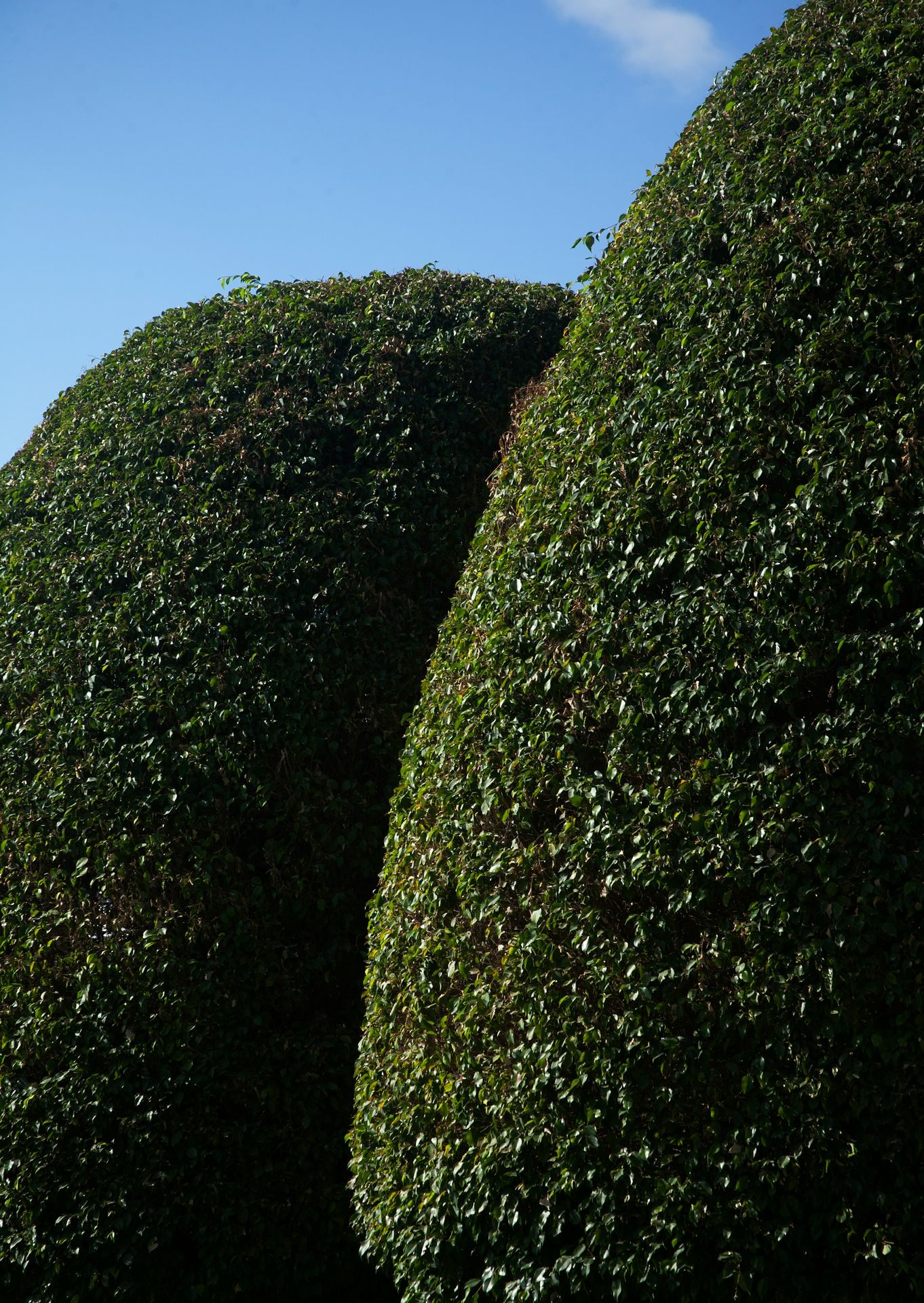
• Ilex crenata. Small leaves, dense growth, accepts repeated pruning. The closest visually to box. Our default choice for topiary and low borders.
• Osmanthus burkwoodii. Evergreen with small shiny leaves, discreetly fragrant spring flowering. Excellent for low to medium hedges and as a replacement for box in larger volumes.
• Phillyrea angustifolia. Evergreen with fine leaves, understated Mediterranean aesthetic, very drought resistant. Perfect for contemporary gardens where one wants to avoid the "suburban garden" effect.
For taller structural hedges :
• Hornbeam (Carpinus betulus). Indigenous, hardy, accepts trimmed heights of 1.80 to 3 m. Our reference hedge.
• Yew (Taxus baccata) in hedge. Evergreen, exceptional longevity, withstands architectural pruning. Slower to grow but an investment for 50+ years.
• Common holly (Ilex aquifolium). Indigenous evergreen, red berries in winter, perfect for semi-shaded areas.
Frequently asked questions
Should young trees be watered during droughts ?
Yes, during the first 3 to 5 years after planting. Abundant and spaced watering (50 to 100 litres every 10-15 days in dry periods) is better than small daily waterings — it forces the roots to go down in search of water. Beyond 5 years, a well-chosen tree for the site should be able to manage without intervention.
When to plant a tree in Belgium?
The ideal period extends from October to March, ideally between November and February, excluding gel. This bare-root or balled planting benefits from winter rains and the absence of evaporation to settle in well before summer. Avoid planting in May-August, except for containerised subjects and with very careful watering.
Should one compost or amend systematically at planting?
Not systematically. An excess of amendment can paradoxically delay deep rooting — the tree is satisfied with the “rich” soil of the pit and does not push its roots beyond. On clay-loam soil in Walloon Brabant, we loosen the bottom and sides of the pit, add a moderate amount of mature compost, and we stop there.
How long does it take for a planted tree to start providing shade?
Count on 5 to 10 years for useful shade, 15 to 25 years for an adult form. That’s why we emphasise: planting today means designing a garden for the decade 2040-2050. It’s also why we often plant a bit denser at first, to have a quick effect, then we gradually thin out when the key subjects have taken.
Can we plant invasive or risky species?
Some fashionable species present real ecological risks: Robinia pseudoacacia (false acacia, invasive), Ailanthus altissima (banned in Wallonia since 2022 on the list of concerning species). We refer to the official regional lists before any choice. The species mentioned in this article are all acceptable from regulatory and ecological points of view.
Conclusion: plant for 2050, not for this spring
Global warming does not require us to reinvent everything — it requires us to plant more wisely. Move away from automatic thinking (“I want a birch because it’s pretty”), ask the right questions (“will it still make sense in 25 years?”), and accept that a garden is designed for the long term.
Our approach is based on a few principles: minimum hardiness of −15 °C for species in the ground ; preference for small-leaved evergreens to avoid breakage from wet snow ; balance between resilient natives and southern species that take over ; priority attention to the soil and site before the plant catalogue. This results in gardens that age well — that is, they become better over time, not the other way around.
Are you considering planting trees?
The selection of species is one of the most sustainable decisions in a garden project. We offer an on-site consultation to analyse your soil, your exposure, and your site, and to build with you a palette suited to the current and future Belgian climate. In Walloon Brabant, Brussels, or Flemish Brabant.