
How to create an English garden in Belgium
TheEnglish gardenseems to be the easiest of all styles: a nature that one would have left free, a profusion of flowers, an almost neglected romanticism. It is exactly the opposite. Behind this apparent nonchalance lies the greatest discipline of composition of all garden styles. The good news: it is also the one that feels most at home in the Belgian climate. Here is where it comes from, what defines it, and how to succeed with it.
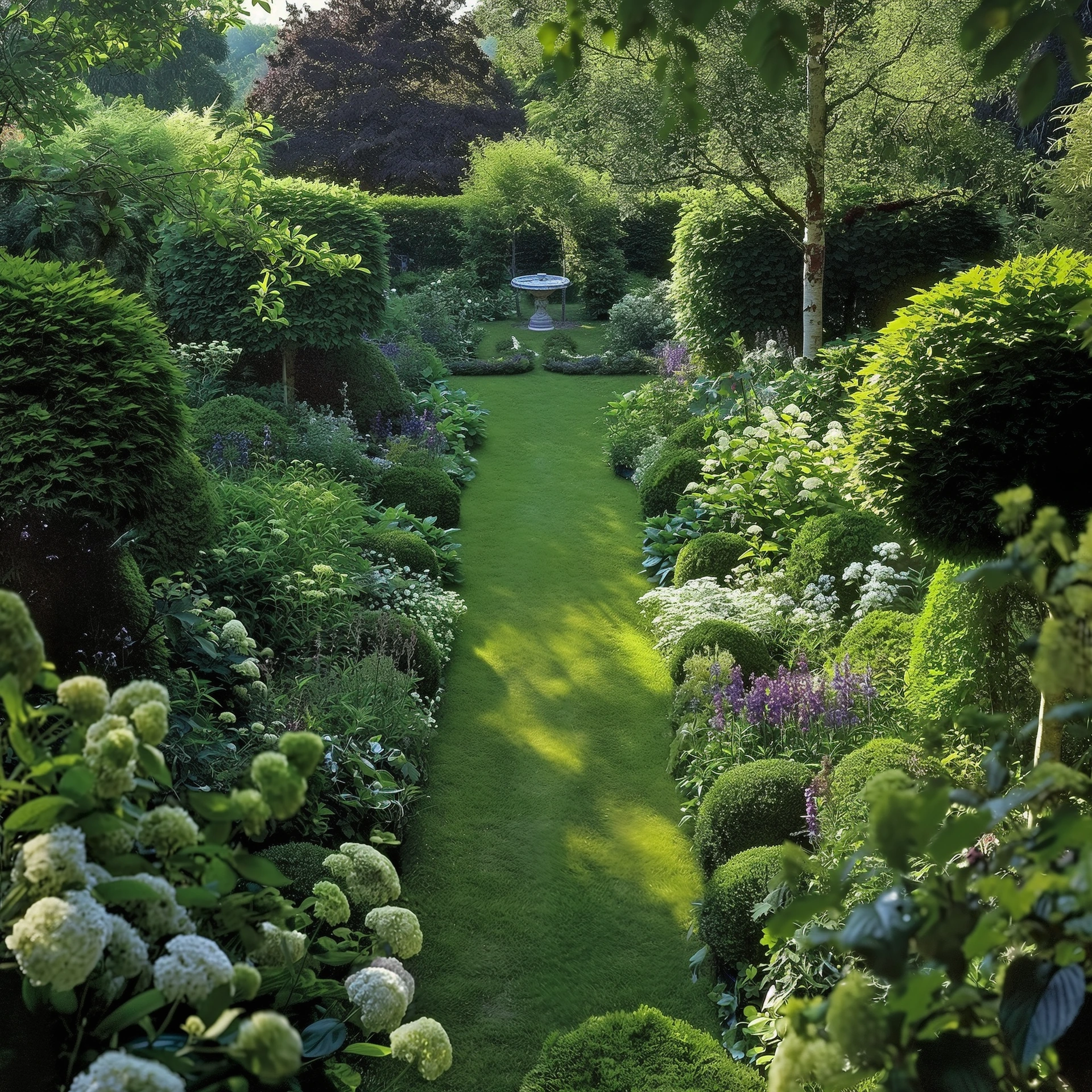
Where the English garden comes from
The English garden did not arise from a single impulse, but from two overlapping traditions.
In the 18th century, in England, landscape designers like William Kent and Lancelot ‘Capability’ Brown broke away from the formal French garden — its geometric flowerbeds, its straight lines. Instead, they designed vast landscapes that seem spontaneous: undulating lawns, groves, bodies of water with natural contours. This is the ‘English garden’, or landscape garden. Its founding principle can be summed up in one phrase: an art that hides the art.
A century and a half later, a second tradition is grafted onto it. At the end of the 19th century, William Robinson and especially Gertrude Jekyll evolved the style towards thecottage garden— more generous, more fragrant, focused on floral abundance. Jekyll, trained as a painter, is considered the creator of themixed borderas it is conceived today: a bed where perennials, shrubs, roses, bulbs, and grasses are composed together, like on a canvas, playing with successive blooms and colour harmonies. Over sixty years, she will design nearly four hundred gardens, often with the architect Edwin Lutyens.
It is this second tradition — the controlled profusion — that is most often referred to as the "English garden" today. But the thread that connects the two has never changed: spontaneity is always drawn.
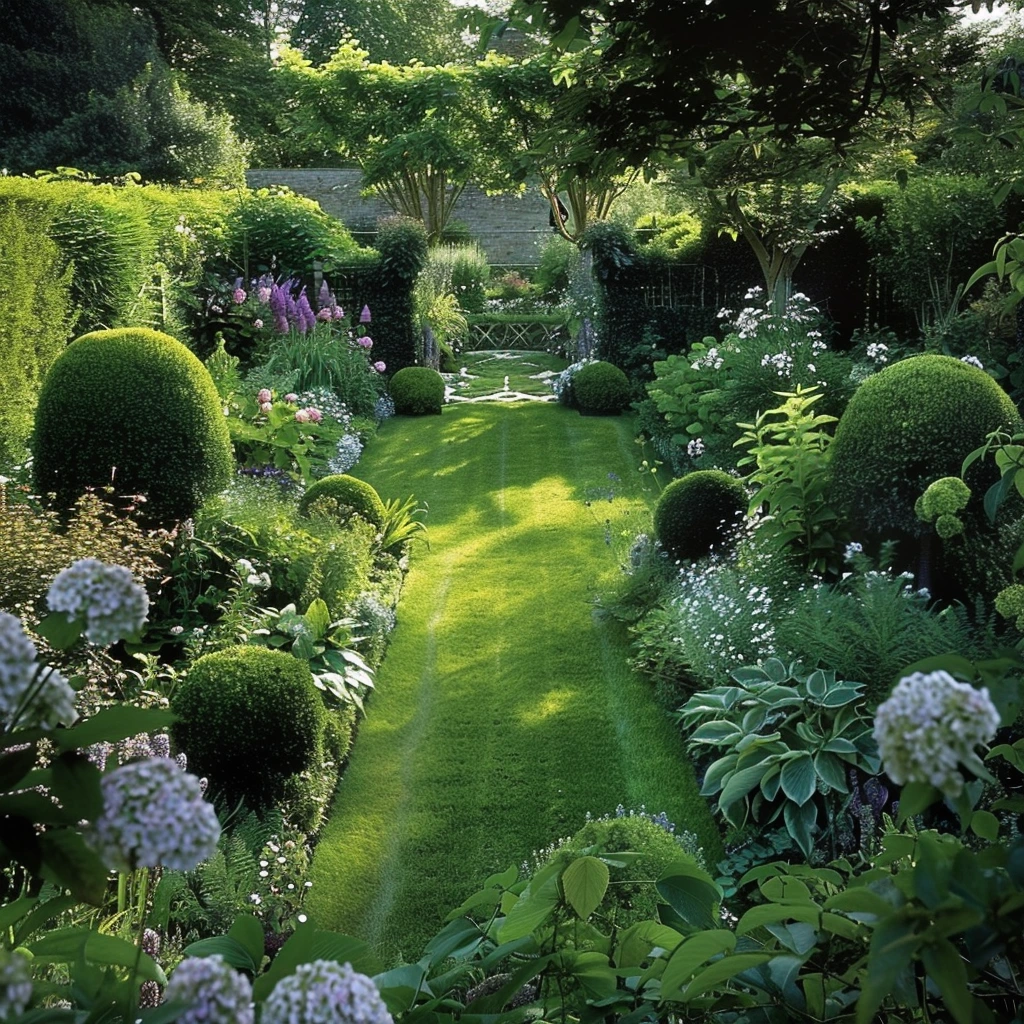
What makes an English garden
Four elements, really, define the style.
Curves.No straight lines: winding paths, beds with rounded and generous contours. The eye should never take in everything at once — there are corners, detours, things to discover.
The mixed border.This is the signature element. A wide bed, densely planted and in layers, where heights, textures, and blooms are superimposed so that there is always something in flower. This is where the art of the English garden is played out.
A structure that holds everything together.This is the least visible secret. Beneath the "mess", there is an order: a beautiful lawn as a calm counterpoint, hedges, a wall, a few trees that frame the scene. Without this framework, the profusion becomes disorder.
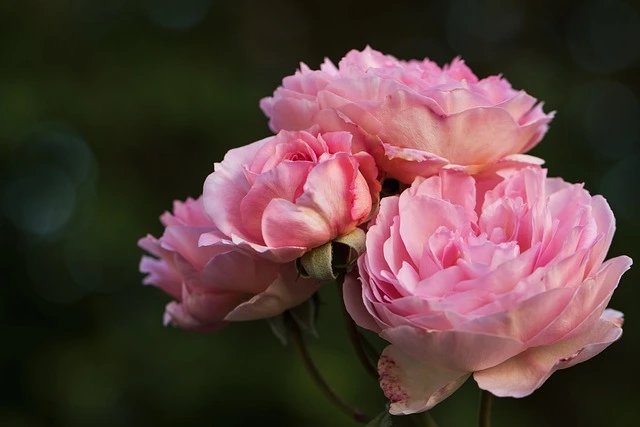
The plants.Old and climbing roses, delphiniums, lupins, peonies, foxgloves, perennial geraniums, hydrangeas, clematis, hollyhocks… a romantic palette, played out in abundance.
The style most "made for" Belgium
Here is a point that is not mentioned anywhere, and which changes everything: of all the garden styles, the English garden is undoubtedly the most naturally suited to Belgium.
The reason is simple. Belgium and England share the same temperate oceanic climate — mild, humid, without extremes. And the plants that define the English garden — roses, perennials, hydrangeas, foxgloves, geraniums — are precisely those that thrive in these conditions. Where a Mediterranean garden or a dry garden requires adaptation, workarounds, and protection, the English garden is at home in Walloon Brabant as well as in Brussels.
It is a rare argument, and a true luxury: choosing the English garden means choosing a style that works with our climate, not against it.
The method — and the truth about maintenance
Successfully creating an English garden always follows the same order.
First, the framework is established.Before any flowers: the layout of the paths, the shape of the lawn, the hedges, a wall, a few trees. It is this structure — often invisible once the garden is mature — that will prevent the abundance from turning into chaos. For hedges, it is better in Belgium to favour yew or beech over boxwood, which has been weakened by the box tree moth.
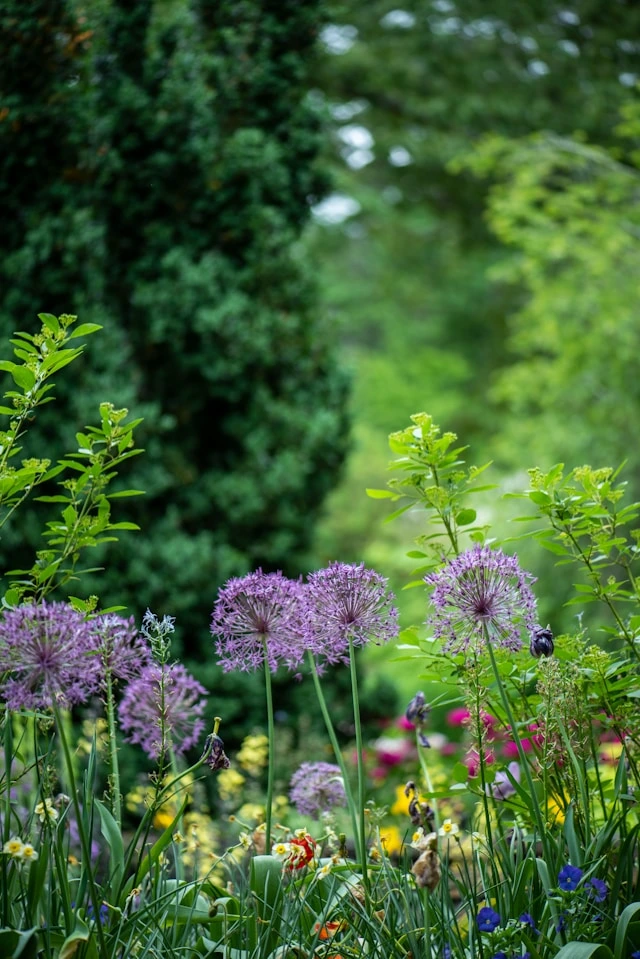
Then we plant the beds, densely and in layers.The tallest perennials and shrubs at the back, the shortest in front, and we mix the species rather than lining them up. The goal: a bed that stands on its own and grows richer year after year.
We compose the succession of blooms.A true English garden has something to offer from March to October. This is planned, flower by flower, season by season.
And now, the truth that few articles acknowledge:the English garden is not a garden without maintenance.It is even one of the most demanding. Themixed borderonly thrives thanks to regular and precise work — staking, removing dead flowers, dividing perennials, constantly 'editing' what takes up too much space. The 'controlled disorder' is, 90% of the time, 'controlled'.
This is precisely where professional design changes everything. An English garden with the right structure, well-thought-out flower beds, and well-chosen plants remains beautiful for a reasonable effort. Improvised, it quickly becomes unmanageable. At Vert Val, it is this balance — the romantic profusionandmaintenance tailored to you — that we design for private gardens in Brabant Wallon and Brussels.
Frequently asked questions
What is an English garden?
The English garden is a style that originated in England, in reaction to the formal geometric garden. It is recognised by its curved shapes, its abundant flowering beds (themixed borders) and an apparent spontaneity that actually conceals a very controlled composition.
What are the characteristics of an English garden?
Paths and beds with curved shapes, wide and densely planted borders, a succession of blooms throughout the season, and a discreet structure — lawn, hedges, trees — that holds everything together.
What plants for an English garden?
The classic palette mixes old and climbing roses, delphiniums, lupins, peonies, foxgloves, perennial geraniums, hydrangeas, clematis, and hollyhocks. All thrive particularly well in the Belgian climate.
Does an English garden require a lot of maintenance?
Yes — it is one of the most demanding styles. The floral abundance only holds up thanks to regular and precise maintenance: staking, pruning, dividing perennials, removing dead flowers. A good initial design significantly reduces this effort, but does not eliminate it.
Can you create a small city English garden?
Yes. The style adapts well to small spaces: a single generous mixed border along a wall, a few climbing roses, and a small lawn are enough to create the atmosphere.
In summary
The English garden is the most deceptive of styles: it looks easy, it is demanding; it looks messy, it is rigorously composed. But it is also the one that feels most at home in Belgium — an asset that few gardens offer. Well designed from the start, it gives you that abundant romanticism that everyone admires, without becoming unmanageable.
Want an English garden designed to last and remain beautiful? Request your free quote— we design your project with you, in Walloon Brabant and Brussels.