
Exotic garden: what the island of Batz taught me for our Belgian gardens
There is a precise moment when one understands this garden, and it is not upon arrival. It is when descending.
Five metres lower, the wind suddenly drops. The air becomes cool. Above you, palm trees with some trunks exceeding a metre in diameter. Banana trees. Water flowing. A few birds, and in the background, the sound of the sea that we have not left. We are on a Breton island swept by the wind, and we have just entered into something else.
This excavation is not a staging effect. It is a design decision made over a century ago, and it is exactly what I came to see.
Where is this garden
The island of Batz, in the north of Finistère, fifteen minutes by boat from Roscoff.
I already knew Brittany, and this coast still surprised me: white sand, huge granite blocks placed there like in a distant landscape. It is disorienting even before entering a garden. The island itself is superb, very well maintained, with beautiful houses — and everything is done on foot, you don't even need a bike.
From the landing stage, we follow a coastal path for just over a kilometre. Twenty minutes of walking, and we arrive at the Georges Delaselle garden. We were among the first visitors at the opening: the gravel paths had just been raked, no one had walked on them yet.
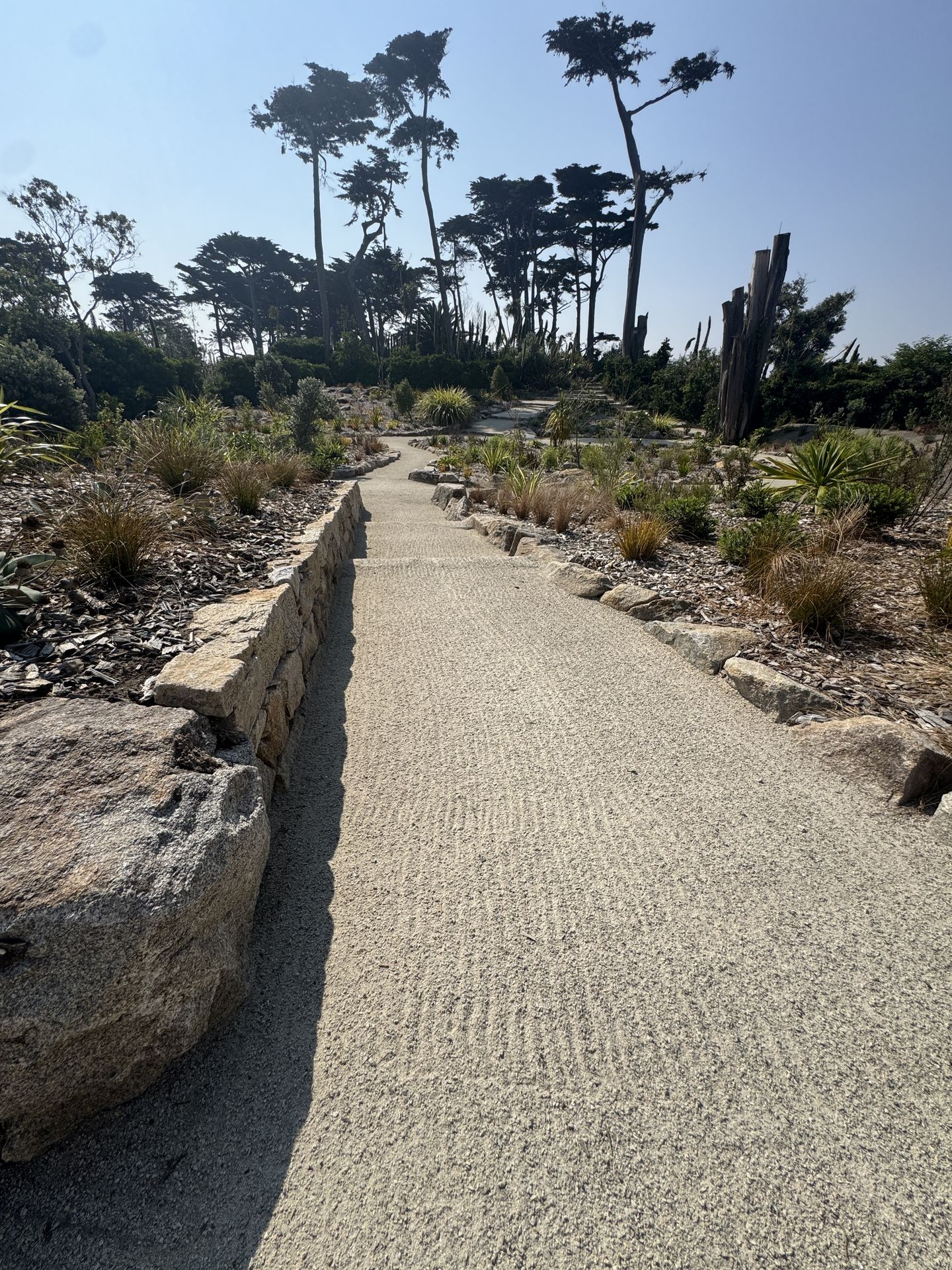
You enter through a small house transformed into a reception and exhibition space, where an artist works with objects collected from the beach. The approach is interesting, and the history of the site is well told.
An exotic garden born on a dune, in 1897
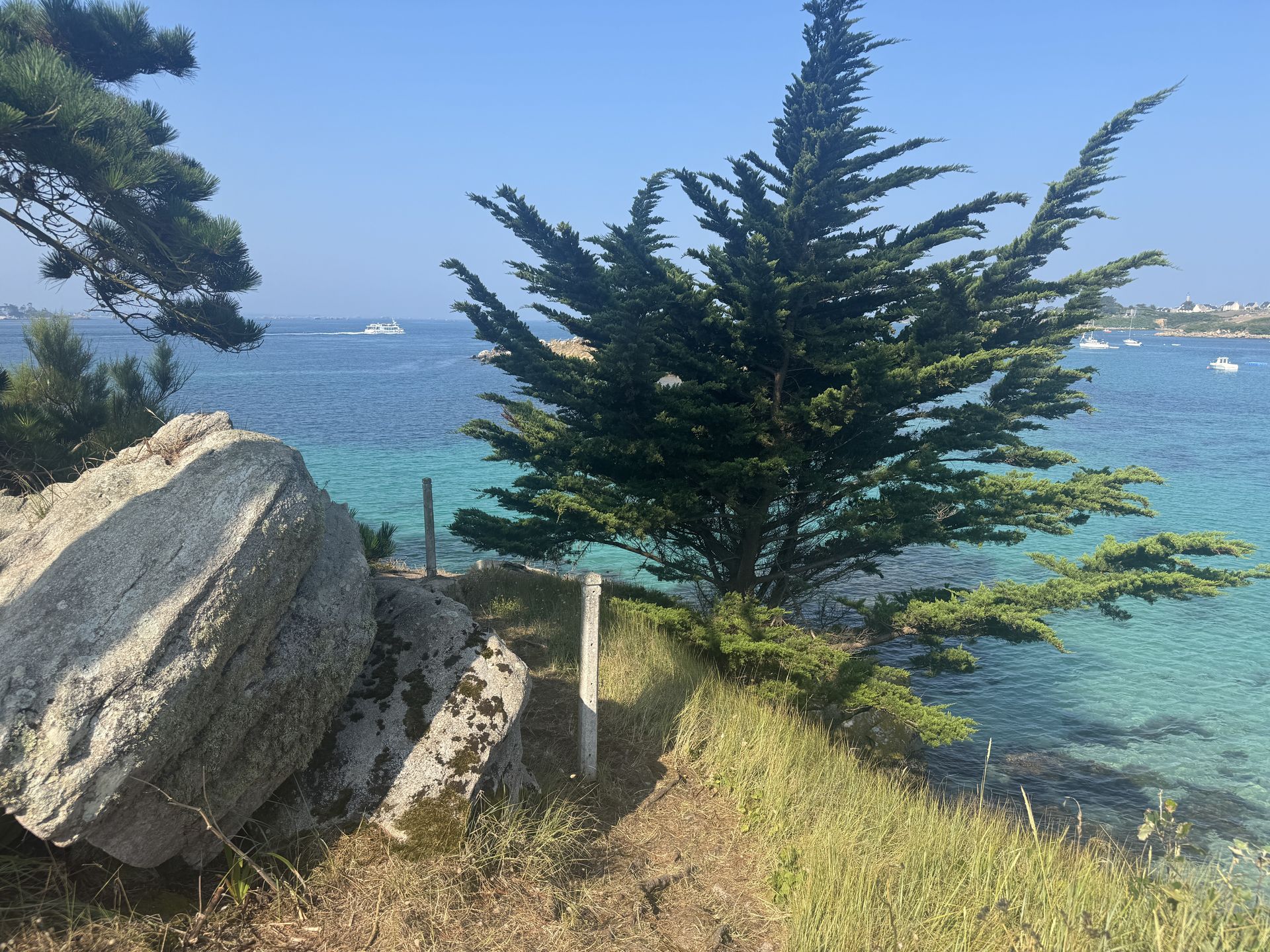
The history of this place is worth telling, because it is a bit crazy.
In 1897, Georges Delaselle, a Parisian insurance broker passionate about botany, decided to create an exotic garden on a dune of the island of Batz. At the time, the island had no trees. He dug large basins in the sand to shelter from the wind — and in doing so, uncovered a necropolis from the Bronze Age, still visible today among the plantings.
He dedicated forty years of his life to it, before having to sell at the end of the 1930s. He died in 1944. The garden then fell into oblivion for nearly thirty years. From 1987, a team of volunteers decided to rehabilitate it. In 1997, one hundred years after its creation, the Coastal Conservatory became its owner; it is now managed by Haut-Léon Communauté.
The result: about 1,700 subtropical species from the five continents, of which more than two-thirds are from the southern hemisphere — Chile, Southern Africa, Australia, New Zealand. A palm grove, a cactus garden, a Maori garden, southern lands. Storm Ciarán, in November 2023, caused severe damage there.
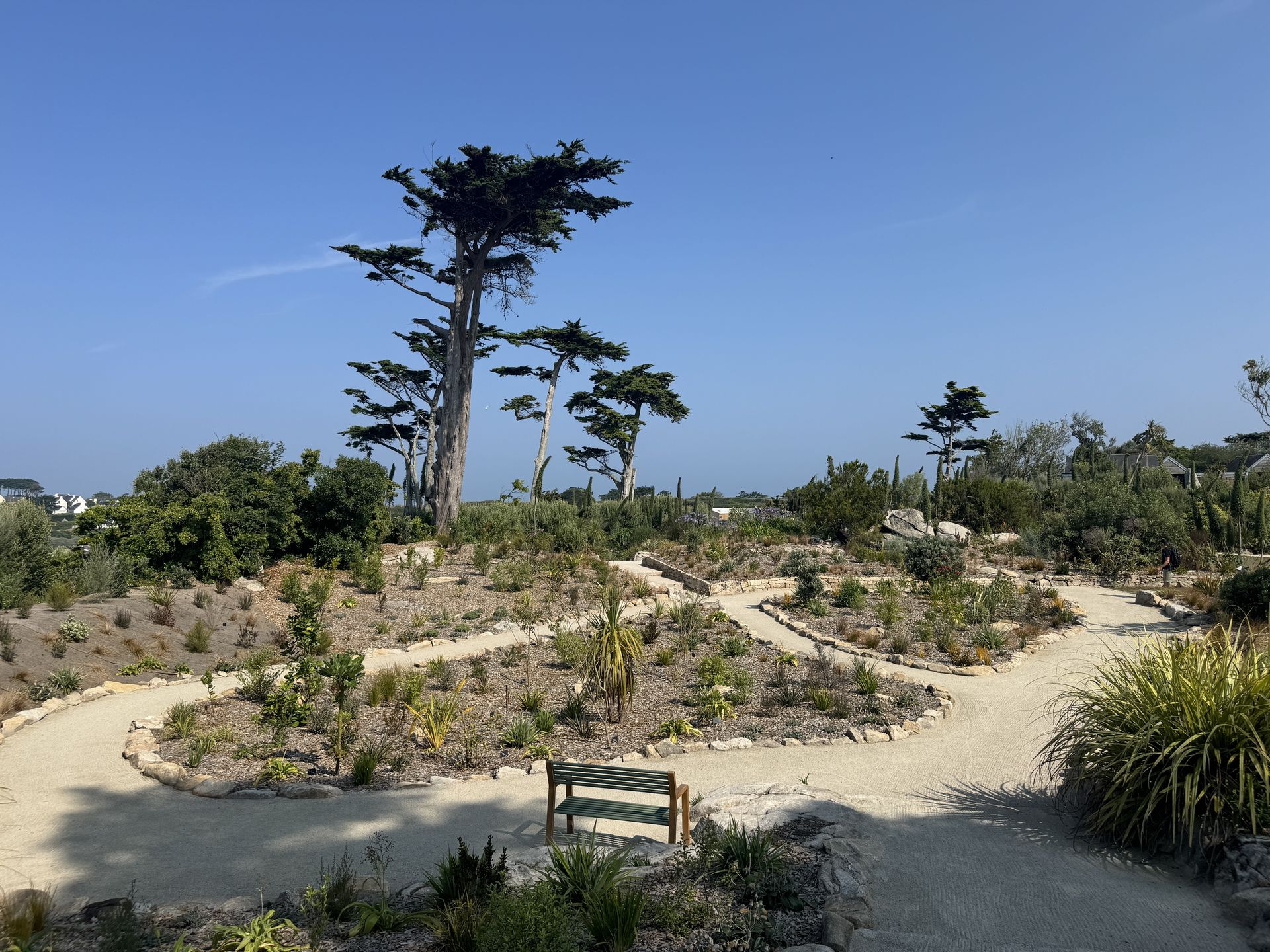
What a landscape architect looks at in such a garden
You can visit this garden for its plants. My profession forces me to look at something else.
The wind, first. Tout le jardin est une réponse au vent. Le décaissement de cinq mètres crée un abri, et c'est cet abri qui rend possible la profusion qu'on y trouve. Ailleurs, ce sont des murets de pierre qui structurent les massifs et cassent les courants. Le principe est transposable partout, y compris chez nous : avant de choisir une plante fragile, on fabrique l'endroit où elle sera protégée. C'est une question de conception, pas de catalogue.
The framework. The garden stands thanks to a few large trees — tall pines, cedars — that provide shade, coolness, and structure. Without them, there would only be a collection of plants. With them, there is a place.
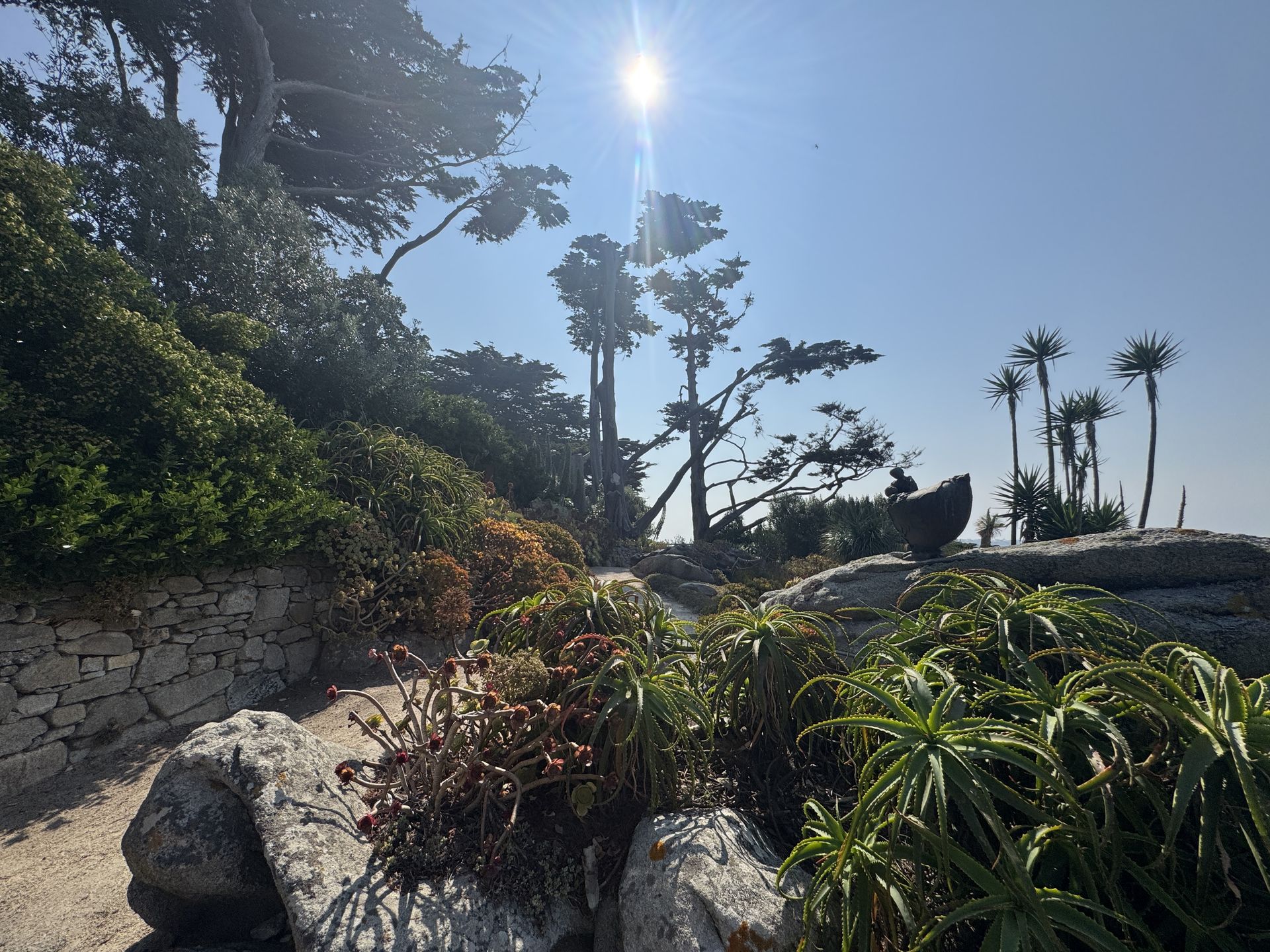
The mulches. They are everywhere, and they change according to the areas: plant-based mulch in chips or straw in the cool parts, mineral mulch from lava in the dry and exposed sectors. It is not decorative. It is what retains soil moisture in summer and protects the crown in winter.
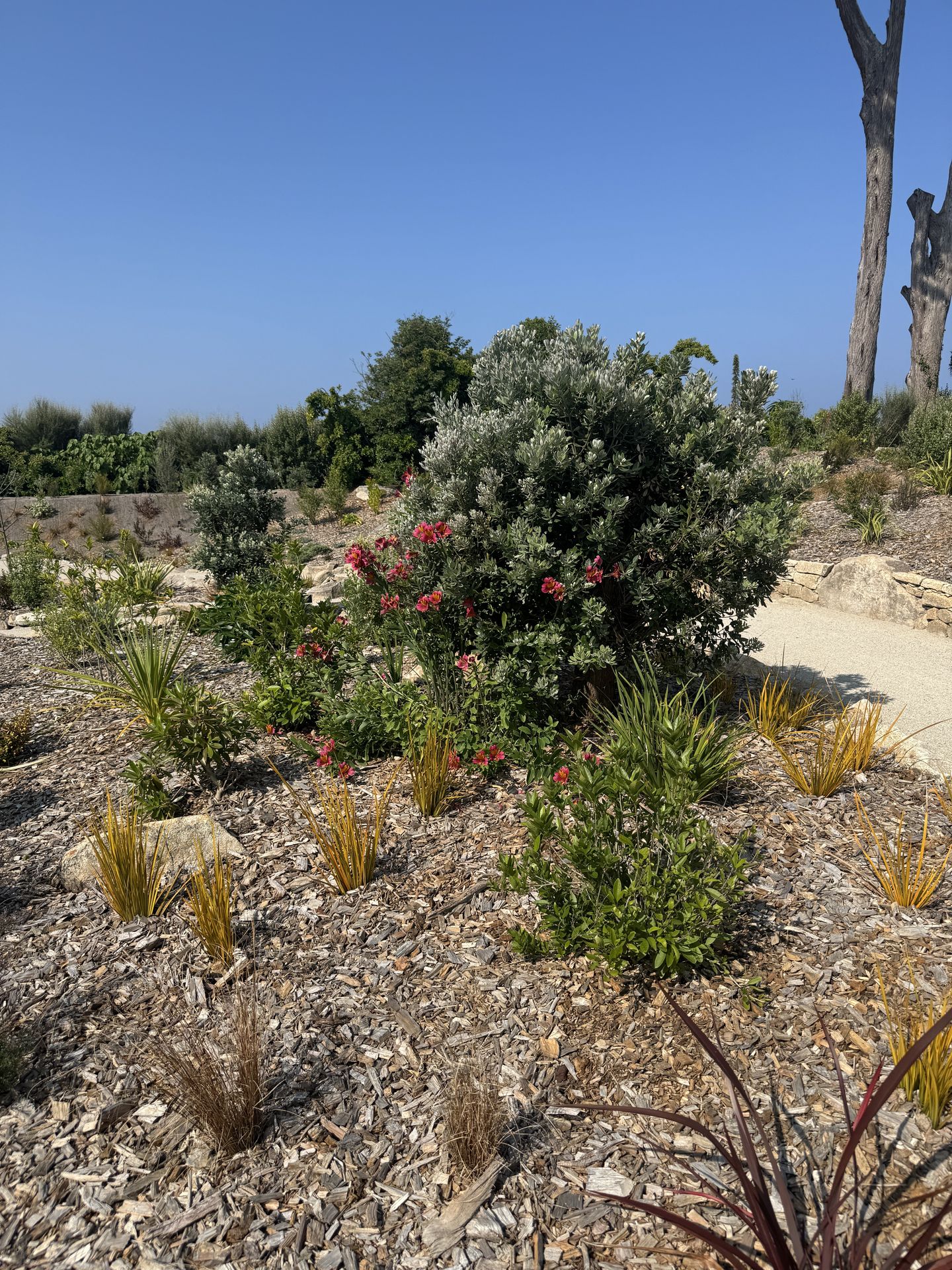
The exhibitions. The garden is divided into thematic atmospheres — cacti, succulents, more sheltered areas — each aligned with its actual exposure. One does not plant against the site, one plants with it.
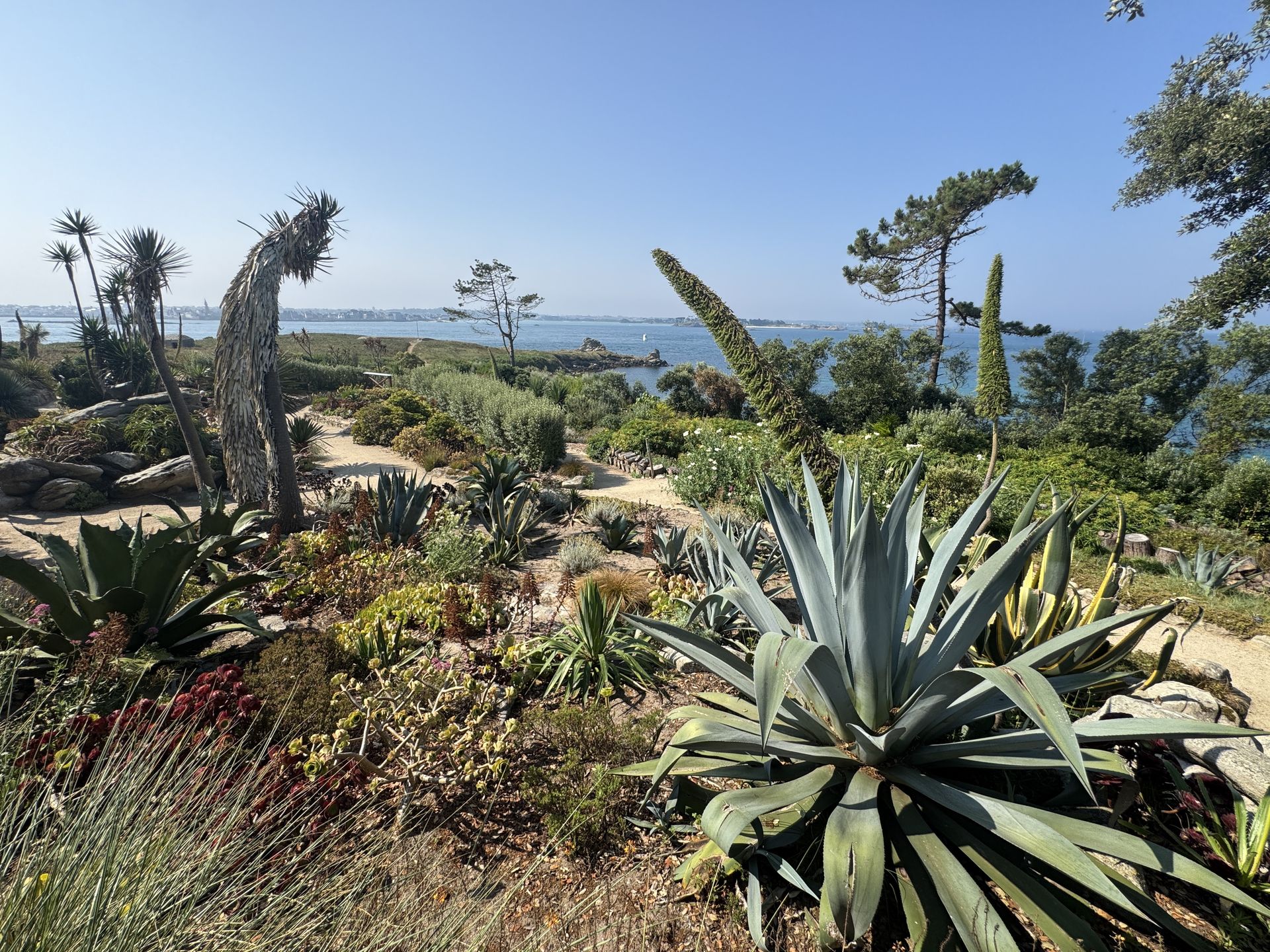
The perspectives. From almost everywhere, one can see the sea. The openings are framed, held. Nothing is left to chance.
The detail. The raked paths every morning give something of Japanese gardens. A garden of this quality relies as much on maintenance as on design — it is a truth I often repeat to my clients.
Can one create a exotic garden in Belgium?
This is the question I asked myself throughout the visit, and the honest answer is: only in part.
The north of Finistère benefits from a very particular climate. The Gulf Stream tempers the coast: it is very windy, the soils are sandy and extremely draining, but it almost never freezes there. It is this combination — no severe frost, perfect drainage — that allows for southern collections in open ground.
We have neither. In Walloon Brabant, cold snaps regularly drop to −8, −10 °C. However, many of these plants do not survive −5 or −6 °C. And we must add the snow, the weight of which can break certain silhouettes.
But cold is not the only factor, nor even the main one. Our soils are clayey and remain waterlogged all winter. A palm, a phormium, or a succulent does not only die from frost: they rot. It is the winter humidity on heavy soil that kills, much more often than the thermometer.
Practical consequence: in a Belgian garden, the real work is not to choose exotic plants. It is to prepare the soil, create relief, install proper drainage and mineral mulching — and then select from a rustic palette. This is precisely the logic of a jungle garden or a Mediterranean garden designed for our climate: the exotic atmosphere is achievable, the copy is not.
The idea I bring back: flat roofs and urban courtyards
This is where the visit becomes directly useful for my projects.
There are situations here that replicate some of the Breton conditions. Flat roofs, first: the substrate is built from A to Z, so we have complete control over drainage — the number one problem is solved by the design itself. The courtyards and city gardens then, where the walls block the wind and where the urban heat island gains a few degrees in winter.
In these contexts, a dry and rustic palette — succulents, grasses, drought-resistant plants on very well-draining substrate — makes a lot of sense. These are plants that withstand our increasingly dry summers, in spaces where watering is complicated. The principle is the same as in a gravel garden or in a Ré island garden: poor soil, clear drainage, plants that like that.
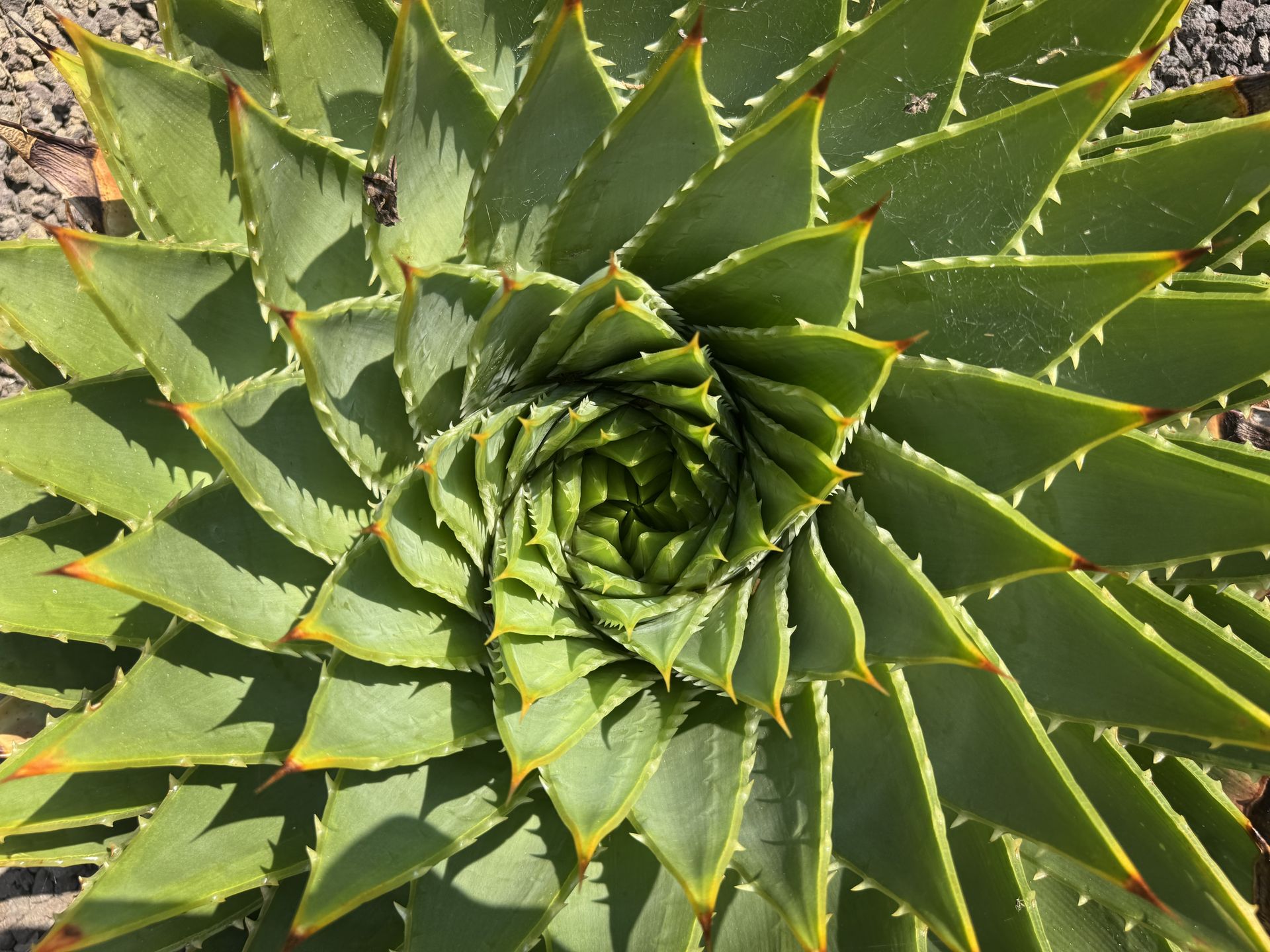
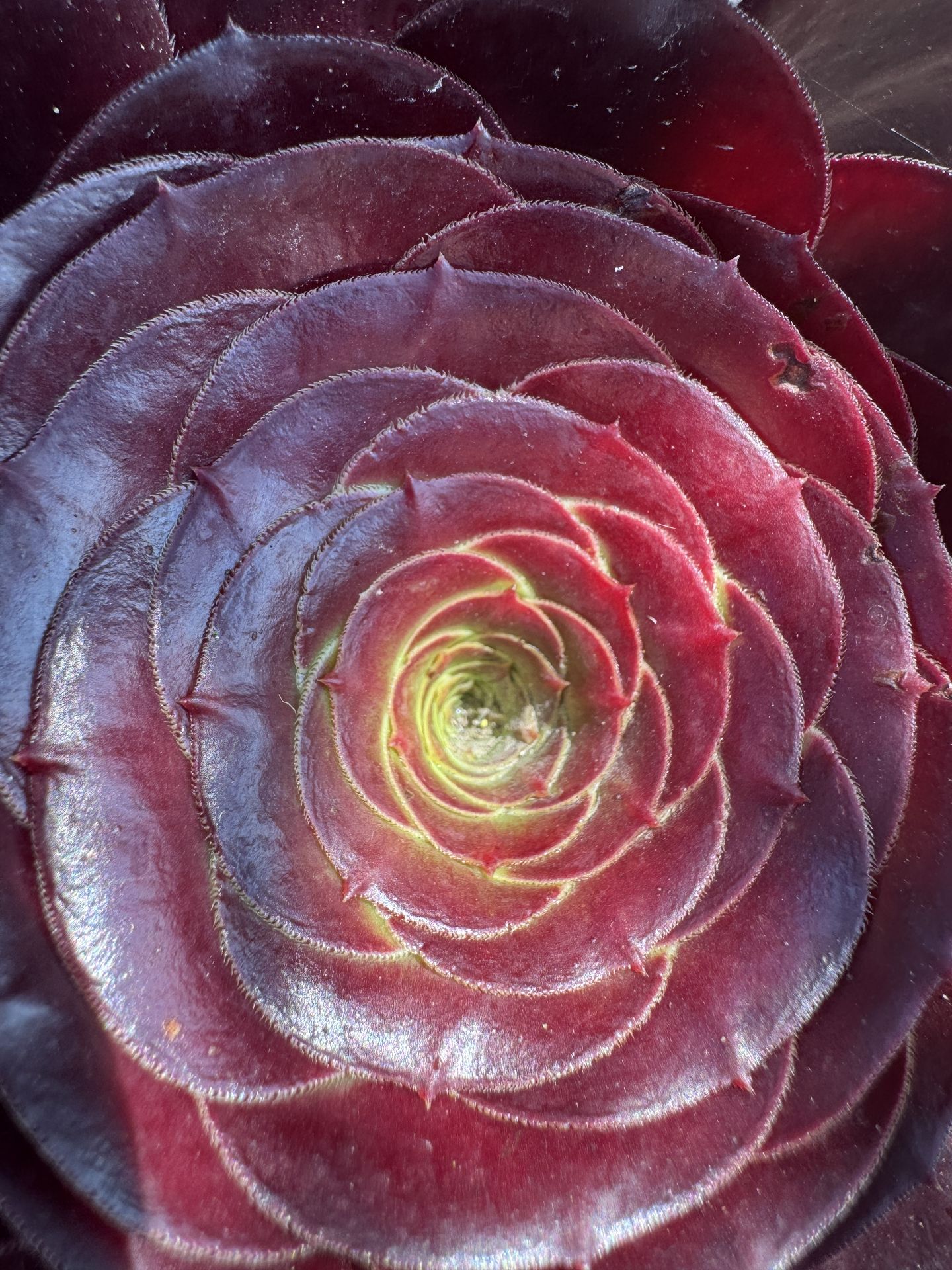
This is the most concrete lesson from this trip. Not a list of species to copy — a method.
One last thing struck me, and I do not have the answer.
On the island, outside the garden, large trees are rare. Those that remain are old, and there is not much new growth. The wind, exposure, old cuts — the causes escape me, and I suppose the territory has its own strategies. But the contrast is telling: the only places where there was shade and coolness were those with large trees.
This is an issue I encounter every week in our Belgian gardens. We plant a lot of shrubs and not enough trees. In twenty years, it will be them that make the difference.
Conclusion
Two days in Brittany, a garden visited at the opening, and a confirmation: the most beautiful atmospheres never come from the plants alone, but from the way the ground has been prepared for them.
If you dream of an exotic garden in Belgium, it is possible — provided you start with the soil, the exposure, and protection from the wind. This is exactly the work we do in advance of each project.
Next article: the exotic and botanical garden of Roscoff, visited on the same day, on the other side of the estuary.
FAQ
Can we really create an exotic garden in Belgium?
Yes, provided you aim for the atmosphere and not the copy. We select hardy plants with large foliage, we work on drainage, and we create shelters against the wind. Many plants seen in Brittany would not survive our winters.
Why do some exotic plants die here while they withstand the cold?
Because the limiting factor is not just the temperature, but the winter humidity. In waterlogged clay soil, the roots and the collar rot before the frost has done its work.
What plants for an exotic atmosphere garden in Walloon Brabant?
Ferns, bamboos, hardy banana plants, grasses, and perennials with large foliage. The selection mainly depends on the exposure and the nature of the soil on your land.